








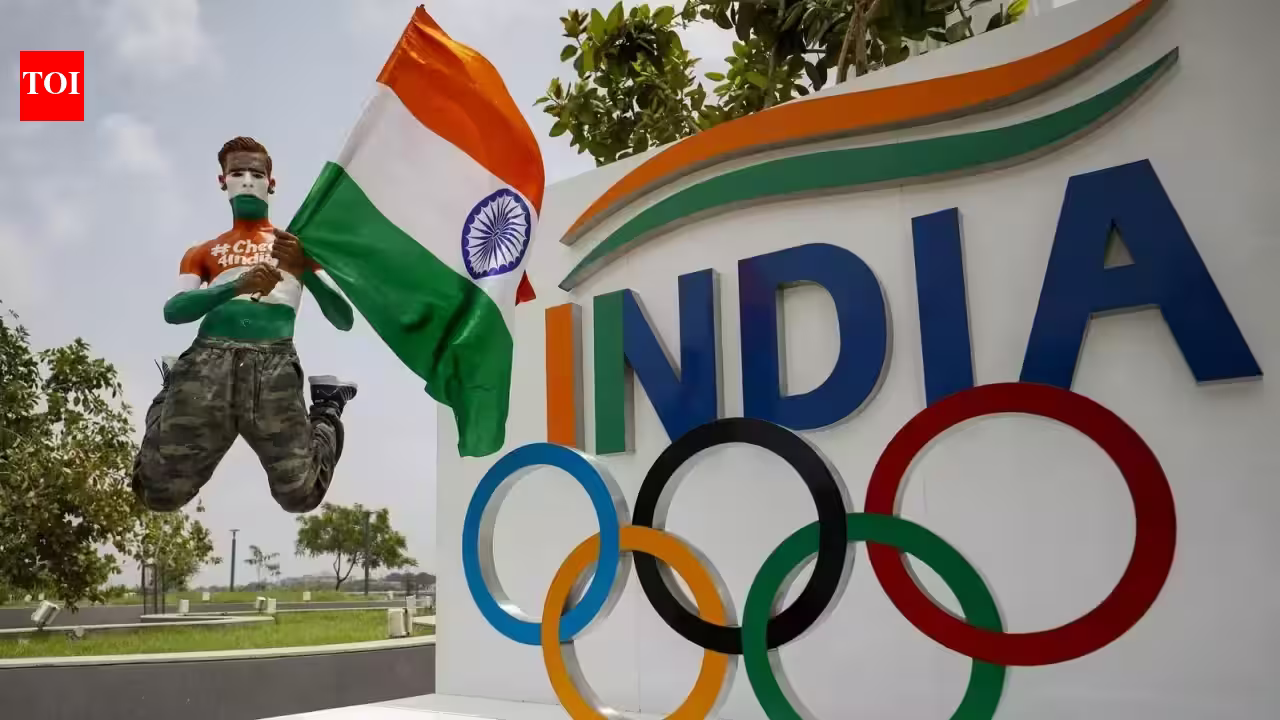
THE global race for the 2036 Summer Olympics has officially entered its most critical phase. The International Olympic Committee (IOC) has confirmed a highly competitive field of seven interested parties: India, Germany, Qatar, South Korea, South Africa, Türkiye, and Hungary. As the world watches, these nations are moving through the “continuous dialogue” stage of the bidding process, with a shortlist due in March 2027 and a final host city announcement slated for mid-2029.
For India, the focus is firmly on Ahmedabad. As the nation positions itself as an emerging global sporting superpower, the proposal for 2036 is being framed not just as a host-city bid, but as a transformational project for the country’s entire sporting ecosystem.
The Global Contenders: Diverse Visions for 2036
The prospective hosts offer vastly different philosophies, ranging from established Olympic veterans to ambitious newcomers.
South Korea is leaning into a regional model. While Seoul—host of the 1988 Games—provides a storied pedigree, the domestic committee has tapped Jeonbuk, specifically the city of Jeonju, to lead the charge. This creates a fascinating internal dynamic: balancing the established, high-capacity infrastructure of the capital with a decentralized, provincial approach.
Qatar, meanwhile, is leveraging its massive success in hosting the 2022 FIFA World Cup. Doha’s strategy is built on the claim that 95% of its required sporting infrastructure is already operational. Having failed in previous bids for 2016 and 2020, Qatar is now positioning itself as a low-risk, high-readiness option, though the challenge of hosting in the intense heat of the Middle East remains a logistical hurdle that the IOC will undoubtedly scrutinize.
Munich, Germany, is playing the “sustainability and legacy” card. With the 2036 Games marking the centennial of the 1936 Berlin Olympics—an event deeply marred by Nazi propaganda—Germany sees this as an opportunity to curate a modern, democratic identity. Their plan focuses on the 1972 Olympic Park, emphasizing a compact layout that minimizes the need for massive new construction.
South Africa offers the most compelling emotional narrative: bringing the Summer Games to the African continent for the first time. Utilizing a multi-city approach—Cape Town, Johannesburg, and Durban—the bid aims to distribute the economic and infrastructural benefits of the Games across the nation.
Türkiye is back in the mix with Istanbul, a city that has refined its bid through five previous unsuccessful attempts. By aiming to use the 2027 European Games as a “live rehearsal,” Turkey is attempting to demonstrate a level of operational maturity that previous failed bids lacked.
Hungary, with Budapest at the center, proposes a lean model. Rather than betting on massive new arenas, they are considering sharing some events with neighboring nations, prioritizing fiscal responsibility and existing facilities over the “mega-project” architecture of the past.
The Indian Strategy: Beyond the Games
Ahmedabad’s bid, under the banner “Rising Together,” is distinctly different from its rivals. While Munich and Budapest argue for minimal building, India is using the Olympic ambition as a catalyst for urban development. The Indian Olympic Association (IOA) has been explicit: the goal is to catapult India into the top tier of global sporting nations.
The roadmap for Ahmedabad is anchored by the 2030 Commonwealth Games. These Games serve as a high-stakes test run for the city’s ability to manage large-scale infrastructure, including the development of 11 sports complexes and significant upgrades to mobility and municipal services. With a draft municipal budget already earmarking over ₹17,000 crore for urban development, the city is betting that the infrastructure built for the Commonwealth Games will serve as a foundational “Sports City” model capable of supporting the Olympic movement.
Lessons from the International Stage
As India moves forward, the comparative landscape offers both caution and inspiration. The success of Qatar’s World Cup proves that modern, high-tech infrastructure can be delivered rapidly, but the criticisms regarding the long-term usage of those venues are a warning.
Munich’s model reminds us that the IOC is increasingly favoring bids that utilize “legacy-focused” planning—reusing structures rather than creating “white elephants.” Meanwhile, the South African approach of spreading events across multiple cities provides a template for India, should it wish to expand the Olympic footprint beyond the borders of Gujarat.
Ultimately, Ahmedabad’s challenge is to prove that its ambition is not just about the pomp of a two-week event, but about creating a permanent, world-class sporting culture. The 2030 Commonwealth Games will be the litmus test. If India can prove it can manage the logistics of a multi-sport event with precision, the case for 2036 will become exponentially stronger.
The road to 2029 is long, but for the seven cities currently in the race, the journey has already begun. The competition is not just between infrastructure and stadium counts; it is a competition of visions—and India is eager to demonstrate that its future in global sport is only just beginning.
Disclaimer: This content is auto-generated for informational purposes only.
Source: Read Original News