







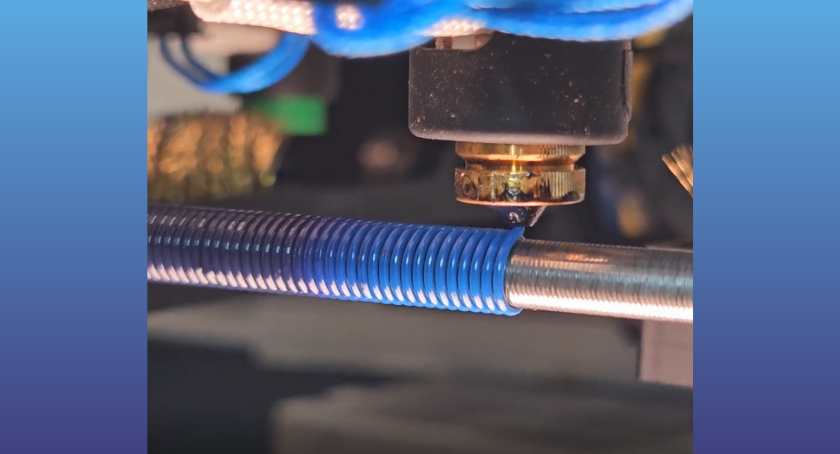
In a move poised to disrupt the medical device industry, TE Connectivity has unveiled a groundbreaking automated 3D printing process for catheter shaft manufacturing. This innovation promises to replace the predominantly manual, high-cost assembly techniques that have long served as the industry standard, signaling a major shift in how minimally invasive medical equipment is produced.
The new technology was developed by the Advanced Technology Group within TE’s Medical business at the PROPELUS Prototype Center in Galway, Ireland. Traditionally, manufacturing catheter shafts—which often require multiple polymer jacket sections with varying levels of flexibility along their length—has been a labor-intensive, manual process. The new 3D printing method streamlines this by applying polymer sections directly onto the shafts during production. The result is a manufacturing cycle that is not only significantly faster but also substantially more consistent in quality.
According to TE Connectivity, these 3D-printed catheter shafts mirror the mechanical properties, materials, and aesthetics of their conventionally produced counterparts, ensuring that the transition to the new process will not compromise the high performance required in clinical settings.
Pat Duane, senior vice president and general manager of TE Connectivity’s Medical business, emphasized the strategic importance of this advancement. “This work reflects TE’s continued focus on advancing manufacturing innovation to help our customers develop increasingly sophisticated minimally invasive medical devices,” Duane said. “We believe additive manufacturing technologies have the potential to expand design possibilities, accelerate development, and support the future of catheter manufacturing.”
Beyond mere efficiency, the technology offers engineers unprecedented flexibility. By allowing for rapid design iteration, the process will help manufacturers shorten their time-to-market. Furthermore, the 3D printing approach may unlock entirely new catheter constructions and device architectures that were previously considered impossible or impractical to manufacture using conventional techniques.
Bernard McDermott, a Medical Engineering Fellow at TE, suggests that this innovation is just the beginning of a broader industrial transformation. “This process, along with complementary disruptive processes in development, will result in a paradigm shift in catheter manufacturing for our customers,” McDermott stated. “It has the potential to significantly reduce product costs, simplify supply chains, and have a positive environmental impact.”
As TE Connectivity continues to integrate these advanced manufacturing solutions, the impact is expected to ripple across the medical technology sector. By reducing waste and complexity, the company is positioning itself at the forefront of a more sustainable and productive future for healthcare providers. With a global workforce of over 90,000, including 10,000 engineers, TE Connectivity remains a dominant force in driving the technical innovations that power next-generation medical devices and the infrastructure that supports them. As this technology scales, manufacturers worldwide may soon find that the old manual assembly methods are quickly becoming a relic of the past.
Disclaimer: This content is auto-generated for informational purposes only.
Source: Read Original News