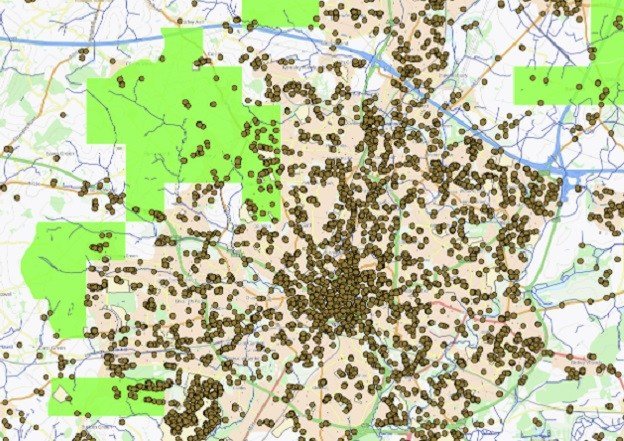









Nigeria is currently facing a silent crisis that threatens its national image, public health, and economic potential: an uncontrolled explosion of urban waste. From the bustling streets of Lagos and the administrative corridors of Abuja to the developing hubs of Kano and Port Harcourt, the proliferation of refuse dumps—often located on highway ramps, railway tracks, and in drainage systems—has become a defining, albeit troubling, feature of the modern Nigerian landscape.
For ‘Tope Fasua, Special Adviser to the President on Economic Matters, this is not merely a logistical failure; it is a symptom of a deeper societal challenge that requires urgent, nationwide intervention. While global discourse often centers on high-level climate change policy, Fasua argues that Nigeria must first master the fundamental task of environmental stewardship. He asserts that a nation cannot effectively engage in complex global climate agendas while failing the “primary school” test of keeping its own streets clean.
The current state of urban waste management has left government authorities vulnerable to accusations of neglect and political sabotage. In cities across the world, waste management has historically been a flashpoint for social unrest and political friction. In the Nigerian context, the issue has transcended simple collection challenges to become a matter of “fly-tipping” and public apathy, where waste is discarded indiscriminately in waterways and abandoned plots.
However, viewing this crisis strictly through a lens of despair misses a vital economic signal. According to data from the World Bank, the accumulation of urban waste is often a byproduct of urban growth and rising standards of living. As consumption increases, so does the volume of solid waste. Consequently, the current crisis should be reframed: it is not just a burden, but a vast, untapped economic opportunity. The waste stream—comprised of plastics, cartons, food waste, and clothing—represents a circular economy waiting to be monetized.
To address this, Fasua proposes a bold, national initiative: the “Cleanest, Safest, and Most-Organised Nation in Africa Project,” or the “COSMOS Project.” This framework is designed to move beyond passive waste collection to an active, national campaign that reshapes the Nigerian mentality. By drawing on the “Broken-Windows Theory,” which suggests that visible signs of disorder encourage further neglect, the project aims to restore order through consistent, high-level enforcement and community engagement.
The potential benefits of a nationwide environmental cleanup are significant. Beyond the immediate improvement in aesthetics, such a program could serve as a massive job-creation engine, absorbing millions of young Nigerians into sustainable careers in waste management, recycling, and environmental monitoring. Economically, a systematic approach to waste could boost national GDP by an estimated 2 to 4 percent by creating value chains that turn trash into industrial raw materials.
Furthermore, the project addresses the “optics” of the nation. For Nigeria to attract the foreign direct investment it craves, it must first regain international respect. A clean environment acts as a signal of stability and competence, helping to shift the global narrative away from perceptions of disorder toward a reality of development. This is already evident in localized efforts, such as those led by Tokunbo Wahab in Lagos, where aggressive interventions against illegal dumping and obstruction of waterways have begun to show the necessity of firm, consistent governance.
Ultimately, the goal is to move beyond the “anyhowness” that currently characterizes urban sanitation and transition toward a system of self-regulation. By incentivizing communities, deploying modern waste-management technology, and fostering a culture of pride, Nigeria can unlock the dormant value in its waste. As the country seeks to position itself as a leader in Africa, the solution may not lie solely in grand industrial projects, but in the subtle, transformative act of cleaning the streets—a necessary foundation for long-term economic prosperity.
Disclaimer: This content is auto-generated for informational purposes only.
Source: Read Original News