








Strategic Capital Infusion for India’s Renewable Energy Ambitions
The recent announcement that ReNew, one of India’s leading renewable energy independent power producers, has secured a $100 million financing facility from the Dutch entrepreneurial development bank, FMO, underscores a broader trend in the global financing landscape for emerging markets. This 10-year facility, extended to ReNew Solar Power through the voluntary retention route (VRR), provides a long-term capital buffer for the company’s extensive pipeline of under-construction renewable energy projects.
For the Indian power sector, this transaction is significant beyond the specific monetary value. It highlights the growing alignment between international development finance institutions and Indian green energy players who are tasked with scaling infrastructure to meet the nation’s ambitious net-zero targets. By utilizing the voluntary retention route—a mechanism designed by the Reserve Bank of India to encourage foreign investment in the Indian debt market—ReNew is effectively tapping into stable, long-term capital that is critical for capital-intensive infrastructure projects where gestation periods are often lengthy.
The Role of Development Finance Institutions in Infrastructure
Financing utility-scale solar and wind projects requires a unique risk appetite, particularly because these ventures demand substantial upfront investment with returns realized over decades. Traditional commercial banks often struggle to provide the tenure lengths necessary to match the lifecycle of solar infrastructure. This is where multilateral agencies and development banks such as FMO step in.
FMO, the Dutch entrepreneurial development bank, operates with a mandate that extends beyond mere profit; it focuses on enabling sustainable private sector growth in developing nations. Their involvement in the Indian market validates the robustness of the business models adopted by firms like ReNew. For global investors, the participation of such a bank serves as a signal of institutional confidence. It mitigates perceived risks related to policy shifts and payment cycles in the Indian power sector, thereby creating a pathway for other international creditors to participate in similar debt structures.
Leveraging the Voluntary Retention Route for Sustainable Growth
The voluntary retention route (VRR) has become a vital tool in the Indian financial regulatory framework for attracting foreign capital into the debt markets. By allowing foreign investors to bypass the typical investment caps associated with the general route, the Reserve Bank of India has created a streamlined process for institutional investors to provide funding.
For ReNew, utilizing this mechanism allows the company to secure capital that is not susceptible to the frequent volatility seen in broader debt markets. The 10-year maturity period of this $100 million facility is particularly noteworthy. It provides the financial stability required to manage the construction risk of multiple solar projects simultaneously. As ReNew expands its portfolio, maintaining a healthy debt-to-equity ratio while ensuring that its interest obligations remain aligned with the revenue generation cycle of its solar assets is paramount. This financing structure supports that goal by providing patient capital that allows for operational efficiency rather than short-term debt servicing pressure.
Scaling Utility Projects Amidst Rising Demand
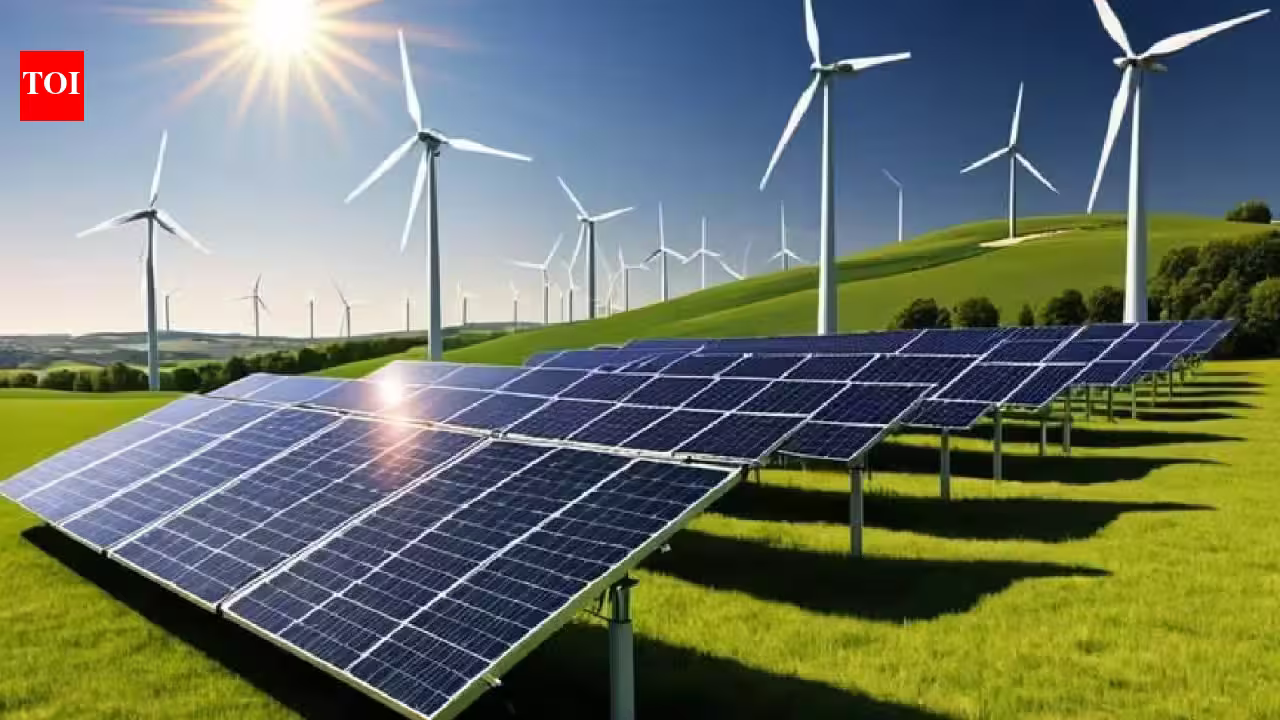
India’s power consumption is surging, driven by urbanization, industrial growth, and the push for residential electrification. To meet this demand, the government has set aggressive targets for renewable energy capacity addition. However, the success of these targets depends heavily on the execution capabilities of private sector players like ReNew, as well as their access to liquid, affordable capital.
Construction of utility-scale solar farms involves high procurement costs for photovoltaic cells, land acquisition expenses, and complex grid integration tasks. When a company manages dozens of these projects simultaneously, the working capital requirements become staggering. The $100 million infusion provides the necessary liquidity to keep the supply chain moving. By funding these assets during the construction phase, the financing ensures that projects reach the commissioning stage on schedule, which is essential for maintaining the developer’s internal rate of return (IRR) and fulfilling power purchase agreements (PPAs) with state distribution companies (DISCOMs).
The Evolving Landscape of Green Finance in India
The deal also reflects a fundamental shift in the broader financial market—the mainstreaming of green financing. Investors are increasingly looking to deploy capital in projects that demonstrate clear ESG (Environmental, Social, and Governance) credentials. India has become a primary destination for this capital because of its favorable solar radiation profile, increasing policy support, and the presence of sophisticated developers who can manage large-scale grid-connected projects.
Looking ahead, the collaboration between ReNew and FMO points toward an increased reliance on international bilateral and multilateral funding for the transition of the Indian grid. As the sector matures, the focus is shifting from simple project financing to more complex financial engineering, including green bonds, sustainability-linked loans, and specialized debt instruments like the one provided by FMO. These mechanisms are critical for reducing the cost of capital, which in turn lowers the overall tariff for the end consumer, making renewable energy not just a clean alternative but an economically superior one.
Strategic Implications for the Future
This financing arrangement is a barometer for the state of the Indian renewable energy sector. It suggests that while global economic conditions remain complex, there is sustained appetite for high-quality Indian renewable assets. The deal also highlights the importance of regulatory stability. The voluntary retention route’s success depends on the RBI’s continued commitment to keeping debt market entry paths open for foreign institutions.
As ReNew continues to add gigawatts to its operational portfolio, its ability to attract such financing will act as a competitive advantage. It allows the company to pursue growth without over-leveraging its balance sheet or relying solely on domestic banking exposure, which can sometimes be constrained by sectoral lending caps. In the coming years, we can expect to see more such bilateral agreements between Indian energy majors and European or North American development finance institutions. These partnerships are the bedrock upon which the next phase of India’s energy transition will be built, ensuring that the country meets its commitment to a greener, more sustainable energy grid while fueling its broader economic aspirations. Through professional financial management and the strategic utilization of global credit, the path toward a carbon-neutral industrial base appears increasingly attainable.
Disclaimer: This content is auto-generated for informational purposes only.
Source: Read Original News