







The Evolution of a Sandbox Legacy
The gaming industry often views sequels to legendary titles with a mix of anticipation and apprehension. When Facepunch Studios, the developer behind the monumental success of Garry’s Mod, announced s&box, expectations were calibrated for a modern, Source 2-powered evolution of that iconic creative experience. Released in April, s&box aimed to provide a platform for user-generated content, leveraging advanced engine capabilities to allow creators and players to build and inhabit virtual worlds. However, the trajectory of the platform has proven to be a stark study in the challenges of platform development and user perception.
Despite early interest, the platform struggled to gain meaningful traction. While its predecessor continues to command a daily concurrent player base of nearly 30,000 users, s&box has historically hovered around 500 active players. This disparity is particularly striking given estimates that suggest between 500,000 and a million copies have been sold. The discrepancy points to a fundamental misalignment between the developer’s vision and the actual desires of the community, prompting a period of reflection and, eventually, a public acknowledgment of systemic failures.
Addressing the AI Content Crisis
One of the most significant hurdles s&box faced was the influx of low-quality, AI-generated content. In an environment built around user creation, the proliferation of automated assets often resulted in a flooded marketplace, making it difficult for high-quality, handcrafted projects to surface. This “slop,” as described by the community, created a barrier to entry for genuine players looking for engaging, curated experiences.
Initially, Facepunch attempted to mitigate this by implementing ranking adjustments to de-prioritize repetitive or automated content. However, lead developer Garry Newman emphasized that the goal was not to ban AI entirely. He maintained that AI remains a valid productivity and learning tool for developers. The issue, therefore, was not the existence of the technology, but the lack of effective discovery mechanisms. The platform’s previous iteration, which attempted to function similarly to a streaming service menu, failed to distinguish quality, leading to a crowded interface where players found it difficult to locate substance amidst the noise.
A Strategic Shift in Development Focus
Following a failed free-to-play promotion that Newman candidly described as unsuccessful, the team has committed to a complete strategic pivot. The core realization was that the platform had been marketed and developed as an “engine and development experience” rather than a gaming destination. By prioritizing the needs of creators over the needs of players, the project lost sight of the fundamental enjoyment factor required to sustain a community.
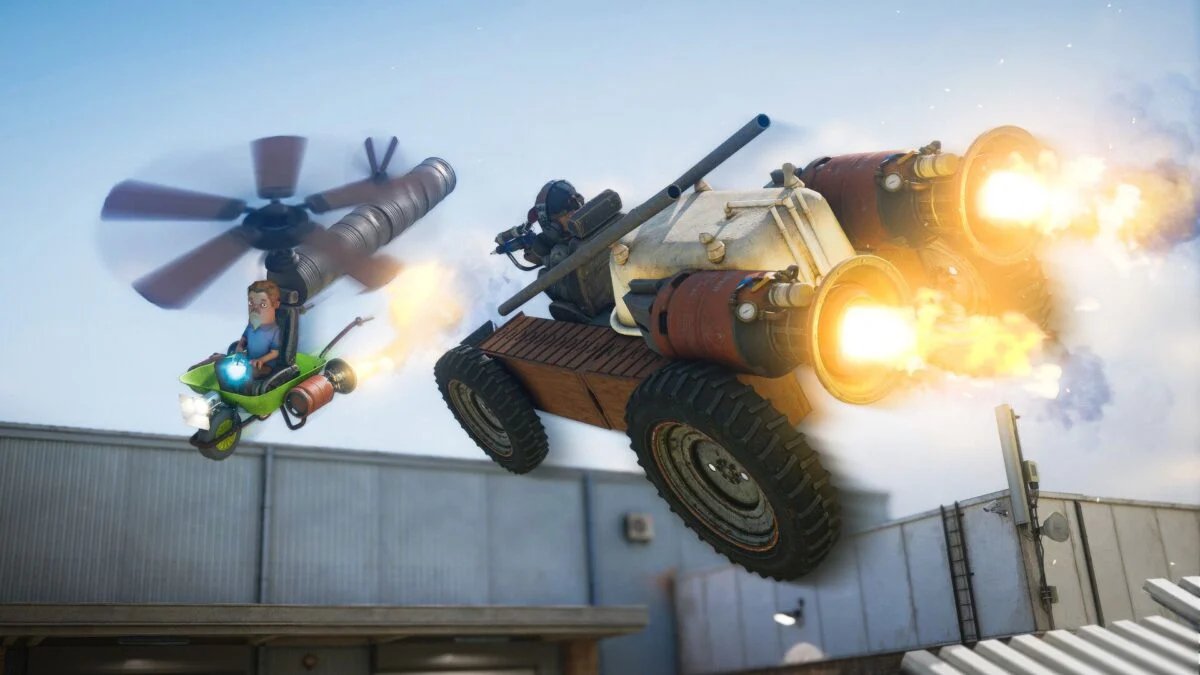
The roadmap now involves shifting the development focus back to the core “Sandbox Game” experience. This entails achieving parity with the classic Garry’s Mod—offering a robust suite of vehicles, NPCs, and multiplayer tools—and subsequently exceeding it. By shifting resources to ensure a first-class experience out of the box, the developers intend to showcase the technical capabilities of the Source 2 engine in a practical, playable context. This is a move toward demonstrating utility rather than just providing a blank canvas.
Embracing Human Curation Over Automation
A critical component of this redesign is the move away from automated discovery. Newman has explicitly abandoned the “Netflix for games” model, acknowledging that it is not a feasible way for users to discover quality content. Instead, the team is moving toward a system that elevates human curation. The belief is that good taste and editorial oversight are irreplaceable, and by fostering an environment where human-led discovery is at the forefront, the platform aims to highlight the most creative and engaging user projects.
To support this technical shift, Facepunch is simplifying its backend infrastructure. The team acknowledged that significant efforts invested in custom backend development were inefficient. Moving forward, the project will lean into the integration of the Steam Workshop. By utilizing established, reliable infrastructure for asset and add-on management, the team can focus its limited resources on the gameplay experience rather than maintaining redundant internal systems.
Economic Restructuring and Future Outlook
In a final effort to revitalize the player base, s&box is transitioning to a free-to-play model before the end of the year. This decision addresses the perception that the combination of an entry fee and internal monetization of digital assets created an unfavorable environment for newcomers. By removing the cost of entry, Facepunch aims to prioritize population growth over immediate revenue.
For those who supported the project during its paid phase, the studio plans to provide exclusive inventory items as a gesture of appreciation. This, combined with the new development roadmap, represents a concerted effort to earn back the trust of the community. Whether these sweeping changes can recover a project that has suffered from a fragmented launch and persistent negative sentiment remains to be seen. However, the shift from a developer-centric toolset to a player-centric ecosystem indicates a maturation in the studio’s understanding of its audience, marking a pivotal moment in the life cycle of s&box.
Disclaimer: This content is auto-generated for informational purposes only.
Source: Read Original News