








The Development Philosophy Behind Big Walk
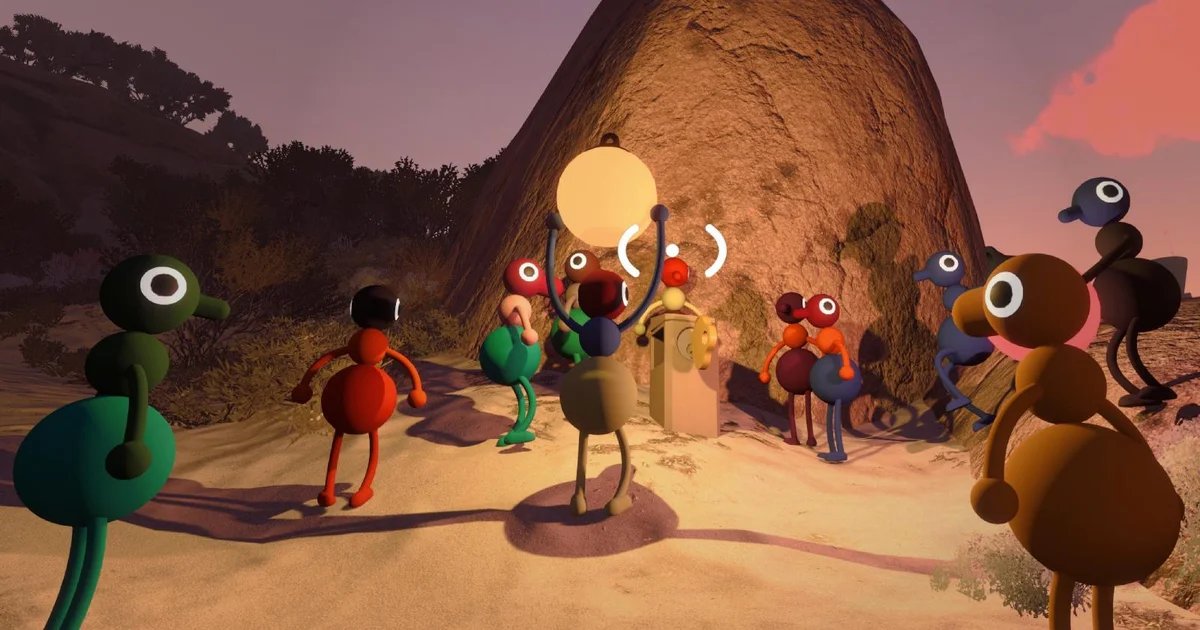
Big Walk, the latest title from the independent Australian studio House House, has quickly become a significant entry in the cooperative multiplayer genre. Known previously for their breakout success Untitled Goose Game, the developers have shifted their focus toward a collaborative puzzle-solving experience that emphasizes communication and shared discovery. Since its release on August 4, the game has demonstrated rapid market traction, crossing the one million units sold milestone in less than seven days.
The technical design of Big Walk focuses on spatial synchronization and proximity-based voice interaction. Players traverse large, dynamically shifting environments that require constant coordination to navigate effectively. The gameplay loop relies on a mix of navigation puzzles and shared environmental manipulation, which serves as a testing ground for how groups of friends work together under pressure. While the technical performance across current platforms has been praised, the studio’s recent announcement regarding the exclusion of the Xbox platform has introduced a complex layer of political discourse into the game’s lifecycle.
The Intersection of Software Distribution and Political Boycotts
In a formal statement, the development team at House House clarified that their decision to omit an Xbox version of Big Walk is a direct response to the BDS movement—a Palestinian-led initiative calling for Boycott, Divestment, and Sanctions against companies perceived to be complicit in actions taken by the Israeli government. The studio explicitly stated that while they desire for the game to reach the widest possible audience, they have placed a moratorium on releasing the title for Microsoft’s hardware until the company is removed from the boycott target list.
This decision highlights an increasing trend among independent software developers to integrate personal and political ethics into their commercial distribution strategies. For House House, the release of Big Walk is not merely a technical deployment of code across various storefronts; it is viewed as an extension of the studio’s internal ethical standards. By choosing to limit the game’s reach, the developers are actively utilizing their platform to draw attention to the ethical implications of the hardware environments in which their games operate.
Technical Complicity and Azure Cloud Infrastructure
The inclusion of Microsoft on the BDS boycott list stems from the company’s long-standing technological partnerships with the Israeli government. Specifically, the criticism centers on the integration of Microsoft’s Azure Cloud computing services and AI systems into the governance and surveillance frameworks utilized within the region. According to the BDS organization, these systems facilitate operations that directly impact the infrastructure of Palestinian territories.
From a technical perspective, this raises difficult questions regarding the global supply chain of digital entertainment. Modern gaming is heavily reliant on massive cloud infrastructure for everything from backend server management and multiplayer connectivity to data storage and digital distribution. When a major service provider like Microsoft integrates its infrastructure into geopolitical conflicts, independent software companies that rely on those same systems face a dilemma. While House House is specifically withholding the game from the Xbox console platform to express its stance, the reality of modern software development is that separating a studio’s output from the cloud infrastructure powering the industry is an exceptionally difficult task.
The Impact on Cross-Platform Accessibility
The absence of an Xbox version of Big Walk fundamentally limits the utility of the game for a specific segment of the player base. For developers, cross-platform play is usually a primary goal, as it maximizes the user base and ensures that friends can play together regardless of their preferred hardware. By deliberately creating a platform gap, House House acknowledges that they are prioritizing their political stance over the traditional goal of total accessibility.
The studio has recognized that this decision creates a hurdle for the collaborative nature of the game, which is designed to be played by groups. This technical limitation means that players who primarily use Xbox consoles as their primary interface for interactive media are excluded from participating in the shared puzzle-solving experience of Big Walk. This creates a fragmented community where the ability to engage with the software is contingent upon the hardware choices of the consumer.
Collective Action in the Gaming Industry
The decision by House House serves as a case study in how small-to-medium-sized developers are attempting to leverage their commercial success to exert influence on the broader industry. By withholding their product, they are attempting to engage in a form of collective action that challenges the neutrality of technology companies. The success of Big Walk, with over one million sales in its opening week, provides the studio with significant leverage, demonstrating that even without the reach of one of the industry’s largest platforms, a high-quality product can still achieve massive market penetration.
This situation reflects a broader shifting landscape where consumers and creators alike are scrutinizing the ties between entertainment conglomerates and global political entities. As technology continues to permeate every aspect of infrastructure, from cloud computing to AI-driven resource management, the distinction between a software company and a participant in global conflict becomes increasingly blurred. House House’s decision forces a conversation about the responsibilities of those who build the software environments that define modern culture. As the gaming industry evolves, the tension between technical ubiquity and ethical accountability is likely to remain a focal point for developers navigating a hyper-connected global economy.
Disclaimer: This content is auto-generated for informational purposes only.
Source: Read Original News