









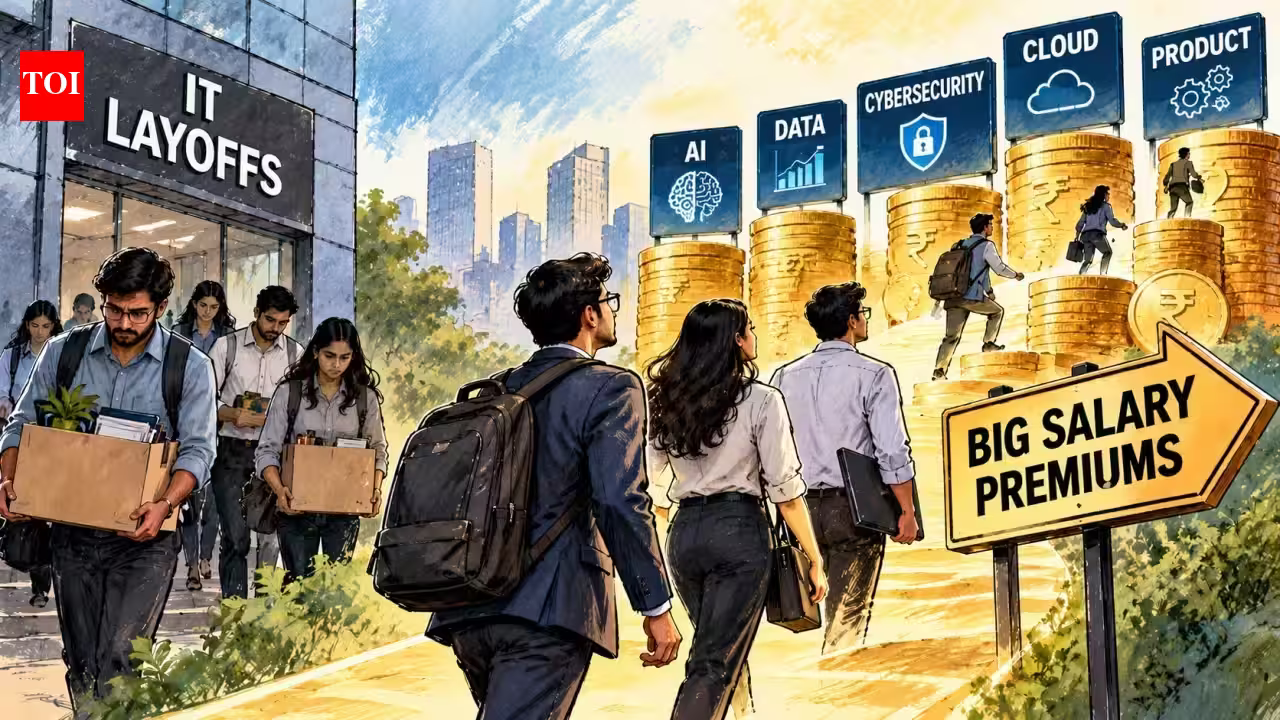
The Indian information technology sector, long considered the bedrock of the nation’s white-collar job market, is undergoing a profound structural shift. As artificial intelligence and automation transition from experimental tools to core operational infrastructure, the traditional metrics of professional valuation—such as years of experience and legacy role titles—are rapidly losing their predictive power regarding compensation. A new era of skill-differentiated salary structures has emerged, favoring those who can bridge the gap between technical complexity and tangible business outcomes.
The Bifurcation of Tech Compensation
The current labor market reflects a clear divide between routine execution-led roles and high-impact specialized capabilities. Data from the TeamLease Digital report on Digital Skills and Salary Primer FY2026-27 indicates that salary premiums are now heavily concentrated in four specific domains: Artificial Intelligence, Data Science, Cloud Engineering, and Cybersecurity.
This hierarchy is visible in entry-level compensation disparities. AI-core roles command a median entry-level salary significantly higher than AI-adjacent or AI-support positions. More importantly, the projected salary growth trajectories for these cohorts differ by nearly ten percentage points, signaling a long-term divergence in earning potential. For professionals, the message is clear: routine operational tasks are being compressed by automation, while roles that build, integrate, and govern AI systems are seeing an unprecedented premium due to a persistent supply-demand mismatch. Only about 16 percent of India’s IT workforce currently possesses the specialized AI skills required to drive projects from pilot to production, creating a fierce competition for top-tier talent.
The Value of Architecture and Governance
As the industry moves beyond simple coding tasks, the highest salary bands are increasingly reserved for architects who can manage scale and risk. Annual salaries exceeding the one-crore mark for roles such as AI Architects, Industrial Data Architects, and OT Security Architects underscore a shift in employer priorities. These individuals are no longer just programmers; they are strategic decision-makers responsible for enterprise-wide technology adoption.
The premium is not merely for technical proficiency but for the ability to own the architecture of complex systems. Employers are paying for the accountability that comes with deploying AI at scale, ensuring that technical investments translate into measurable business performance. This reality has neutralized the traditional geographic advantage held by major metropolitan hubs. Today, a GenAI engineer in a tier-two city like Indore can command a higher salary than a cybersecurity professional in a traditional tech hub like Bengaluru, provided their capability set directly maps to the high-value needs of the organization.
Strategic Reskilling for Career Longevity
For IT professionals currently occupying traditional or execution-heavy roles, the path forward requires a shift from reactive learning to strategic capability building. The goal is not necessarily to discard one’s existing career path, but to adopt “adjacency.” A software tester can pivot into intelligent operations, a business intelligence analyst can transition into data engineering, and a system administrator can migrate into cloud infrastructure.
This approach involves moving away from being defined by a job title and toward a portfolio of transferable skills. At the entry level, professionals must prioritize building strong technical foundations in AI and cloud applications. At the mid-career stage, the focus shifts to machine learning operations and enterprise integration—the ability to take existing technologies and deploy them to improve workflows. For senior professionals, the emphasis must remain on strategic leadership, governing AI adoption, and aligning technology initiatives with organizational business goals.
The Risk of Stagnation in Routine Roles
The contraction of routine, rule-based roles is the most significant challenge facing the broader IT workforce in India. Activities like manual testing, basic operational support, and repetitive reporting are becoming increasingly automated. While the IT sector continues to employ millions, the salary growth for professionals remaining in these stagnant domains is likely to decelerate as their work is absorbed by sophisticated software and AI agents.
Industry leaders emphasize that the risk lies in viewing these roles as permanent. Instead, professionals must evaluate their current responsibilities against the backdrop of AI integration. If a role primarily involves high-frequency, low-complexity tasks, it is inherently vulnerable. The transition to higher-value responsibilities is not an option but a requirement for maintaining career relevance. Those who integrate deep domain knowledge with new-age technical skills are the most likely to command higher compensation, as they offer the unique benefit of understanding both the industry-specific problem and the technological solution.
Market Outlook and Future Readiness
Looking ahead, the Indian IT sector will likely continue to prioritize “capability-based hiring.” The obsession with the popularity of a specific tool or language is being replaced by an appreciation for problem-solving capacity. Organizations are moving toward lean, high-output teams where each member is expected to contribute to business outcomes rather than just fulfilling a set list of duties.
For the individual professional, the takeaway is an urgent need for proactive self-assessment. Choosing to upskill based on the potential for salary premiums alone may lead to a superficial understanding of a field. Sustainable growth comes from identifying the specific capabilities emerging as critical within one’s industry and building a track record of practical, high-impact application. The digital workforce in India has crossed a threshold, and the future belongs to those who view technology not as a static profession but as a dynamic toolkit for addressing complex, real-world business challenges. As this evolution continues, the ability to adapt, solve novel problems, and connect technology to revenue will be the primary determinants of professional worth in the Indian IT landscape.
Disclaimer: This content is auto-generated for informational purposes only.
Source: Read Original News