








Sonipat has long been known as a manufacturing powerhouse in the National Capital Region, producing auto components for global markets. However, in the wake of the recently concluded Asian Games in Aichi-Nagoya, the city has cemented a far more prestigious reputation: India’s undisputed “medal factory.” With a staggering haul of 13 gold medals—spanning disciplines as diverse as hockey, athletics, kabaddi, wrestling, and archery—this Haryana city has transformed itself into a crucible for champions.
While the city lacks the massive capital influx of Gurgaon or the administrative sway of Delhi, it possesses something far more potent: a sporting DNA forged in the hearths of its villages and the grit of its families.
The Anatomy of Success: Sacrifices at Home
For the gold-medalists of Sonipat, the road to the podium rarely began in a high-tech facility. It began at the kitchen table or on the family farm. Consider the story of archer Kushal Dalal, who found solace in the precision of the bow. With no professional range available, his family didn’t just support his dream—they built it. They cleared a section of their five-acre farmland in Siwanka village and wove paddy straw into makeshift targets, turning a corner of their livelihood into a training ground for excellence.
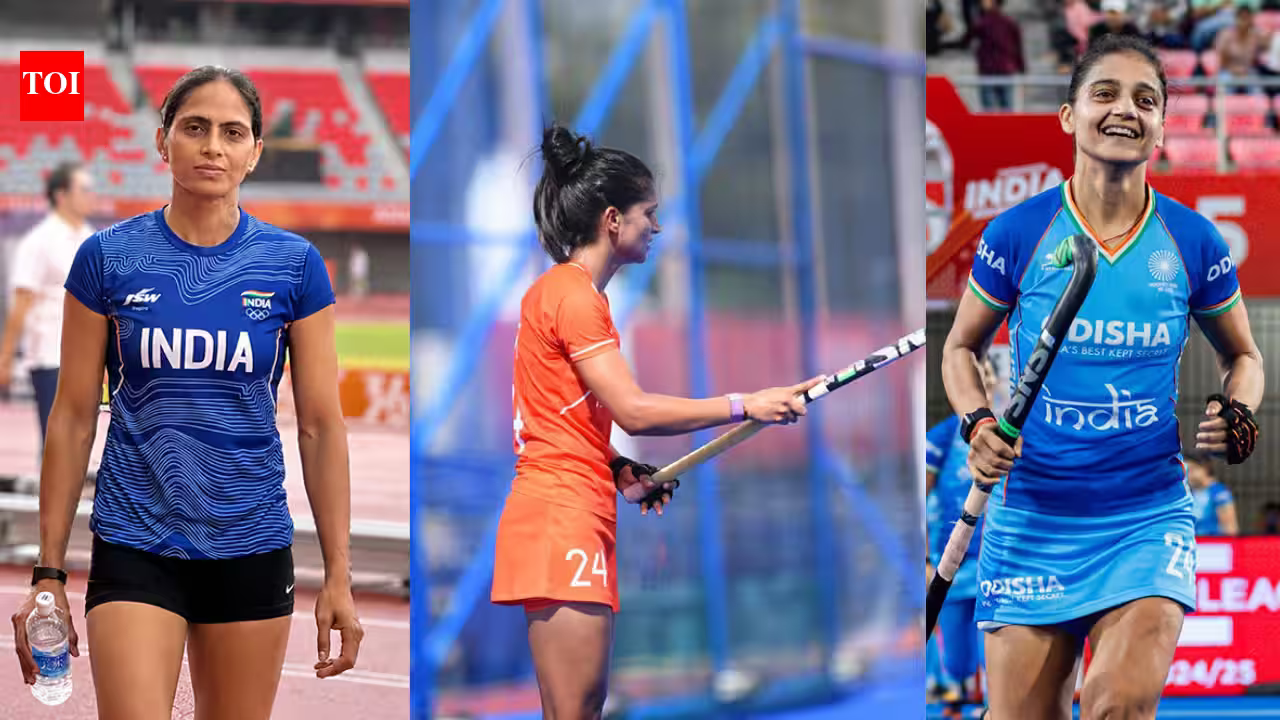
The journey was often paved with even deeper personal sacrifices. For runner Kiran Pahal, training was a battle against social stigma and limited resources. When gossip regarding her social life threatened to end her track career, Pahal stood her ground, even staging a hunger strike to regain her father’s permission to train. Her grandmother, sensing the girl’s potential, dipped into her own pension to purchase Pahal’s first pair of running shoes.
These vignettes of grit are mirrored in the career of hockey star Neha Goyal. Driven by the humble prospect of receiving free school supplies and footwear, she entered the world of sport to help her family. Her mother, a worker in a local foam factory, consistently shielded her daughter from societal pressures, allowing Neha to transform a need for equipment into a professional athletic career that would eventually lead her to international gold.
Infrastructure and the Ecosystem of Excellence
While family support provided the spark, Sonipat’s structural landscape provided the fuel. The region is uniquely dense with elite sports institutions, including the Sports Authority of India (SAI) National Centre of Excellence and the historic Motilal Nehru School of Sports in Rai. These facilities offer world-class amenities—synthetic tracks, hypoxic chambers, and specialized injury rehabilitation centers—that bridge the gap between raw talent and elite performance.
However, the real engine of the city’s success may be its private academies and grassroots centers. Former India hockey captain Pritam Rani Siwach’s academy stands as a testament to this community-led model. What started as a small initiative in 2004 with just seven trainees has blossomed into a powerhouse, currently supporting 200 athletes, 150 of whom are girls. By providing essentials—ranging from school fees and shoes to nutritional staples like milk, bananas, and soaked chana—Siwach has ensured that poverty is never the reason a young athlete stops chasing their dream.
From Farming to the Podium
Economists and sports administrators agree that Sonipat’s shift toward high-performance sport is no accident. As ancestral landholdings shrink and traditional farming becomes less viable, sports have emerged as a high-stakes, high-reward alternative. For many families, an athlete in the house is not just a source of local pride; it is a pathway to stable government employment in the Railways, the Army, or paramilitary forces.
“As landholdings have shrunk, sports have emerged as an important pathway to secure government jobs,” explains Meenu Beniwal, president of the Haryana Olympic Association.
This sentiment is echoed by wrestling and kabaddi veterans. In villages like Rindhana, kabaddi is a way of life, with hundreds of children training daily on local grounds, inspired by the success of neighbors who have made it to the Pro Kabaddi League. Similarly, the local akharas serve as training grounds not just for physical prowess, but for the discipline and endurance required for life. Wrestling coach Naveen Mor, who trains dozens of children on a one-acre plot without charging a fee, notes that for families with limited options, sports provide the most viable route to upward mobility.
The Sonipat Standard
The Aichi-Nagoya Asian Games served as a watershed moment for Sonipat. When athletes like Abhishek Nain scored the winning goal for the men’s hockey team in the semi-finals or when wrestling sensation Sujeet Kalkal claimed his gold, the city wasn’t just celebrating individual achievement—it was validating a decade of quiet, persistent investment.
As the next generation of athletes, represented by five-year-olds like Ritika who are already learning the proper grip on a hockey stick, begins their journey, it is clear that Sonipat’s “golden harvest” is sustainable. By marrying the indomitable spirit of the Haryanvi household with a structured, community-focused academy system, the city has created a blueprint that the rest of the nation is now struggling to emulate. It takes a village to raise a child, but in Sonipat, it takes a village to forge a champion.
Disclaimer: This content is auto-generated for informational purposes only.
Source: Read Original News