







REVENUE records have been shattered in the heart of the Spanish capital, as Real Madrid officially became the first sporting organization in history to surpass the €1.2 billion annual revenue mark. In a staggering financial performance for the 2025-26 season, the Los Blancos board confirmed a record-breaking €1.221 billion ($1.42 billion) in operating income—an achievement made even more remarkable by the fact that the club ended the campaign without a single major trophy.
The milestone, approved by the board on July 28, 2026, marks the third consecutive year of record-breaking financial growth for the club. While the figure represents a 3.1% increase over the previous term, analysts have noted a nuanced accounting detail: the total includes a €23.5 million ($27.3 million) reversal of a financial provision stemming from a prior European Commission settlement. Even excluding this, the club’s revenue of approximately €1.198 billion remains unprecedented in the history of global sports.
The Bernabéu: A Modern Financial Engine
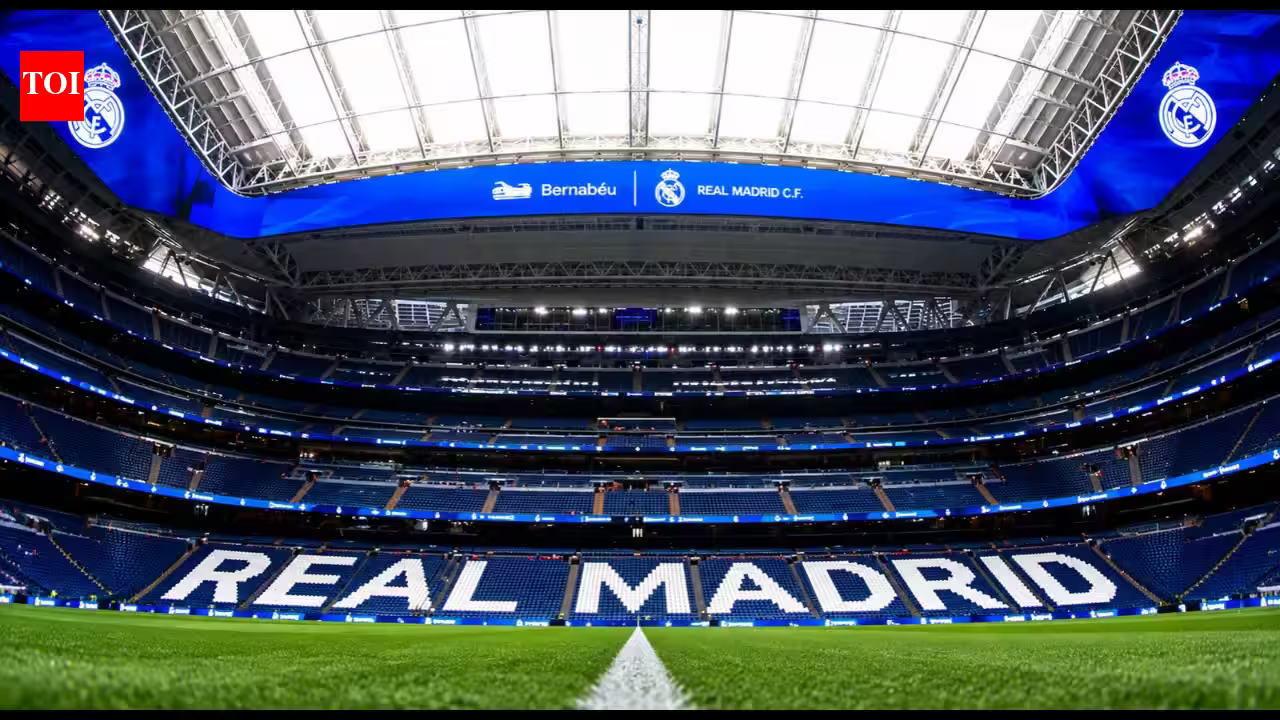
Central to this financial juggernaut is the revamped Santiago Bernabéu. Despite the project’s cumulative costs ballooning to €1.407 billion—nearly triple the original 2018 estimate—the stadium has evolved into a premier revenue-generating machine. During the 2025-26 season, the facility contributed €363 million to the coffers, a substantial 11% increase year-on-year and more than double the income generated prior to the stadium’s extensive redevelopment.
The club has shifted its strategy from single-match reliance to long-term profitability. By implementing personal seat licenses, Madrid has secured commitments from supporters for the next three decades. Furthermore, the installation of a retractable roof, a 360-degree scoreboard, and an ingenious underground pitch-storage system has turned the arena into a versatile venue capable of hosting non-football events.
However, the path to prosperity has not been without turbulence. The club has faced significant headwinds, including noise-complaint restrictions that forced the suspension of major concerts and a Supreme Court ruling that blocked proposed parking facility developments. Despite these setbacks and an outstanding project debt of roughly €1.1 billion, the club maintains a healthy day-to-day net debt of just €9 million, suggesting that the long-term vision remains on track.
Commercial Dominance: Adidas, Emirates, and HP
Real Madrid’s commercial prowess has acted as a vital stabilizer, allowing the club to flourish even when the trophy cabinet remained empty. Marketing and commercial activities brought in a massive €539 million—a 6% annual jump and a staggering 82% increase compared to the 2018-19 pre-renovation baseline.
The engine of this commercial success is a “Big Three” sponsorship trio. Through strategic contract renewals finalized in June 2026, Adidas (kit supplier) and Emirates (shirt sponsor) remain anchored to the club through 2034 and 2031, respectively. The arrival of HP as the first-ever sleeve sponsor in the club’s 121-year history, worth between €70 million and €80 million annually, has further diversified an income stream that already relies on a global merchandising network and over 30 corporate partners.
Investment and Sustainability
For a club defined by the “Galáctico” era of high-profile signings, the current financial model shows a surprising level of fiscal discipline. Madrid allocated €161 million to new player signings during the 2025-26 period, yet total player wages and transfer amortizations remained at 46% of total revenue. This sits safely below the 50% sustainability benchmark the club has set for itself.
As a member-owned entity, there are no external dividends to be paid to private owners; instead, all surpluses are recycled back into the organization. This strategy was visible in the €192 million reinvested into technology and infrastructure, ensuring that the club does not merely rely on the prestige of its past, but actively invests in the tools required for future dominance.
Impact Beyond the Pitch: The Real Madrid Foundation
While the commercial figures dominate headlines, the club’s social footprint continues to expand through the Real Madrid Foundation. Marking its 28th year, the foundation operates in over 100 countries, impacting nearly two million people annually.
With a budget ranging from €18 million to €22 million, the foundation serves as the club’s humanitarian arm, funding social sports schools for vulnerable youth and supporting adapted sports clinics for individuals with disabilities. Their work in 2025-26, supported by high-profile corporate partners like Endesa and HSBC, saw extensive outreach in the Middle East and the Asia-Pacific region. This commitment to social responsibility, underscored by President Florentino Pérez’s significant personal donations for disaster relief, highlights the club’s influence as a cultural institution, not just a football team.
As the 2026-27 season begins, Real Madrid finds itself in a unique position: possessing the most formidable financial architecture in sports history while facing the perennial pressure to convert that wealth into silverware. The club has proven that it can thrive without trophies, but in Madrid, where excellence is the minimum expectation, the record-breaking revenue of 2025-26 will likely be viewed as the foundation for a new era of dominance both on and off the pitch.
Disclaimer: This content is auto-generated for informational purposes only.
Source: Read Original News