







Raipur bore witness to a nerve-wracking yet ultimately triumphant spectacle on Friday, as the Indian women’s cricket team narrowly avoided a humiliating upset in the first T20I against Zimbabwe. In what was expected to be a routine outing for the hosts, a catastrophic top-order collapse sent shockwaves through the stadium, forcing the experienced Deepti Sharma and the composed debutant Niki Prasad to script a dramatic rescue mission.
The four-wicket victory, while eventually comfortable in terms of balls remaining, serves as a stark reminder of the volatility inherent in the shortest format of the game. For Smriti Mandhana, marking her first match as India’s full-time T20I captain, the evening began under immense pressure, testing both her tactical acumen and her resilience in the face of an unexpected batting crisis.
The Collapse: A Powerplay Nightmare
India’s chase of a modest 115-run target began with the characteristic flair expected from a side of their caliber. Mandhana signaled her intent early with a few crisp boundaries, but the momentum shifted violently in the second over. The Zimbabwean bowling attack, often considered the underdog, found a rhythm that exploited the moisture in the surface and the impatience of the Indian top order.
Nyasha Gwanzura emerged as the tormentor-in-chief. Her clinical off-spin dismantled India’s backbone in record time. Mandhana was the first to depart, followed in quick succession by Anushka Sharma. Before the capacity crowd in Raipur could even settle into their seats, the scoreboard read a dismal 19 for 3, with the talismanic Harmanpreet Kaur already back in the dugout after being undone by Michelle Mavunga. When Shafali Verma fell to Gwanzura with the score still stagnant at 19, India found themselves in the precarious position of 19 for 4, losing four pillars of their lineup well before the conclusion of the powerplay.
For Zimbabwe, a side that had endured a winless streak of 18 T20Is this calendar year, the air in the middle grew thick with the scent of a historic upset.
The Resilience of Experience and Youth
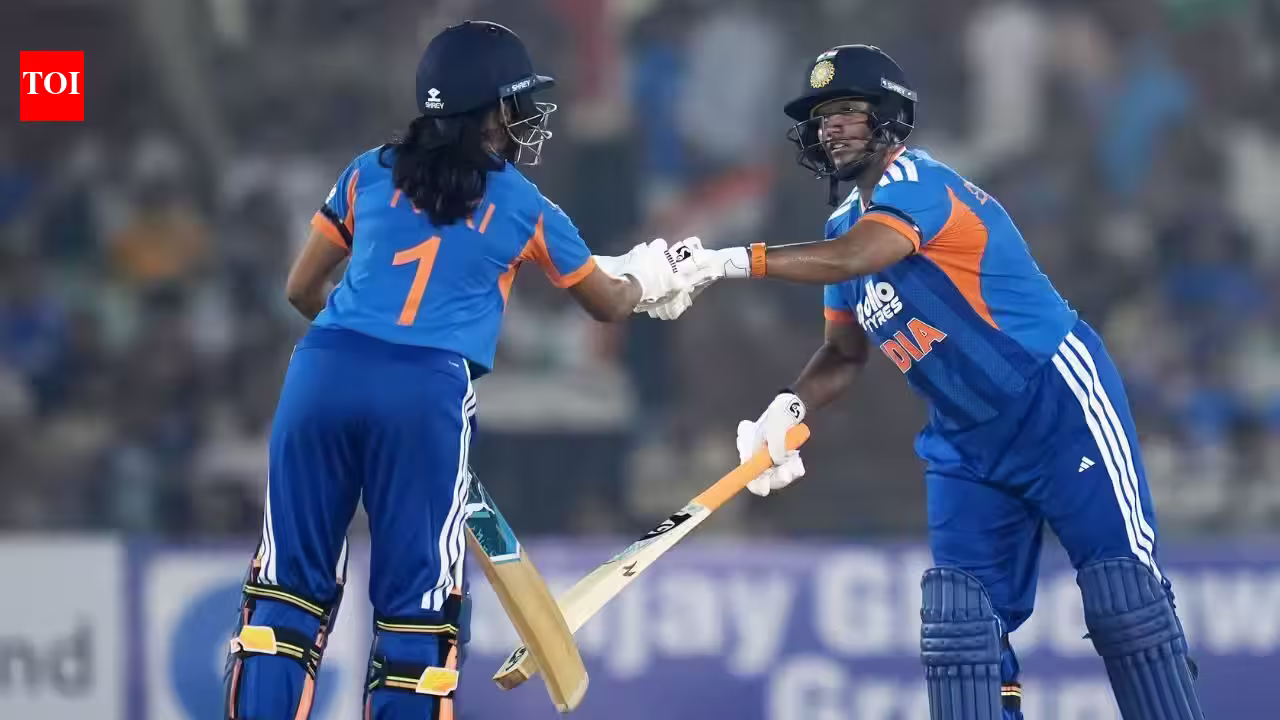
With the match slipping away, the responsibility fell upon the shoulders of the seasoned Deepti Sharma and the young debutant Niki Prasad. The duo, demonstrating a level of maturity that belied the chaotic state of the innings, opted for a calculated rebuild rather than a desperate counter-attack.
Deepti Sharma anchored the recovery, her 49 off 37 balls acting as the stabilizing force. She meticulously rotated the strike and punished the loose deliveries, ensuring that the required run rate never spiraled out of control. Partnering her was Niki Prasad, who showed remarkable poise in her first international appearance. Tasked with the “fire-fighting” role under the most intense pressure imaginable, Prasad flourished.
The pair stitched together an 82-run partnership that completely neutralized the Zimbabwean threat. By the time they regained control of the game, the psychological advantage had swung firmly back to the hosts. Prasad eventually applied the finishing touches, finding the boundary to seal the match with 4.2 overs to spare. It was a baptism by fire for the youngster, who walked away from her debut not just with a victory, but with the confidence of having navigated a high-stakes crisis.
Zimbabwe’s Competitive Stand
While the narrative of the night focused on India’s recovery, Zimbabwe’s effort with the bat and ball deserved significant recognition. Having been invited to bat first, the visitors showcased a disciplined approach. Halfway through their innings, they were comfortably placed at 60 for 1, with Kelis Ndhlovu providing a solid platform.
Ndhlovu’s 42 provided the backbone of the innings, while Sharne Mayers remained unbeaten on 43 to guide Zimbabwe to a respectable total of 114 for 5. India’s bowling unit, led by world number one N. Shree Charani, had to work hard to restrict the scoring. Charani was at her frugal best, finishing with 1 for 14, while Nandani Sharma showcased her death-bowling prowess by claiming two wickets in a sharp final over to conclude with figures of 2 for 11.
Reflections on a Chaotic Opener
For coach and captain alike, the takeaways from the Raipur opener will be bittersweet. While the ability to recover from 19 for 4 proves the depth and temperament of the squad, the ease with which the top order was dismantled will likely be the focus of the team’s next training session.
“We knew we had the quality to bounce back, but we cannot afford such lapses in the future,” said team staff members after the match. As the series moves forward, India will look to tighten their grip on proceedings, while Zimbabwe will undoubtedly take immense heart from a performance that pushed a global powerhouse to the absolute brink.
With the first hurdle cleared, the Indian team will look to solidify their batting unit for the second T20I, while the visitors will aim to replicate their clinical bowling performance—but this time, with the hope of finishing the job. As it stands, the series is alive, the debutants are rising, and the spectators in Raipur are left anticipating an even more competitive follow-up.
Disclaimer: This content is auto-generated for informational purposes only.
Source: Read Original News