







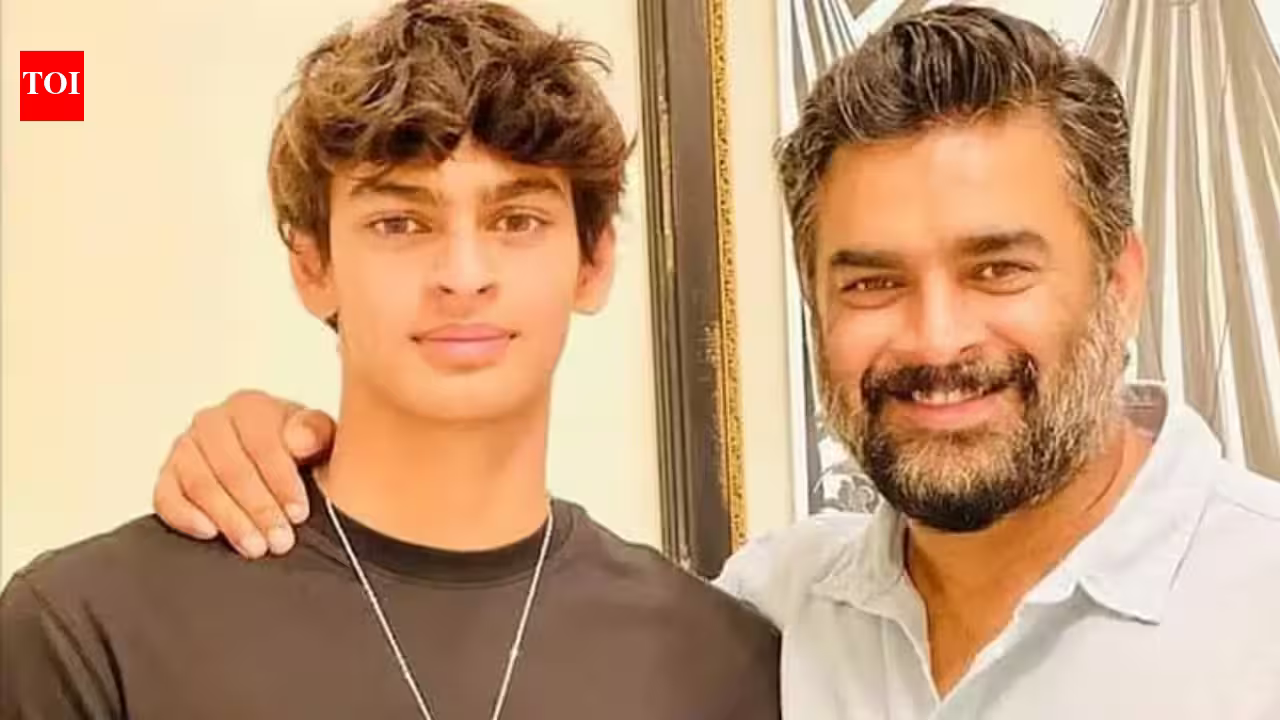
In the glitzy, often suffocating ecosystem of Indian celebrity culture, the children of Bollywood stars are rarely granted the luxury of anonymity. They are born into a digital spotlight, their every milestone dissected by social media algorithms and their developmental stages treated like public property. Yet, amidst the relentless speculation and the industry’s penchant for creating “next-generation” narratives, R Madhavan has carved out a refreshingly different path for his son, Vedaant.
The 3 Idiots and Rocketry star has long been vocal about the precarious balance of raising an athlete in the shadow of a famous father. While Vedaant has made headlines for his impressive performance in the pool—representing India on global stages and clocking record-breaking times—Madhavan remains the most prominent voice tempering the expectations of the masses. He isn’t just a proud father; he is a strategic gatekeeper of his son’s mental health, constantly reminding the public, and more importantly Vedaant, that athletic prowess is a marathon, not a sprint.
The Reality Check of the Olympic Dream
When it comes to his son’s athletic trajectory, Madhavan possesses an almost clinical level of objectivity. In an industry known for hyperbole, the actor has consistently hit the brakes on the narrative that Vedaant is already a finished product. Recalling an interview with Lallantop Cinema, Madhavan didn’t shy away from the blunt truth regarding the Olympic conversation.
“His achievements are good, but he is nowhere close to the Olympics,” the actor stated candidly. For a parent, this kind of public transparency is rare. Most star parents lean into the hype, curating their children’s public image to maximize visibility. Madhavan, however, understands that the label of an “Olympic-bound athlete” is a weight that can crush a teenager long before they reach the qualifying blocks. By keeping the goalposts firmly planted in reality, he is protecting Vedaant from the inevitable disappointment of a public that expects gold medals before a young man has even reached his physical peak.
Fame vs. Success: The Philosophical Father
The most compelling aspect of the Madhavan-Vedaant dynamic is the actor’s focus on the psychological architecture of his son. As Vedaant’s swimming career began to gain traction—most notably with his silver medal at the Danish Open in 2022—the media blitz became immediate. With that attention came the risk of the teenager conflating public “likes” with genuine athletic success.
Madhavan describes himself as a “philosophical friend” rather than a traditional father. This approach was vital when the fame arrived. “I explained it to him that there is a huge difference between success, fame, and popularity,” the actor explained. “Don’t consider fame and popularity to be yours, because at his age it is very easy to confuse each thing. You still have a long way to go for success.”
This distinction is profound. In an era where followers and engagement rates are often mistaken for merit, Madhavan is teaching his son that the applause from a crowd is fleeting and often unearned, whereas the success in a swimming lane is tangible and solely his own. By separating the man from the “star kid” brand, Madhavan is ensuring that when the cameras eventually turn elsewhere—as they inevitably do—Vedaant will be left with a solid sense of self rather than an identity crisis.
Protecting Kids from the Comparison Trap
Perhaps the most damaging habit of the Indian entertainment landscape is the compulsion to compare star kids. Whether it’s their fashion sense, their career path, or their speed of achievement, there is an incessant desire to weigh one celebrity scion against another. Madhavan has emerged as a staunch critic of this “mould” mentality.
He is adamant that such comparisons are not only unfair but cruel. “It is wrong to compare kids between each other. It breaks their hearts,” he said. “You can’t just put kids of the same age in a mould and compare, saying they’ll become successful or not. Star kids are kids after all.”
Madhavan’s protective stance is a rejection of the assembly-line view of stardom. By insisting that children should grow at their own pace, he is challenging the audience’s right to dictate a child’s life trajectory. For the Madhavan household, the focus is internal: what are the goals for this season? How is the training progressing? These are the only metrics that matter to them, effectively shielding Vedaant from the toxicity of online forums and tabloid debates.
The Sacrifice Behind the Splash
While the headlines capture the silver medals, the real story lies in the quiet, logistical sacrifices the family has made to facilitate Vedaant’s dreams. The family’s move to Dubai was not merely a lifestyle choice; it was a tactical decision to place Vedaant in a world-class training environment.
This move highlights a level of commitment that goes beyond standard parental support. It required uprooting, significant financial investment, and a total shift in focus from the center of Mumbai’s film industry to the training facilities of the Middle East. It shows that Madhavan is willing to sideline his own professional convenience to ensure his son has the best possible chance at greatness. Yet, even with these resources, Madhavan ensures that Vedaant remains the one doing the hard work. He attends the competitions, he posts the updates, but he never tries to steal the spotlight. He is the observer, the cheerleader, and the anchor—never the protagonist of his son’s swim.
In the end, Vedaant Madhavan is not just another star kid caught in the slipstream of his father’s fame. He is an athlete carving out a life of discipline, far from the chaotic noise of Bollywood. And as long as he has a father who prioritizes his son’s character over his celebrity, Vedaant stands a better chance than most at reaching the finish line on his own terms—whether that finish line ends in an Olympic pool or somewhere entirely of his own choosing.
Disclaimer: This content is auto-generated for informational purposes only.
Source: Read Original News