







A Life Upended: The High-Stakes Legal Battle of Actor Imran Khan
The glitz and glamour of Bollywood usually center on box-office returns and red-carpet appearances. But for actor Imran Khan, the current narrative is far more somber, playing out not on a soundstage, but within the austere confines of the Bombay High Court. In a move that has sent shockwaves through the industry and civil society circles alike, the actor has filed an urgent plea to stay a notice issued by the Foreigners Regional Registration Office (FRRO), which effectively mandates his departure from India by October 28.
For a man who has considered Mumbai his home since the tender age of two, the notice is not just a bureaucratic hurdle—it is an existential threat. As the legal gears begin to turn, the case raises profound questions about the rights of Overseas Citizens of India (OCI), the boundaries of political dissent, and the extent of executive power.
From Protest to Deportation Notice
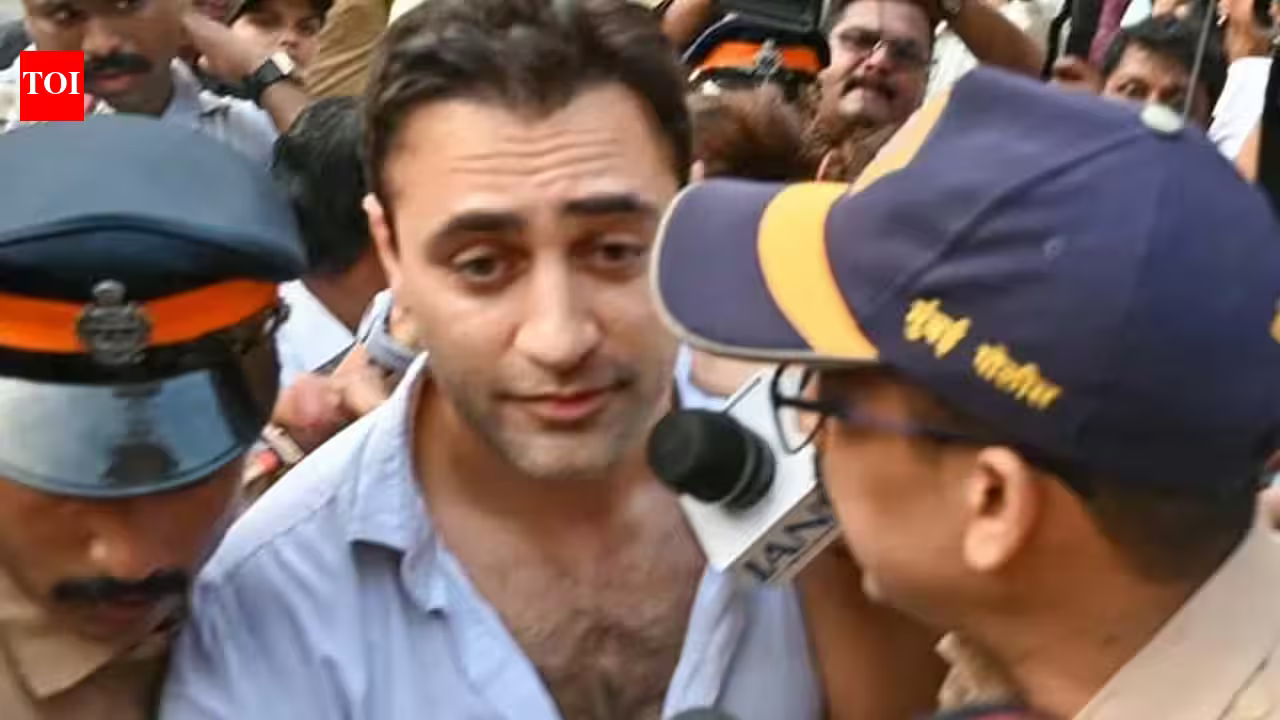
The catalyst for this sudden legal tempest can be traced back to October 10, at Mumbai’s historic August Kranti Maidan. Khan, alongside his partner Lekha Washington and cousin Zayn Marie Khan, participated in a demonstration calling for the resignation of Chief Election Commissioner Gyanesh Kumar. What began as a citizen’s exercise of free speech ended with a brief detention.
While the protest itself was largely peaceful, it provided the backdrop for a swift administrative retaliation. Shortly after the event, the FRRO issued a notice dated October 14, alleging violations of the Immigration and Foreigners Act. The order was direct: leave India within 14 days or face prosecution. For Khan, who has lived, worked, and built a life in India for decades, the directive was nothing short of a “punitive executive action” designed to make him a scapegoat.
Challenging the “Arbitrary” Nature of the Order
In his petition, filed by advocates Zulfiquar Memon, Parvez Memon, and Chirag Naik, Khan has pulled no punches. He characterizes the FRRO’s notice as “arbitrary, unreasoned, and wholly misconceived.” Central to his argument is the claim that his constitutional rights under Article 14 (equality) and Article 21 (right to life and liberty) have been violated.
The actor’s legal team contends that the authorities bypassed the most basic tenets of natural justice. There was no show-cause notice, no preliminary inquiry, and, most importantly, no opportunity for him to present his side of the story before the “leave India” order was slapped on his desk. Khan argues that the notice is a vague instrument that fails to cite specific provisions of the law he allegedly broke, making it an opaque tool of state power rather than a lawful administrative directive.
The OCI Status and the Question of Citizenship
The crux of the government’s stance—and the central point of contention in the petition—is Khan’s status as a US national holding an OCI card. The FRRO notice treats him primarily as a foreign national, citing immigration rules that the authorities allege he breached during the October 10 protest.
Khan’s defense, however, highlights the discrepancy between his legal status and his lived reality. Having resided in India since he was a toddler, his connections to the country are deep and multi-generational. His petition asserts that the authorities have conveniently ignored the rights associated with his OCI status, treating him as a transient visitor rather than a long-standing resident. By failing to acknowledge his history in the country, the actor argues, the government is attempting to “stifle perceived dissent” by framing a political demonstration as an immigration issue.
Political Pressure and the Shadow of Scrutiny
The legal firestorm did not emerge in a vacuum. The momentum against the actor was fueled by external political pressure, most notably from BJP leader and former MP Kirit Somaiya. Somaiya had publicly demanded Khan’s deportation, explicitly calling on the Mumbai Police to verify the actor’s citizenship status and alleging that his participation in the protest was a violation of the terms governing foreign nationals in India.
This political posturing has added a layer of complexity to the case. Khan, in his statements during and after the protest, maintained that he attended the event as a concerned Mumbai resident, not as a representative of any political faction. His detention and the subsequent “ride” in a police van—which he famously captured in a nonchalant social media post—suggest a man who remains defiant. However, the legal reality is far more precarious. He is now faced with a stark choice: fight a battle in the courts that could define his future in India, or prepare to abandon the home he has known for almost his entire life.
The Path Forward: A Question of Due Process
As the Bombay High Court prepares to hear the urgent plea, the outcome remains uncertain. The petition highlights the disproportionate nature of the punishment; the actor faces the loss of his livelihood, the separation from his family, and the forced uprooting of his life over an unproven case involving bailable offences.
“Such loss cannot be compensated in terms of money or otherwise,” the petition poignantly states. Khan’s argument is clear: even if there is an investigation to be had, it must follow the rule of law. By seeking to keep the FRRO notice in abeyance, he is asking for the one thing he feels he was denied from the start—a fair hearing.
As the October 28 deadline looms, the case has become a litmus test for the treatment of OCI cardholders who choose to engage in the democratic process. Regardless of the individual circumstances of the protest, the precedent set by this case regarding executive authority and the right to due process will be closely watched by legal experts and the public alike. For now, Imran Khan remains in his home, waiting for the judiciary to decide if he will be allowed to stay.
Disclaimer: This content is auto-generated for informational purposes only.
Source: Read Original News