









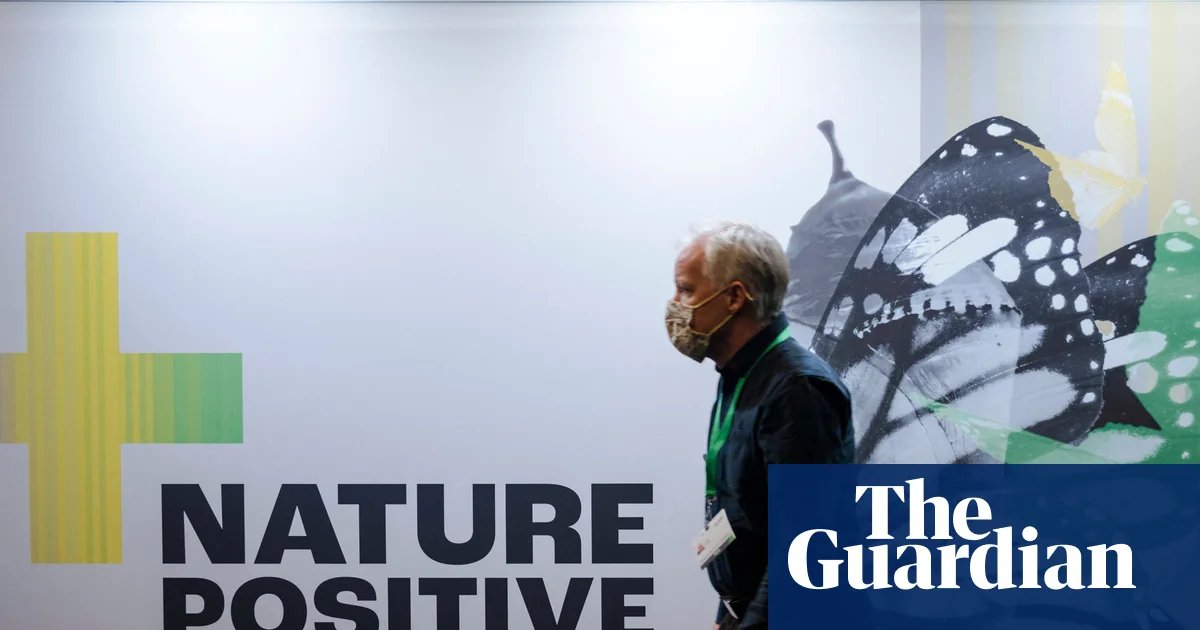
As the global community gathers in Yerevan, Armenia, for COP17, the urgency surrounding the natural world has reached a fever pitch. Nearly every country on Earth is set to reconvene this month to address the accelerating destruction of biodiversity, a crisis that experts warn represents the largest loss of life on the planet since the extinction of the dinosaurs. Despite a landmark, once-in-a-decade deal struck in late 2022, progress has stalled, leaving world leaders to confront an uncomfortable reality: humanity is failing to curb the collapse of the ecosystems upon which it depends.
COP17 serves as the primary forum for assessing the 23 specific targets established in Montreal three years ago. Among these are high-stakes objectives such as protecting 30% of the world’s land and sea by 2030, restoring 30% of degraded ecosystems, and, critically, reforming $500 billion in environmentally damaging subsidies. However, a preliminary assessment from the UN convention on biological diversity suggests that nations are currently off track on every single one of these goals. Since the inception of the biodiversity convention at the 1992 Earth Summit in Rio, governments have failed to meet a single comprehensive UN target for nature.
The pressure on Armenia, as the host nation, is immense. Delegates arrive in Yerevan against the backdrop of the recent COP16 in Cali, Colombia, which concluded in disarray after negotiations overran and failed to reach a consensus on key topics. Observers are now looking for a “serious course correction,” as described by Guido Broekhoven of the World Wide Fund for Nature, to ensure the remaining years of the decade are not as unproductive as those that preceded them.
While the “30 by 30” target—protecting 30% of the Earth for nature—shows signs of technical progress, with estimates suggesting that roughly 27.5% of terrestrial areas have been formally earmarked for conservation, experts warn that administrative metrics are not enough. Effective conservation requires more than just drawing borders on a map; it necessitates the active management of vital ecosystems like rainforests, wetlands, and coral reefs. Furthermore, the goal of reforming harmful subsidies remains largely ignored, as governments continue to provide tax incentives for fossil fuel extraction and state support for agricultural expansion into protected wilderness.
The primary obstacle to meaningful action remains financial. While the 2022 enthusiasm for nature protection was high, the political and economic landscape has shifted significantly. International conservation funding has faced severe headwinds; for instance, the United States, though not a party to the convention, has seen its USAID conservation contributions curtailed. Similar trends in funding reductions across Europe have exacerbated tensions with developing nations, which maintain that ambitious conservation goals cannot be achieved without sustained, delivered financial support.
Private sector engagement has proven equally disappointing. The “Cali Fund,” established in 2025 to encourage corporations to contribute to conservation in return for utilizing genetic resources, has raised only $6,000—a negligible fraction of its $1 billion annual goal. With a packed and complex agenda, negotiators in Yerevan face the dual risk of political gridlock and simple exhaustion. As environment ministers deliberate in the coming days, the window to honor the commitments made in 2022 is closing rapidly, forcing a final reckoning on whether global policy can ever catch up to the pace of planetary destruction.
Disclaimer: This content is auto-generated for informational purposes only.
Source: Read Original News