







The Rise of Compact Engineering in Multitools
The landscape of portable utility tools has long been dominated by established industry giants, most notably Leatherman, which pioneered the modern pliers-based multitool concept. For years, the standard for professional and everyday carry has been the full-size multitool—robust, reliable, and capable of addressing a wide variety of mechanical tasks without requiring a full tool chest. However, a new player, Tokyo-based design studio Tsuchioto Works, is challenging this status quo with a project currently moving through the development pipeline: the Blackjaw.
This device represents a shift toward streamlined, specialized pocket hardware. While the market is saturated with budget-friendly alternatives that often compromise on material quality or ergonomics, the Blackjaw aims to maintain a high level of construction integrity while optimizing for weight and efficiency. Measuring 4.2 inches when folded, the tool presents a competitive footprint against industry benchmarks, positioning itself as a viable candidate for professionals, hobbyists, and anyone who requires a permanent fixture on their belt loop or in their carry kit.
Design Specifications and Material Composition
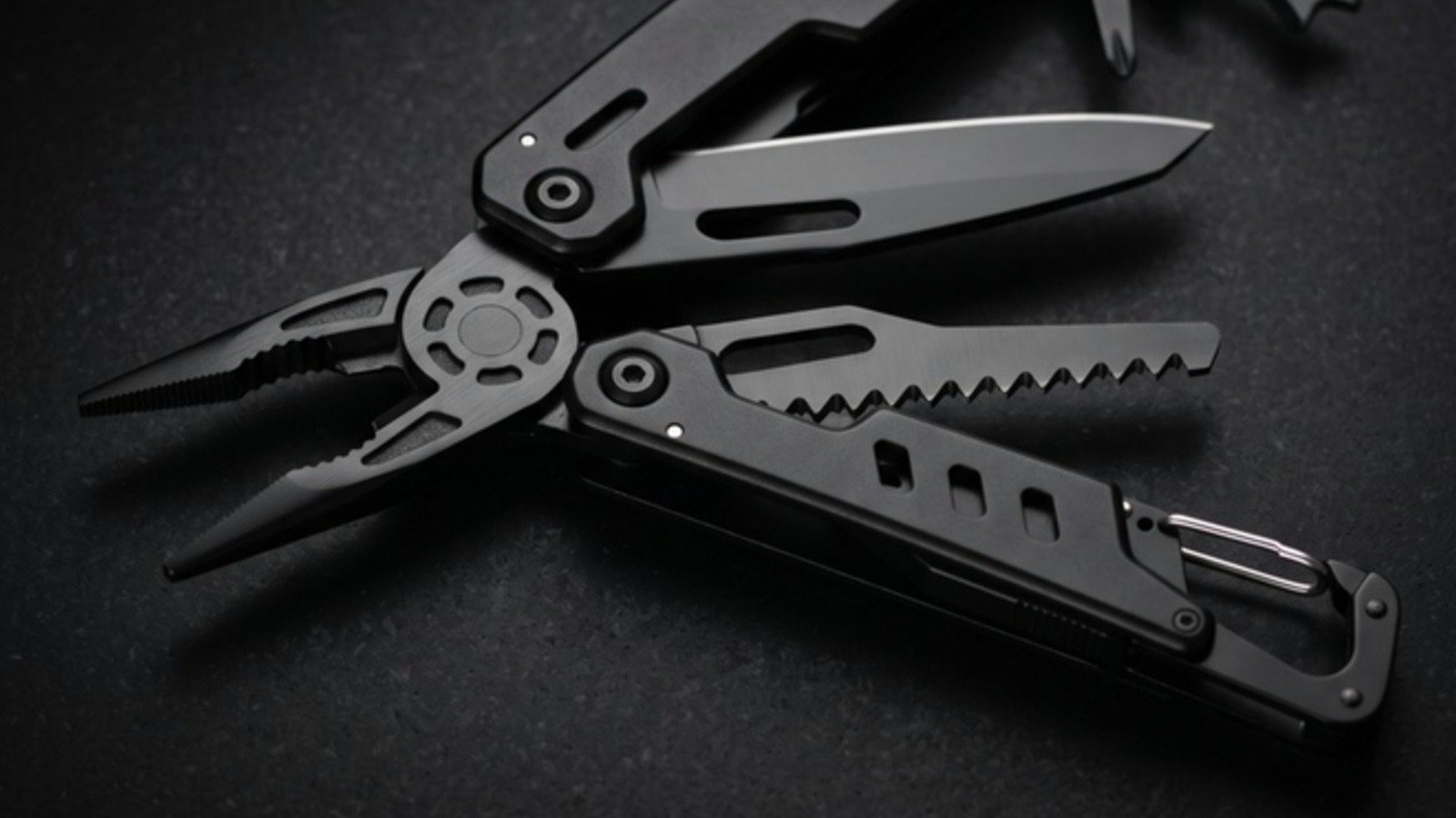
At the core of the Blackjaw’s design philosophy is the integration of premium materials and a user-focused layout. The device features a frame constructed primarily from durable aluminum, providing a lightweight structure that does not feel flimsy in the hand. The critical functional components—the pliers, blades, screwdrivers, and saws—are forged from stainless steel to ensure longevity and resistance to corrosion in various environments.
The physical dimensions are particularly noteworthy. Weighing in at 7.8 ounces, the tool achieves a weight reduction compared to many of its full-size counterparts, which often hover closer to the 8.5-ounce mark. The aesthetic choice to utilize a matte black finish throughout the unit serves more than just visual appeal; it reinforces the tool’s tactical and professional appearance. By placing all external implements on the outer sides of the handles, the designers have prioritized speed, allowing users to deploy the blades or drivers without the necessity of unfolding the plier heads first. This specific architectural choice reduces the number of steps required to begin a task, a critical feature for users working in fast-paced or restrictive environments.
Functionality and Tool Selection
The Blackjaw packs 11 distinct tools into its frame, focusing on a balance between versatility and structural rigidity. The plier assembly is engineered with a dual-purpose geometry: it features long-nose tips for handling intricate or small components, complemented by a toothed section in the center of the jaw specifically designed for gripping nuts, bolts, and pipes. The integrated wire cutters are positioned at the base of the plier head, offering a clean shearing action for standard gauge wiring.
Beyond the pliers, the inclusion of a double-sided saw adds a dimension of utility for tasks involving light construction or forestry, such as trimming small branches or sizing dowels. The toolset is rounded out by a dedicated wire-stripping notch, a blade optimized for utility cutting, and standard can and bottle openers. While some multitools in this class offer swappable bit systems to provide a wider variety of screwdrivers, the Blackjaw follows a fixed design. By eliminating detachable parts, the designers have minimized the risk of component loss during field operations, ensuring that the tool remains a cohesive, functional unit even in high-stress or outdoor scenarios.
Economic Impact and Market Positioning
The strategy behind the Blackjaw’s entry into the market is fundamentally disruptive. By utilizing a crowdfunding model, Tsuchioto Works has been able to offer the tool at an aggressive price point compared to established premium models. Currently, early supporters can secure the device for significantly less than the standard market rates for full-size competitors. This pricing strategy highlights a growing trend where independent design studios leverage direct-to-consumer platforms to bypass traditional retail markups.
However, potential users must weigh this cost-effectiveness against a long lead time. As the project progresses through its manufacturing and refinement phases, the timeline for delivery is projected for early 2027. This extended horizon is a characteristic of complex hardware development within the independent design sector. For the consumer, this creates a trade-off: those who prioritize immediate availability will likely continue to rely on legacy brands, while those who prioritize cost-to-performance ratios and design innovation may find the Blackjaw to be a compelling addition to their long-term toolkit strategy.
Assessing the Utility for Modern Professionals
The ultimate value of a tool like the Blackjaw lies in its ability to handle “micro-tasks” that do not warrant hauling a full tool kit but demand more capability than a standard pocket knife. Whether it is adjusting a loose fastener, stripping an unexpected wire, or performing a precise cut on site, the tool provides the necessary leverage and functionality in a compact package.
The inclusion of a carabiner is a functional necessity for modern daily carry, allowing the tool to remain secured to a belt or backpack, ensuring it is accessible when needed. By balancing weight reduction with a robust stainless-steel build, Tsuchioto Works has entered the market with a product that serves as both a high-utility piece of equipment and a testament to modern industrial design. As the market for compact, high-performance tools continues to evolve, the Blackjaw serves as a prime example of how thoughtful engineering can consolidate multiple mechanical functions into a single, cohesive frame, providing a practical solution for the everyday challenges encountered in both professional and domestic settings.
Disclaimer: This content is auto-generated for informational purposes only.
Source: Read Original News