







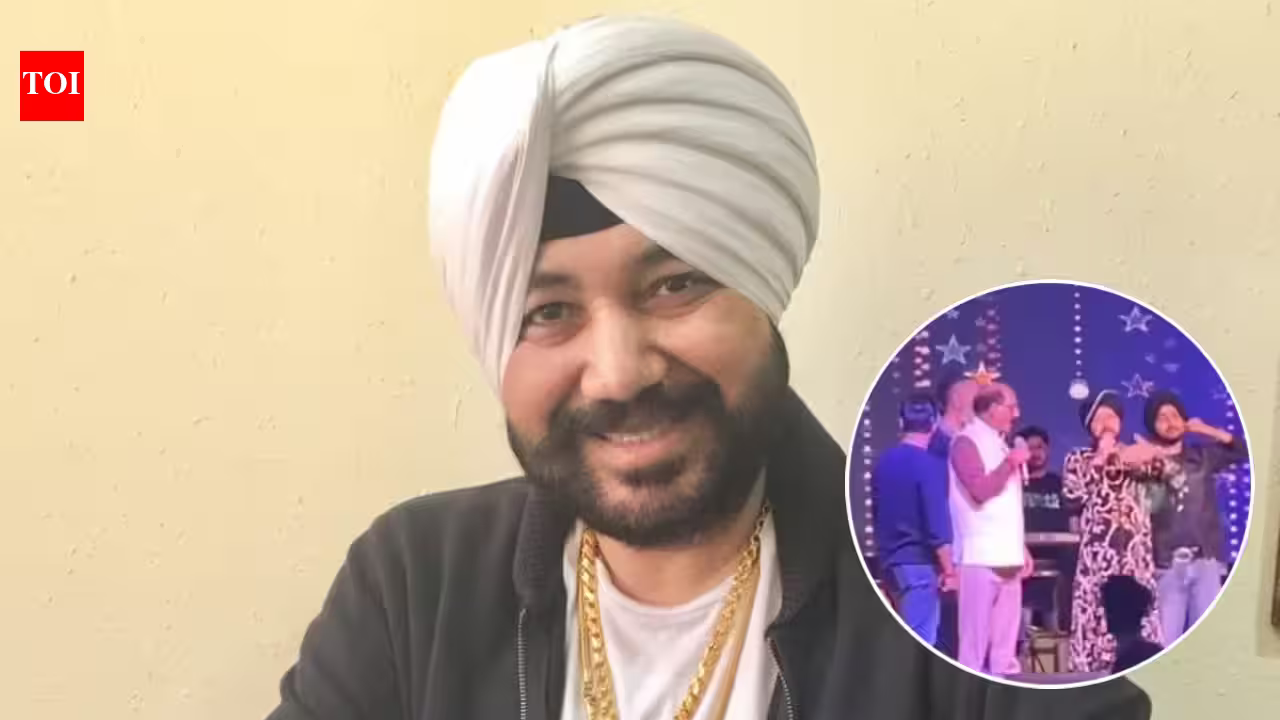
The high-octane energy typically synonymous with a Daler Mehndi performance hit an abrupt and jarring wall this past Sunday in Uttarakhand, turning a celebration of faith into a theater of public confrontation. What was intended to be a night of soulful melodies and rhythmic beats at the Kunjapuri Fair in Tehri district quickly descended into a viral spectacle, leaving audiences across the country debating the intersection of celebrity entitlement, religious sanctity, and the responsibilities of a performer.
The incident, now immortalized in shaky, widely-circulated smartphone footage, captures the moment Uttarakhand cabinet minister and Narendranagar MLA Subodh Uniyal decided to take matters into his own hands—literally. Walking onto the stage mid-performance, Uniyal didn’t just ask for a pause; he delivered a scathing public indictment of the veteran singer, alleging that the sanctity of the Navratri celebrations had been breached by the star’s personal conduct.
## A Clash of Stage Presence and Public Sentiment
The Kunjapuri Fair is no small gathering; it is a significant cultural and religious pillar for the local community, deeply intertwined with the observance of Navratri. As devotees gathered to honor Goddess Durga, the expectations for decorum were clearly high. According to witnesses and the viral clip, Minister Uniyal reached a breaking point, mounting the stage while the performance was ongoing to address the elephant—or rather, the alleged alcohol—in the room.
“There is a Durga Mata programme for Navratri, and you are singing at the event after drinking alcohol, which is not appropriate,” Uniyal declared, his voice cutting through the ambient noise of the event. The accusation was direct and heavy with moral weight. For the attendees, many of whom had flocked to the fair to see a musical icon, the shift from a festive mood to a tense, politically charged standoff was immediate. The minister’s presence on stage wasn’t just an interruption; it was a firm assertion that the religious nature of the venue superseded the professional status of the performer.
## The Weight of Expectation
The tension in the air was palpable as Uniyal continued his reprimand, moving beyond the immediate accusation of intoxication to a broader criticism of the singer’s professionalism. “We called you so that our people could be entertained. You are making a fool of us,” he stated, looking at the singer. He touched upon the very currency that brings artists like Mehndi to such stages: their reputation.
“You have a big name; we should respect that. You were called because you have a big name,” the minister added, highlighting a sentiment shared by many event organizers who pay premium fees for high-profile talent. The implication was clear: the public’s “respect” for a performer is contingent upon the performer’s respect for the public’s values. In the eyes of the minister, the breach of that unspoken contract rendered the performance not only offensive but a betrayal of the audience’s trust.
## Mehndi’s Counter: A Quiet Exit
In the face of such a public shaming, most performers might have lashed out or attempted a spirited defense. Daler Mehndi’s response, however, was notably understated. As the minister’s voice rose, the singer, known for his larger-than-life persona and explosive energy, appeared to pivot toward de-escalation.
In the brief clip, Mehndi is seen interjecting with a visible show of restraint. “Sir, I request you with folded hands… please leave the stage,” he said. It was a moment of awkward power dynamics—the entertainer, usually the master of his domain, being physically directed by a political figure. By choosing not to engage in a shouting match or offer a rebuttal on the microphone, Mehndi effectively ceded the spotlight to his critic, leaving the stage to the minister’s narrative. As of now, the singer has maintained a studied silence regarding the incident, leaving the air thick with unanswered questions and a digital trail that continues to gain traction across social media platforms.
## The Question of Accountability
As the dust settles on the Kunjapuri Fair, the incident has ignited a broader discussion about the boundaries of live performance. When an artist is hired for a religious or community-oriented event, does the nature of the booking change the job description? For many, the answer is a resounding yes. The expectation of sobriety and reverence is often baked into the invitation for such events, even if it isn’t explicitly written in a contract.
However, the lack of independent verification regarding the minister’s claims of intoxication leaves a critical void in this narrative. Did the minister have concrete proof, or was this a case of a politician seizing a public moment to demonstrate his own adherence to local sensitivities? The viral nature of the video ensures that, regardless of the truth, the court of public opinion has already begun its proceedings.
## The Aftermath and Future Implications
For organizers of future religious and cultural fests, the Tehri incident serves as a cautionary tale. It underscores the fragility of large-scale public events and the potential for a single moment to overshadow weeks of planning and cultural intent. It also highlights the growing scrutiny under which public figures operate; in an era where every moment is recorded and shared, there is no “off-stage” for celebrities, especially when they are the headline act of a sensitive regional event.
Daler Mehndi, a veteran of the industry, has weathered many storms in his storied career, but this particular controversy taps into a different kind of pressure—the moral policing of public art. As the video continues to make its rounds, the music world is left to ponder whether this was a genuine breach of conduct or a performative clash between regional authority and celebrity culture. Whatever the case, one thing is certain: the next time a performer takes the stage in Uttarakhand during a major religious festival, the bar for their conduct—and the watchfulness of those in attendance—will be higher than ever before.
Disclaimer: This content is auto-generated for informational purposes only.
Source: Read Original News