







A Disappointing Debut for GPTRACK50
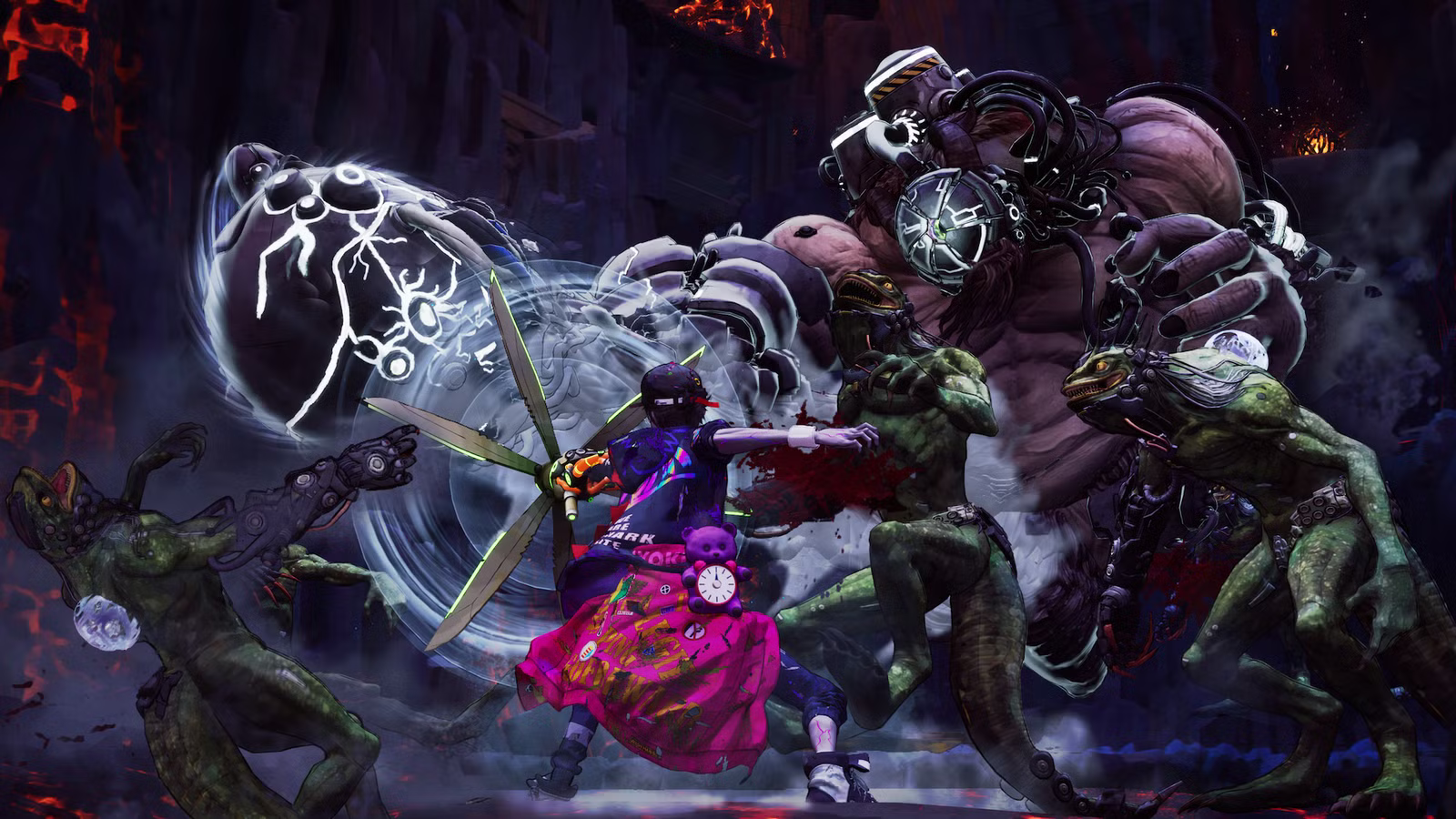
Stupid Never Dies represents the latest endeavor from GPTRACK50, the studio established by former Capcom producer Hiroyuki Kobayashi. Marketed as an action RPG that blends genre tropes with a unique, stylized aesthetic, the title attempts to carve out a niche in the crowded gaming landscape. However, beneath its colorful, collage-inspired visuals lies a game that struggles to balance its ambitious design goals with basic functionality. While the development team clearly intended to provide an experience that emphasizes fast-paced, visceral combat, the final product is hindered by a repetitive structural loop and a narrative approach that feels strikingly detached from contemporary standards.
The Narrative Premise and Its Execution
The story of Stupid Never Dies occupies a strange, often uncomfortable space. Set in a dystopian future where zombies have been relegated to the bottom of a social hierarchy dominated by other supernatural entities, players assume the role of Davy, an undead protagonist. The central objective is unconventional: Davy seeks to resurrect a human woman named Julia, who is preserved in a frozen state.
This premise introduces significant friction. By casting the female lead as a static object of affection—frequently interacting with her through shrine-like displays and digital interactions—the game relies heavily on tropes that many modern narratives have moved to discard. While the developers likely intended for the relationship to be viewed as a darkly comedic element, the execution comes across as dehumanizing. This narrative choice complicates the player’s investment in the protagonist, as the primary motivation for progression feels fundamentally disconnected from the actual gameplay loop of fighting through dungeons.
Structural Challenges in a Faux-Roguelike
Mechanically, Stupid Never Dies utilizes a structure often associated with roguelikes, where players enter procedurally generated, multi-layered dungeons to gather resources and experience points. These runs are governed by a strict time limit, requiring players to manage their exploration carefully before the clock runs out. While the inclusion of permanent progression boosts—such as increased stats and leveling mechanics that persist after death—helps mitigate the frustration of repeated failures, the core loop eventually wears thin.
The game is designed to be played in short, burst-oriented sessions, typically lasting no more than 20 minutes per run. This pace is occasionally disrupted by boss encounters, which heighten the tension of the time-management mechanic. However, because the level layouts often lack variety and the objectives remain largely the same, the experience quickly becomes formulaic. Even with deep RPG elements like gear rarity and passive perks, the lack of environmental diversity makes the later hours of the 30-hour campaign feel like a mandatory grind rather than an evolving challenge.
Combat Dynamics and Technical Constraints
The most significant technical hurdle for the title is its combat system. Despite the expectation of high-octane action, the character animations are notably sluggish. Attacks feel disconnected from player inputs, creating a sensation of heaviness that contradicts the fast-paced nature of the encounter design. The lack of a target-locking mechanism further compounds these issues, leaving the player frequently struggling to strike enemies that move with greater speed and agility than the protagonist.
Compounding this is the reliance on a “Stupid Parry” mechanic—a high-risk defensive maneuver that rewards players for absorbing damage to land a counter-attack. While this serves as a thematic nod to the game’s title, it rarely feels like a precise or satisfying tactical necessity. The transformation system, which allows Davy to consume monster cores to adopt temporary powers, offers a glimpse of what could have been a diverse combat suite. However, because these alternate forms share the same sluggish movement and attack delays as the base character, the transformation feels more like a visual aesthetic change rather than a tactical pivot.
The Impact of Design Misalignment
Stupid Never Dies suffers from a fundamental misalignment between its visual direction and its internal mechanics. Its magazine-collage art style suggests a lively, high-energy experience, yet the gameplay is bogged down by deliberate, slow-paced movement and repetitive dungeon configurations. The decision to stretch the game into a 30-hour experience exacerbates these issues, as the novelty of the combat fades long before the final encounter.
For players seeking a tight, responsive action experience, the current state of the game presents significant barriers to entry. The difficulty in navigating the dungeon floors, combined with the lack of polish in the attack animations, makes even the most well-built character feel cumbersome. While the game provides substantial progression opportunities that reward persistence, the underlying foundation of the combat experience remains a point of contention. Ultimately, while the studio’s attempt to revitalize a classic arcade-style brawler format with modern roguelike elements is clear, the execution falls short of delivering a cohesive or rewarding experience. As it stands, the title serves as a reminder that stylistic flair cannot compensate for sluggish mechanics and a narrative that fails to resonate with a modern audience.
Disclaimer: This content is auto-generated for informational purposes only.
Source: Read Original News