









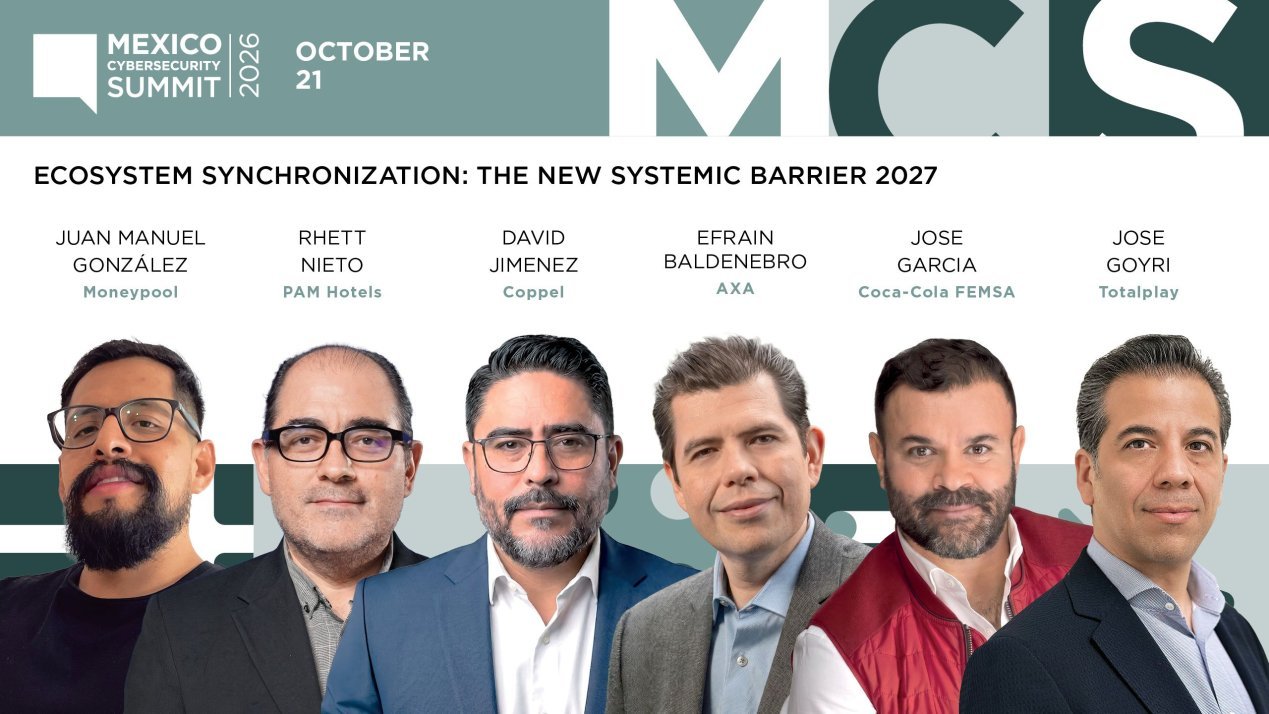
Mexico’s digital security landscape is currently facing a critical structural disadvantage: while cybercriminals operate with seamless, synchronized efficiency, the nation’s corporate defenders remain trapped in a fragmented ecosystem. Industry leaders from major organizations, including Coppel Group, AXA, and Coca-Cola FEMSA, warn that a lack of comprehensive legislation and a punitive regulatory environment are stifling the threat intelligence sharing necessary to protect the country’s growing digital economy.
Speaking at the Mexico Cybersecurity Summit 2026, experts highlighted that Mexico’s current legislative framework is limited in scope, covering only federal public administration rather than the private sector. This gap forces companies to navigate a landscape where reporting a security incident can be misconstrued as an admission of negligence, exposing firms to legal and reputational risks.
The Transparency Paradox and Legal Roadblocks
The absence of a general cybersecurity law has created a “transparency paradox.” Currently, if a company shares technical indicators of a breach with a peer, it risks regulatory backlash. Unlike the United States, which utilizes “safe harbor” models and Information Sharing and Analysis Centers (ISACs) to anonymize threat data, Mexican firms are left to fend for themselves.
David Jiménez, Chief Technology Security Officer at Coppel Group, noted that investors are increasingly sensitive to these risks. When evaluating the regional digital environment, international capital looks at the National Cyber Security Index, where Mexico ranks 72nd compared to Canada’s second and the United States’ 31st. Without a legal framework that encourages transparency, corporate intelligence remains siloed in informal, personal networks rather than being institutionalized for the collective good.
Synchronized Attacks vs. Fragmented Defense
Cyber attackers have evolved into a sophisticated supply chain, where one group handles initial access, another deploys ransomware, and a third manages extortion. Conversely, victims often operate in isolation.
“Defending only yourself is a Pyrrhic victory,” explained Rhett Nieto, Corporate Director of Cybersecurity at PAM Hotels. He noted that even when companies successfully take down fraudulent sites impersonating their brands, the same attackers reappear days later targeting competitors. The consensus among panelists is that the industry requires government-backed, trusted sectoral centers to exchange indicators—such as those formatted via STIX and TAXII—without fear of reprisal.
To mitigate these risks, corporations are tightening their own supply chain dependencies. Totalplay and Coca-Cola FEMSA are implementing rigorous third-party risk management, requiring suppliers to undergo security training, maintain multifactor authentication, and, in some cases, undergo periodic audits to ensure that a vendor’s vulnerability does not become a catastrophic company-wide incident.
Leveraging AI for “Agentic Speed”
As the threat landscape becomes more automated, security teams are turning to agentic AI to bridge the capacity gap. The deployment of AI is no longer optional, as human teams cannot manually keep up with the volume of daily patches and emerging vulnerabilities.
However, industry leaders are adopting a disciplined approach to implementation. AXA, for instance, has established a cross-functional AI Board that includes legal, data privacy, and security stakeholders to vet every agentic solution before it is integrated. At Coppel, AI adoption is mapped to specific security capabilities to ensure that technology enhances response times without introducing new risks.
Ultimately, the shift toward AI is a move toward “agentic speed,” allowing security operations centers to automate monitoring and containment. Yet, the experts agree that technology alone cannot solve the systemic issues. Until the legal framework evolves to foster a culture of collective defense, the “sync” advantage will continue to rest firmly in the hands of the attackers.
Disclaimer: This content is auto-generated for informational purposes only.
Source: Read Original News