







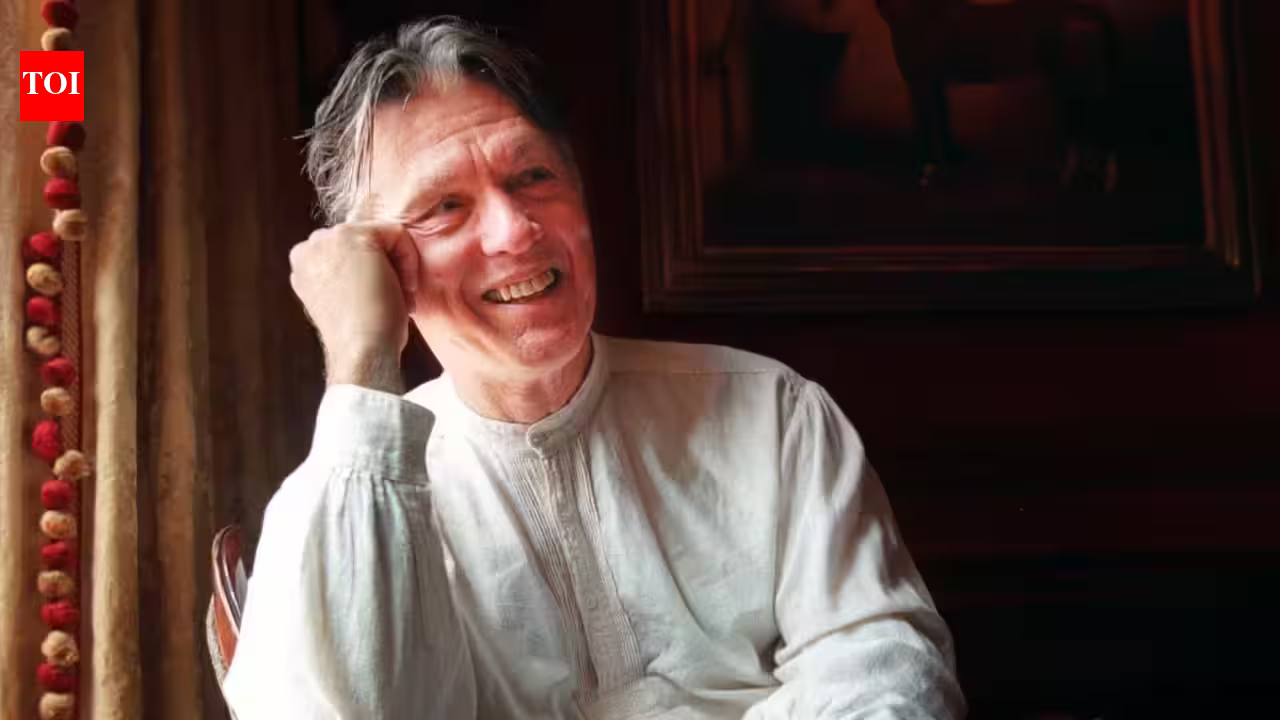
The lights of Hollywood have dimmed just a little further this week as the industry mourns the loss of a true titan. Tom Skerritt, the man who brought an unmistakable sense of grounded authority to over 180 projects, passed away on October 21 at the age of 93. While he will be remembered for the iconic roles that anchored blockbusters like Top Gun and Aliens, it is his quiet, off-screen philosophy—a masterclass in the art of living—that feels particularly poignant in the wake of his passing.
In an era defined by constant noise and the pressure to curate perfect lives, Skerritt’s approach to his own existence serves as a sobering, beautiful counter-narrative. He didn’t just play wise characters; he lived like one.
Finding Peace in the Rearview Mirror
In a candid 2020 interview with Closer Weekly, Skerritt was posed the perennial question that haunts most of us: “Do you have any regrets?” His answer was as disarmingly simple as it was profound. He didn’t offer a list of “what ifs” or mourn missed opportunities. Instead, he framed his life as a cumulative experience.
“I’ve lived through everything, so what regrets could I have? I’m healthy and reasonably sane,” he stated. For a man who had navigated the turbulent waters of Hollywood for over six decades, this wasn’t a dismissal of the hard times, but a validation of them. Skerritt viewed his past—the hits, the misses, the trials, and the triumphs—not as a series of errors, but as the essential architecture of his character. He understood that regret is a tax paid on the past, one that yields no return on investment. By choosing to view his journey as a collection of necessary lessons, he remained free of the emotional baggage that often weighs down those in the twilight of their years.
The Architecture of a Hollywood Icon
To understand the weight of his perspective, one must look at the breadth of his contribution to cinema. Skerritt wasn’t a flash-in-the-pan sensation; he was a working actor’s actor. From his early days in War Hunt (1962) to the high-stakes intensity of Commander Mike “Viper” Metcalf in Top Gun, he mastered the art of playing the “everyman” who possessed an extraordinary amount of grit.
Whether he was navigating the extraterrestrial terrors of Alien or holding the moral compass steady in the beloved television series Picket Fences, Skerritt had an uncanny ability to inhabit roles that demanded gravitas. He didn’t just recite lines; he imbued them with the lived-in wisdom of someone who had spent decades observing the human condition. His filmography is more than just a list of credits—it is a map of a career built on versatility and a refusal to be pigeonholed.
From Detroit to the Silver Screen
Born in Detroit, Michigan, in 1933, Skerritt’s path to the Academy Awards was anything but a straight line. As the youngest of three children, he grew up in a household where the arts weren’t necessarily the focal point. His mother, Helen, was a homemaker, and his father, Roy, was a business executive. Skerritt’s early life was marked by the practical realities of mid-century American upbringing—graduating from Mackenzie High School and attending Wayne State and UCLA, but his journey also included a significant detour into service.
Before the cameras ever captured his face, Skerritt served four years in the United States Air Force, starting in 1953. Enlisting as a specialist, he spent those formative years in the service before turning his gaze toward the creative life. It is perhaps this background—the discipline of the military combined with the intellectual curiosity of his university years—that gave him the “reasonable sanity” he later cited as his greatest accomplishment. He wasn’t a product of an acting school bubble; he was a product of the world.
The Lesson of the Present Moment
Perhaps the most lasting gift Skerritt left behind is his encouragement for others to “make the most of every day.” It sounds like a cliché plastered on an office poster, but coming from a man who had seen the cycles of Hollywood fame turn so many times, it held a different kind of authority.
Skerritt believed that life is in a constant state of flux. He didn’t advocate for grasping at the past or obsessing over the future. Instead, his philosophy was one of active participation—experience as much as possible, let the experiences shape you, and evolve with the changing tides of life. He realized, as many of us eventually do, that the things we fret over in the moment rarely matter in the long run. What matters is the health of the mind and the integrity of the spirit.
A Legacy Beyond the Screen
As we look back on the nearly century-long life of Tom Skerritt, it is easy to fixate on the films and the accolades. Yet, there is something profoundly comforting in knowing that this man found peace not by avoiding the difficulties of life, but by accepting them as the price of admission to a life well-lived.
He leaves behind a legacy that transcends his performances. He taught us that we don’t need to be perfect to be successful, and we don’t need to be free of regrets to be at peace. By simply living with intention, staying “reasonably sane,” and acknowledging that every experience is a building block of our identity, we might all find a little bit of the tranquility that accompanied Tom Skerritt until his final curtain call.
He didn’t just leave us movies to watch; he left us a template for how to handle the inevitable passage of time with grace. Rest in peace, Commander. Your mission is complete, and the lesson remains.
Disclaimer: This content is auto-generated for informational purposes only.
Source: Read Original News