






Bridging the Educational Gap: How RUDHRA is Redefining Braille Accessibility
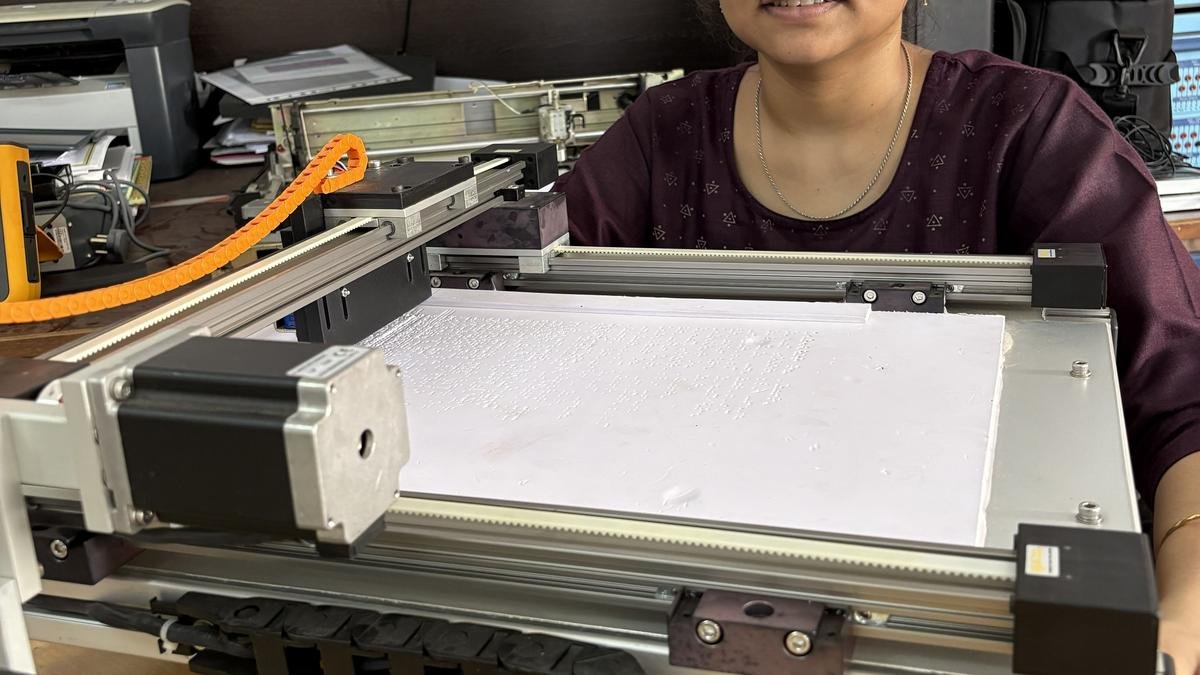
In the landscape of modern educational technology, true innovation is often born not from high-tech complexity, but from the simple, empathetic observation of a classroom challenge. For Lingampalli Himaja, a student at Shri Vishnu Engineering College for Women, a routine visit to a school for the visually impaired served as the catalyst for RUDHRA—an award-winning assistive technology project that is now gaining global recognition.
Identifying the Pain Points in Special Education
The traditional method of Braille transcription, while effective, is physically demanding. During her observation, Himaja noted the strain experienced by students using the conventional slate-and-pin method. Beyond the physical fatigue caused by applying constant pressure to punch individual dots, students faced a cognitive hurdle: they had to understand the mirrored pattern of Braille characters to ensure the paper was legible once flipped.
For students navigating an academic curriculum, these physical and cognitive barriers translate into a slower pace of learning and an over-reliance on external assistance for transcribing materials. Recognizing that these “small difficulties” were, in fact, significant roadblocks to independent learning, Himaja sought a solution that would streamline the transition from information to Braille text.
The Evolution of an Innovation
The development of RUDHRA was an iterative process defined by “user-centric design.” Initially, the team focused on a mechanical interface involving push buttons to generate Braille dots. However, a critical turning point occurred during field testing when a student suggested a more intuitive approach: voice input.
This feedback proved instrumental, shifting the project’s focus toward a voice-enabled system. By allowing users to provide information orally, the machine automates the conversion process, printing the required information in Braille directly. This pivot underscores a vital lesson for young innovators: the most sophisticated technology is useless if it does not address the specific ergonomic and practical needs of the user. Through continuous testing and refinement, the project evolved from a standard college engineering task into a functional, life-changing tool.
Recognition and Policy Implications
Himaja’s decision to enter the James Dyson Award—a global competition that celebrates design engineering—provided the necessary platform to elevate RUDHRA beyond the lab. Being named the India National Winner and securing a place in the Global Top 20 has not only provided validation for her team’s efforts but has also highlighted the importance of inclusive design in educational policy.
As the government and educational institutions look to integrate more accessible technologies into the classroom, innovations like RUDHRA offer a roadmap for “Universal Design for Learning” (UDL). This framework emphasizes that educational tools should be usable by all people, to the greatest extent possible, without the need for adaptation. RUDHRA exemplifies how engineering students can contribute to social policy by lowering the barriers to information access for students with disabilities.
A Lesson for Future Innovators
For students currently balancing rigorous academic schedules, Himaja’s journey offers a clear takeaway: meaningful innovation requires active listening. While engineering principles are the foundation, the success of any educational tool depends on the real-world feedback of the end-user. As RUDHRA prepares for potential scalability, its journey serves as a testament to how student-led research, when aligned with social needs, can provide tangible solutions to longstanding educational inequalities.
By continuing to prioritize empathy alongside technical proficiency, the next generation of engineers can ensure that the tools of tomorrow are as inclusive as they are transformative.
Disclaimer: This content is auto-generated for informational purposes only.
Source: Read Original News