








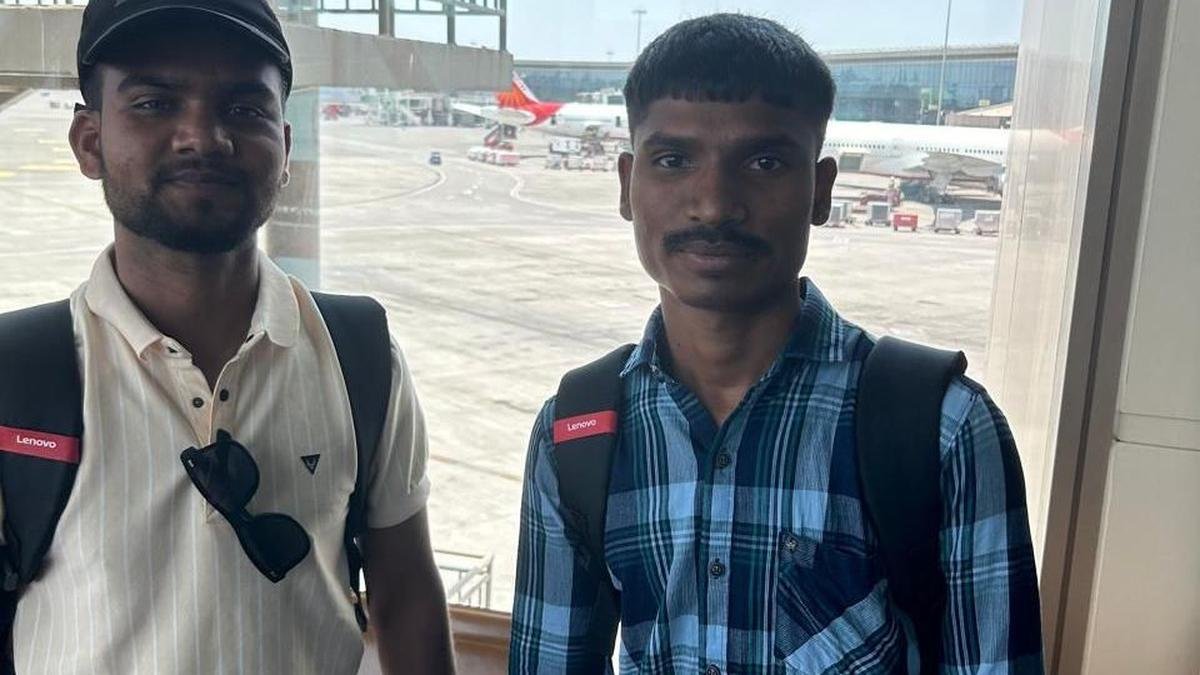
Bridging the Gap: How Global Exposure is Reshaping Rural Aspirations
For many students in India’s remote corners, the horizon of academic potential is often defined by local constraints. However, the story of Ignasiyus Prakash Bada, the first graduate of the Lloyds Infinite Foundation’s Curtin University Sponsorship Programme, serves as a compelling case study on how targeted scholarship policies can transform individual trajectories and regional development.
From Gadchiroli to Global Classrooms
Growing up in Bande, a village nestled near the Surjagarh iron ore mines in Maharashtra’s Gadchiroli district, Bada’s path to international education was fraught with systemic barriers. Born into a family where his father worked as a farmer and his mother served as an anganwadi helper, the concept of studying abroad seemed an impossible ambition.
The turning point arrived through the Lloyds Infinite Foundation’s Curtin University Sponsorship Programme. This initiative is a prime example of industry-led educational investment, covering not just tuition, but the comprehensive costs of accommodation, travel, and living expenses. By removing the financial “gatekeeping” that often prevents rural students from accessing global institutions, the program allowed Bada to pursue a Master’s in Innovation and Entrepreneurship at Curtin University in Perth, Australia.
The Pedagogical Value of International Exposure
Bada’s experience highlights a crucial aspect of higher education: the value of “distance learning” in a literal sense. Transitioning from the rhythms of rural Gadchiroli to the cultural and academic landscape of Western Australia provided more than just a degree.
“The educational and cultural environment in Australia changed my perspective, confidence, and ambitions,” Bada reflects. For students from underrepresented backgrounds, international education often serves as a “forcing function” for self-reliance. Navigating a foreign education system forces students to take ownership of their routine and decision-making processes. Bada identifies this autonomy—the need to “figure out everything by myself”—as perhaps the most valuable component of his education. It transformed his self-perception, moving him from a student who doubted his place on the global stage to one capable of competing with peers from around the world.
Policy Implications: Reversing the Brain Drain
A recurring challenge in educational policy is the “brain drain” phenomenon, where students from underserved regions migrate to urban centers or abroad and never return to their communities. Bada’s trajectory offers an alternative narrative: one of circular migration driven by intellectual capital.
Living thousands of miles away provided Bada with a “critical distance.” Viewing his home district through an objective lens allowed him to identify specific needs and opportunities that he had previously taken for granted. This shift in perspective is exactly what policy-makers strive for when promoting global exposure—the idea that students should return home not just with knowledge, but with an entrepreneurial vision to implement it.
Empowering the Next Generation
Upon completing his degree, Bada chose to return to his roots, joining Lloyds Metals and Energy Ltd. as a Management Trainee. His decision to build a career in the same district where he grew up underscores a vital takeaway for educational stakeholders: when students from remote areas are granted access to high-quality opportunities, their intent is often to contribute to the growth of their own communities, provided the professional infrastructure exists to support them.
Bada’s journey serves as a blueprint for bridging the gap between remote villages and the global knowledge economy. It challenges the conventional wisdom that academic excellence is solely tied to geographical proximity to top-tier urban institutions. Instead, it proves that with the right financial scaffolding and a commitment to nurturing talent from every sector of society, the next generation of innovators can come from anywhere—even a village in Gadchiroli.
Disclaimer: This content is auto-generated for informational purposes only.
Source: Read Original News