









The Convergence of Global Geopolitical Risks and Market Stability
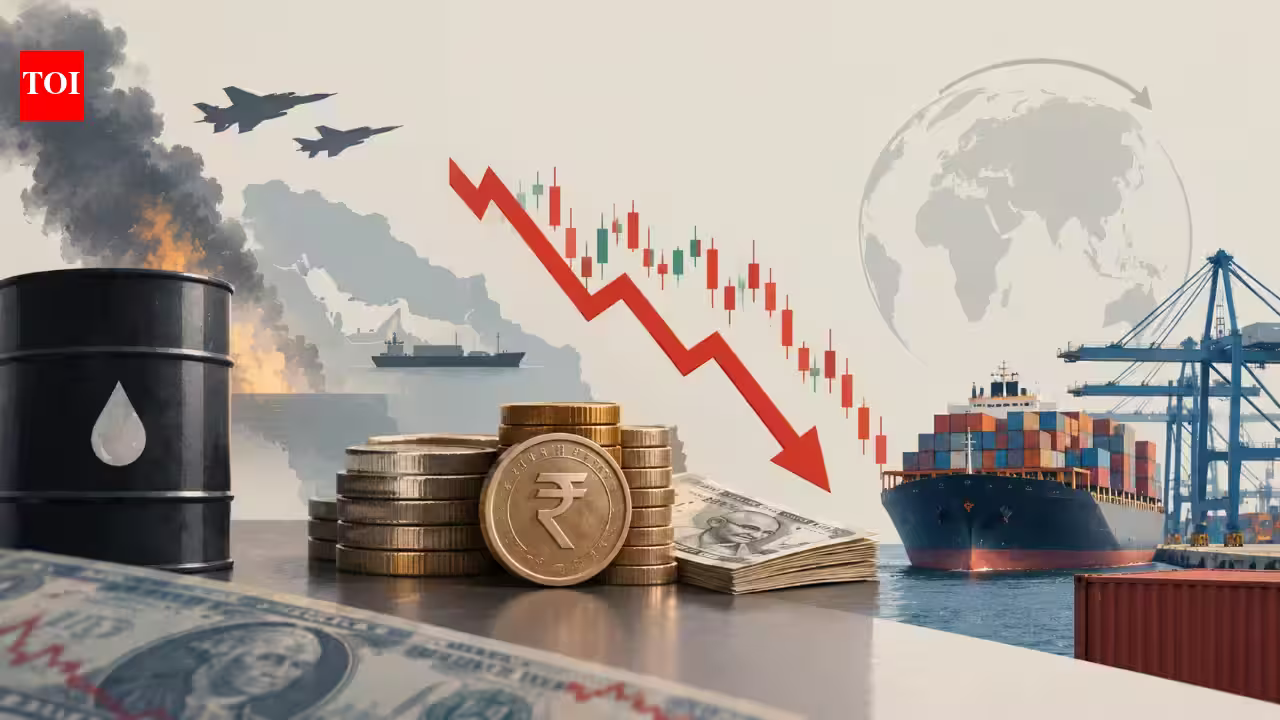
The current state of Dalal Street reflects a complex intersection of macroeconomic headwinds and geopolitical instability that is testing the resilience of Indian equity markets. Investors are currently navigating a landscape characterized by heightened volatility, driven primarily by the escalating tension in the Persian Gulf. As military rhetoric intensifies between key global powers, the uncertainty surrounding oil supply chains has become a primary driver of market sentiment. Brent crude prices have surged toward the 114-dollar mark, a threshold that historically serves as a catalyst for inflationary pressure and fiscal strain within the Indian economy.
For an import-dependent nation like India, soaring crude prices are rarely contained within the energy sector. They permeate the broader economy, complicating the task of fiscal management and threatening the current account deficit. When crude oil prices remain elevated, the immediate impact is a depreciation of the Indian rupee, which has recently trended toward the 95-per-dollar level. This currency weakening creates a feedback loop: foreign investors, fearing erosion in returns due to exchange rate fluctuations, tend to accelerate capital outflows, which further suppresses the valuation of domestic assets. The recent trend of foreign portfolio investors (FPIs) withdrawing capital serves as a stark reminder of the sensitivity of global liquidity to the perceived stability of emerging markets.
Analyzing Foreign Institutional Participation and Valuation Metrics
A critical analytical lens must be applied to the shifting behavior of foreign funds. While the cumulative net selling by FPIs has reached unprecedented levels—surpassing 3.7 lakh crore for the year—the intensity of this selling has shown signs of moderation in recent sessions. The stabilization of US Treasury yields, specifically the decline in the 10-year yield from 5.36 percent to 5 percent, has provided a slight reprieve. In finance, when bond yields moderate, the relative attractiveness of riskier equity assets often improves, offering a brief window of stability for Indian large-cap stocks.
From a valuation standpoint, the current market correction is providing a necessary recalibration. Large-cap companies, which were trading at demanding multiples earlier in the year, are now entering more reasonable valuation territories. Institutional investors are beginning to differentiate between companies with strong fundamentals and those that have been carried upward by speculative momentum. Despite the net selling, the fact that foreign funds turned net buyers in two sessions during the week suggests that institutional capital is not abandoning the market entirely but is instead waiting for a clearer signal regarding geopolitical de-escalation and domestic policy responses. The resilience of these investors often hinges on the expectation that India’s long-term consumption story remains intact despite short-term cyclical disturbances.
The Risks Embedded in Margin Trading Funding
Beyond macroeconomic indicators, internal market mechanics have introduced a new layer of risk that warrants caution. The growth of the Margin Trading Funding (MTF) book, which has doubled to approximately 1.5 lakh crore in the last two years, has become a point of concern for market regulators and analysts alike. MTF allows investors to leverage their portfolios, essentially buying more stocks than their cash capital would normally permit. While this fuels bull rallies, it creates a fragile structure during periods of market correction.
When stock prices decline, the mechanisms of margin calls are triggered. Investors who are unable to deposit additional collateral are forced to liquidate their holdings, creating a cascading effect of selling pressure that drags down midcap and smallcap segments. This “forced liquidation” explains the disproportionate slide in stocks that do not necessarily have negative company-specific news. As the market enters a period of heightened volatility, the MTF segment represents a vulnerable point. Market participants must distinguish between genuine price discovery and volatility driven by technical liquidation, as the latter often creates buying opportunities for long-term investors once the margin-driven selling subsides.
Anticipating the Impact of Large-Scale IPO Listings
As the market grapples with these challenges, the upcoming listing of Jio Platforms acts as a significant liquidity event. With an initial public offering (IPO) that raised over 30,000 crore and saw subscription levels exceed 22 times, the event is widely considered a litmus test for investor appetite in the current environment. The anticipated listing price, projected by market speculators to trade at a premium, highlights that there is still significant idle capital waiting to be deployed into high-quality, large-scale growth stories.
The listing of a company of this magnitude serves a dual purpose. First, it absorbs a substantial amount of market liquidity, which could influence secondary market dynamics in the immediate aftermath. Second, the performance of the stock post-listing will provide clarity on the depth of the market’s current risk tolerance. A successful and stable debut could act as a sentiment stabilizer, signaling to the broader investor community that despite geopolitical headlines, the Indian primary market remains a vital destination for institutional and retail capital. Analysts will be monitoring the trading volume and the participation of institutional buyers on the listing day to gauge the prevailing mood toward growth-oriented tech and infrastructure assets.
Strategies for Navigating Periods of Elevated Volatility
Investors and businesses operating within the Indian equity framework must pivot toward defensive strategies during this period of uncertainty. The primary focus should remain on risk management rather than speculative gains. For retail investors, this means favoring companies with low debt-to-equity ratios and robust cash flows, as these entities are better equipped to weather the inflationary pressures induced by high energy costs. Diversification, once considered a standard advisory, has become a functional necessity to mitigate the localized volatility in midcap and smallcap segments.
Looking ahead, the market will likely be influenced by how the government and the Reserve Bank of India manage the dual challenge of a weakening rupee and external inflationary pressures. Corporate performance in the upcoming quarterly results will be scrutinized for how companies are passing on, or absorbing, the rising costs of raw materials and logistics. The current market phase is one of transition—moving from a period of easy liquidity to one where asset prices must be justified by demonstrable earnings growth. For the astute observer of Indian markets, the current turbulence is a cycle-driven event rather than a structural breakdown of the growth thesis. By focusing on capital preservation and maintaining a disciplined approach to asset allocation, investors can navigate the immediate fluctuations of Dalal Street while remaining positioned for the eventual stabilization of global energy prices and geopolitical calm.
Disclaimer: This content is auto-generated for informational purposes only.
Source: Read Original News