








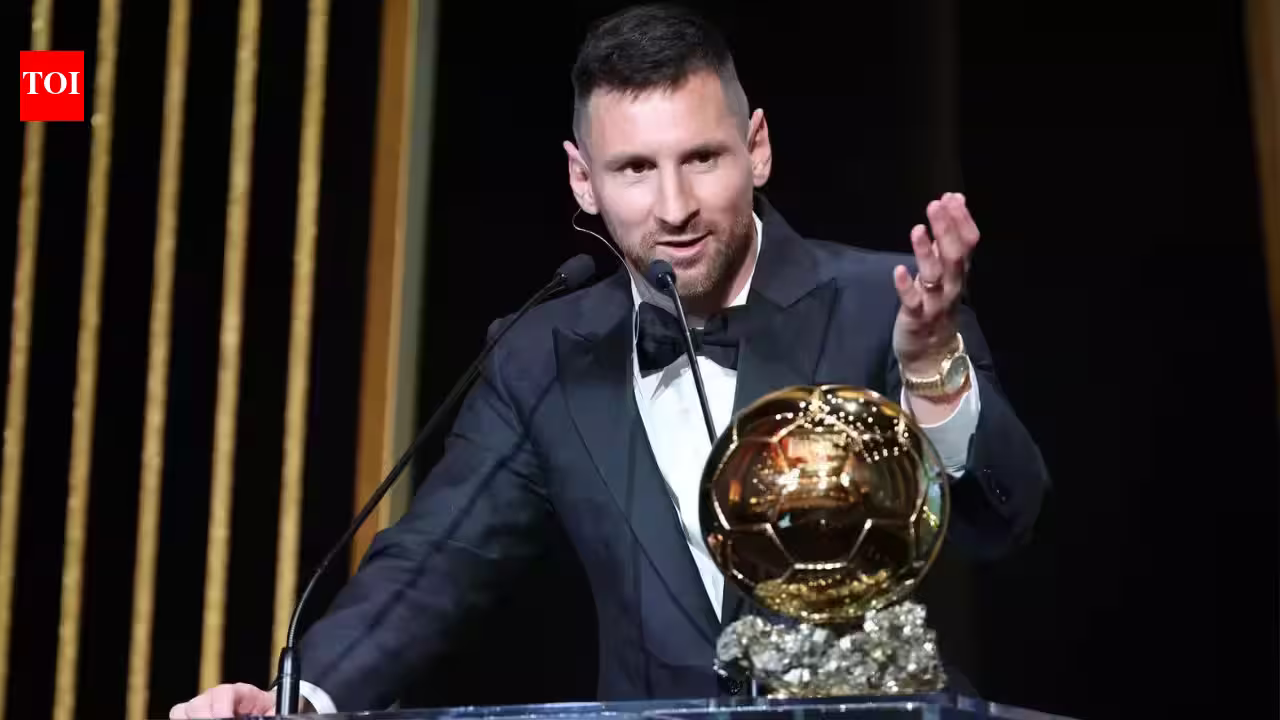
As the football world turns its eyes toward London, the air is thick with anticipation for Monday’s 70th anniversary of the Ballon d’Or. For the first time since 2015, the prestigious ceremony will migrate away from France, setting up shop at the iconic London Palladium at 2000 GMT. While the setting is new, the central narrative remains a compelling clash between the established icons of the past decade and a hungry, burgeoning generation of superstars ready to claim the sport’s ultimate individual prize.
The Dawn of a New Rivalry
The conversation surrounding the 2026 Ballon d’Or is largely defined by the emergence of the next great footballing rivalry: Lamine Yamal and Kylian Mbappé.
Yamal, a prodigy who has already secured “best young player” accolades in consecutive years, enters the evening as a formidable favorite. His resume is bolstered significantly by a stellar campaign that saw him help Spain clinch the World Cup trophy and Barcelona secure the Spanish league title. The football community is watching closely to see if this is the night the baton is officially passed to the young Spaniard.
In the other corner stands Kylian Mbappé, a player whose talent has long signaled he should be the undisputed king of the sport. Despite winning the World Cup in 2018 as a teenager and maintaining his status as one of the world’s most prolific scorers—holding the record for most goals in World Cup history—Mbappé has yet to secure the Ballon d’Or. Following a seventh-place finish last year, the Frenchman is eager to ascend to the top. However, critics point to a lack of recent silverware with Real Madrid and the French national team as potential roadblocks that could see him bypassed once again.
The Endurance of Lionel Messi
Perhaps the most startling aspect of this year’s shortlist is the continued presence of Lionel Messi. Even at 39 years old, and now plying his trade in Major League Soccer with Inter Miami, the Argentine maestro refuses to exit the spotlight.
Messi’s case remains anchored in his uncanny ability to perform on the biggest stages. After leading Inter Miami to their inaugural MLS Cup, he orchestrated another heroic campaign with Argentina, steering them to within a single match of back-to-back World Cup titles. While Argentina ultimately fell to Spain in the final, Messi’s influence on the tournament was undeniable. With a record eight Ballon d’Or titles already in his trophy cabinet, the legendary playmaker remains a constant reminder that class, even in the twilight of a career, is permanent.
Harry Kane: The Silent Contender
If the public narrative favors a youth movement, Harry Kane represents the gritty consistency of a veteran striker at the absolute peak of his powers. The England captain has shattered records in the Bundesliga with Bayern Munich, coupling prolific goalscoring numbers with essential team trophies.
Interestingly, while Kane’s blistering form at the start of the current campaign has stunned fans, those particular goals will not factor into this year’s decision. The voting period was strictly capped on July 19, 2026. Nevertheless, his achievements throughout the designated window—including his stellar performance in leading England to a third-place finish at the World Cup—make him arguably the most dangerous “spoiler” to the Yamal-Mbappé narrative.
A New Era for the Women’s Award
The women’s category promises a changing of the guard, as three-time defending champion Aitana Bonmati is sidelined for the ceremony following a leg fracture sustained last December. With the Barcelona and Spain midfielder removed from contention, the path is clear for another household name to reclaim the throne.
Two-time winner Alexia Putellas enters as the heavy favorite. Having returned to her imperious best to help Barcelona capture both the Champions League and the Spanish league title, the Spain international is well-positioned to secure her third Ballon d’Or. However, she faces stiff competition from elite talents such as Manchester City’s Khadija Shaw and Barcelona’s Claudia Pina, both of whom have enjoyed remarkable seasons.
The Mechanics of Excellence
The methodology behind the Ballon d’Or remains rigorous and transparent. One journalist from each of the top 100 nations in the FIFA rankings is tasked with the selection process. These voters rank 10 players from the 30-man shortlist, with their first-place choice earning 15 points and subsequent selections earning incrementally less.
The criteria are designed to reward the complete athlete: individual performances are scrutinized alongside team success, as well as the subjective measures of “decisive and impressive character” and the demonstration of “class and fair play.” In the event of a deadlock, the award is decided by the number of first-place votes received, a fail-safe designed to ensure the most deserving player stands alone at the top of the podium.
As London prepares to host this historic gala, the outcome remains shrouded in suspense. Whether the night belongs to the rising tide of Yamal and Mbappé, the unrelenting consistency of Kane, or the enduring brilliance of Messi, the 70th anniversary of the Ballon d’Or is destined to be a watershed moment in football history.
Disclaimer: This content is auto-generated for informational purposes only.
Source: Read Original News