







The story of Tina Vaikunthe, a Class 9 student from Khetapur, Maharashtra, captured national attention in August 2026. Her daily seven-kilometer trek to secondary school in Dongargaon highlights a systemic challenge faced by millions of Indian students: the gap between the Right to Education (RTE) Act’s ideals and the reality of the commute. While Tina’s story led to the introduction of a dedicated State transport bus service, her experience serves as a lens through which to view a broader national crisis in educational accessibility.
The Distance Gap: Policy vs. Reality
The RTE Act of 2009 mandates the “neighbourhood school” concept, requiring governments to provide primary schools (Classes 1–5) within a one-kilometer radius and upper primary schools (Classes 6–8) within three kilometers. However, the National Household Travel Survey (NHTS), conducted by the National Statistics Office (NSO), reveals that these targets are often missed.
Data from the survey—covering nearly half a million households—shows that over 60% of students aged 6 to 14 travel more than one kilometer to reach their classrooms. For older students (aged 15 to 29), the challenge is steeper: over 75% commute more than a kilometer daily. This disparity is largely due to the urban-centric concentration of secondary and higher education institutions. The 2026 Economic Survey corroborated this, noting that while 38.1% of urban schools offer secondary education, only 17.1% of rural schools do, forcing rural students to travel longer distances for their studies.
Modes of Transport and Economic Burden
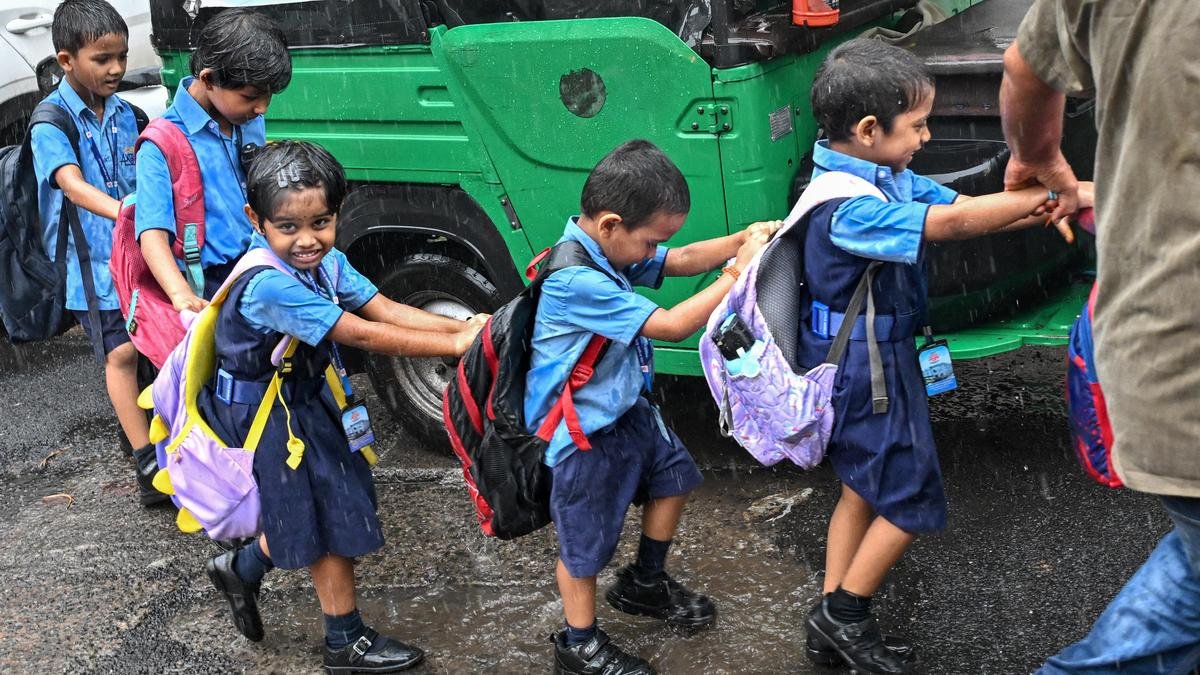
For children aged 6 to 14, walking remains the primary mode of transit, with nearly 50% covering over a kilometer on foot. While the Supreme Court of India noted in a 2017 judgment that forcing children to walk long distances is contrary to the spirit of the RTE Act due to the physical fatigue and stress involved, infrastructure has lagged behind the legal mandate.
As students age, reliance on transit evolves. Buses are the most common transport for those aged 15–29, while bicycles remain the most significant private mode of transport for students of all ages, particularly in rural areas. However, this accessibility comes at a cost. The NHTS found that urban families spend an average of ₹617 per month on school commutes, while rural families spend ₹361. Given that the average annual education expenditure per child in government schools is just ₹2,863, these travel costs represent a substantial slice of a family’s budget, potentially threatening retention rates.
The Path Forward: Safety and Infrastructure
The implications of these long, often arduous commutes extend beyond fatigue. With the Ministry of Road Transport and Highways reporting over 10,000 minor fatalities in road accidents in 2024, the commute to school is a significant safety concern.
Educational experts suggest that improving student retention requires a multi-faceted approach:
- Infrastructure: Developing dedicated, safe footpaths and cycle lanes near school zones.
- Transit Policy: Increasing the availability of public transport, similar to the intervention seen in Tina Vaikunthe’s village, to reduce travel time, which currently averages 22–26 minutes across the country.
- Safety Regulations: Stricter enforcement of speed limits in school zones and better oversight of over-crowded school buses and autorickshaws.
Ensuring that students spend less time navigating dangerous roads and more time engaging with their curriculum is essential for improving academic productivity and curbing dropout rates. As India continues to expand its educational infrastructure, the focus must shift from simply building schools to ensuring that the journey to those schools is safe, affordable, and inclusive.
Disclaimer: This content is auto-generated for informational purposes only.
Source: Read Original News