









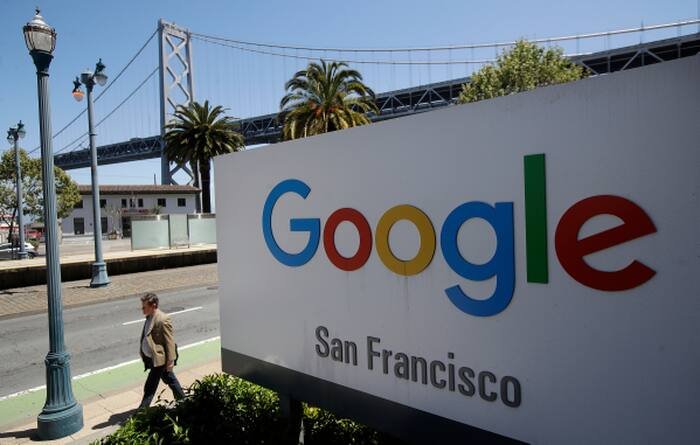
Alphabet Inc., the parent company of Google, faced a turbulent reception on Wall Street Wednesday evening. Despite reporting significant growth in its quarterly financial figures, the tech giant saw its stock price tumble by approximately 9% in after-hours trading, falling to $295.20 as investors reacted to results that failed to meet lofty market expectations.
The Mountain View-based corporation reported a total revenue of $127.58 billion for the third quarter—a robust 25% increase compared to the same period last year. However, this impressive top-line growth was not enough to satisfy analysts surveyed by FactSet, who had projected a slightly higher target of $127.97 billion.
## Profitability Pressures and Investment Losses
The company’s bottom line took a more noticeable hit. Net income for the July-September period dropped to $26.17 billion, a significant decline from the $34.98 billion recorded during the same timeframe in 2025. A primary driver behind this volatility was an $8.7 billion loss stemming from equity investments.
Earnings per share (EPS) were reported at $2.12, trailing significantly behind the average analyst forecast of $3.01. While the direct comparability of these figures remains a point of scrutiny for financial observers, the clear gap between performance and expectation served as the primary catalyst for the sell-off in extended market hours.
## AI Momentum: The Gemini Milestone
Despite the financial shortfall, leadership at Alphabet remains bullish on the company’s technological trajectory, particularly regarding artificial intelligence. CEO Sundar Pichai sought to reframe the narrative by highlighting the company’s “full stack” approach to computing, noting that Alphabet has officially achieved a half-trillion-dollar revenue run rate.
The brightest spot in the quarterly report was the performance of Gemini, Google’s flagship artificial intelligence assistant. Pichai announced that Gemini has officially surpassed one billion users, marking it as the fastest-growing product in the history of the company. This milestone serves as a critical proof point for Alphabet’s aggressive pivot toward AI integration across its ecosystem—a strategy that has required massive capital expenditure over the past year. By embedding AI capabilities into search, cloud services, and enterprise software, Google aims to solidify its dominance in a landscape increasingly defined by generative models.
## Navigating a Challenging Market Climate
The market’s reaction underscores the current high-pressure environment for “Big Tech.” Investors have become increasingly sensitive to the balance between heavy investment in AI infrastructure and immediate fiscal returns. While Alphabet’s 25% year-over-year revenue growth is objectively strong, the market’s punitive response suggests that analysts are scrutinizing whether these massive AI investments are translating quickly enough into bottom-line profitability.
For the remainder of the fiscal year, all eyes will be on whether Google can stabilize its EPS and mitigate the volatility caused by non-core equity investments. As the company continues to scale its AI products to its billion-strong user base, the challenge will be demonstrating that its rapid innovation cycles can eventually yield the margin expansion that shareholders clearly demand. For now, the disparity between the company’s stated momentum and its latest balance sheet has left Wall Street unconvinced, setting the stage for a period of heightened scrutiny during the upcoming earnings calls.
Disclaimer: This content is auto-generated for informational purposes only.
Source: Read Original News