








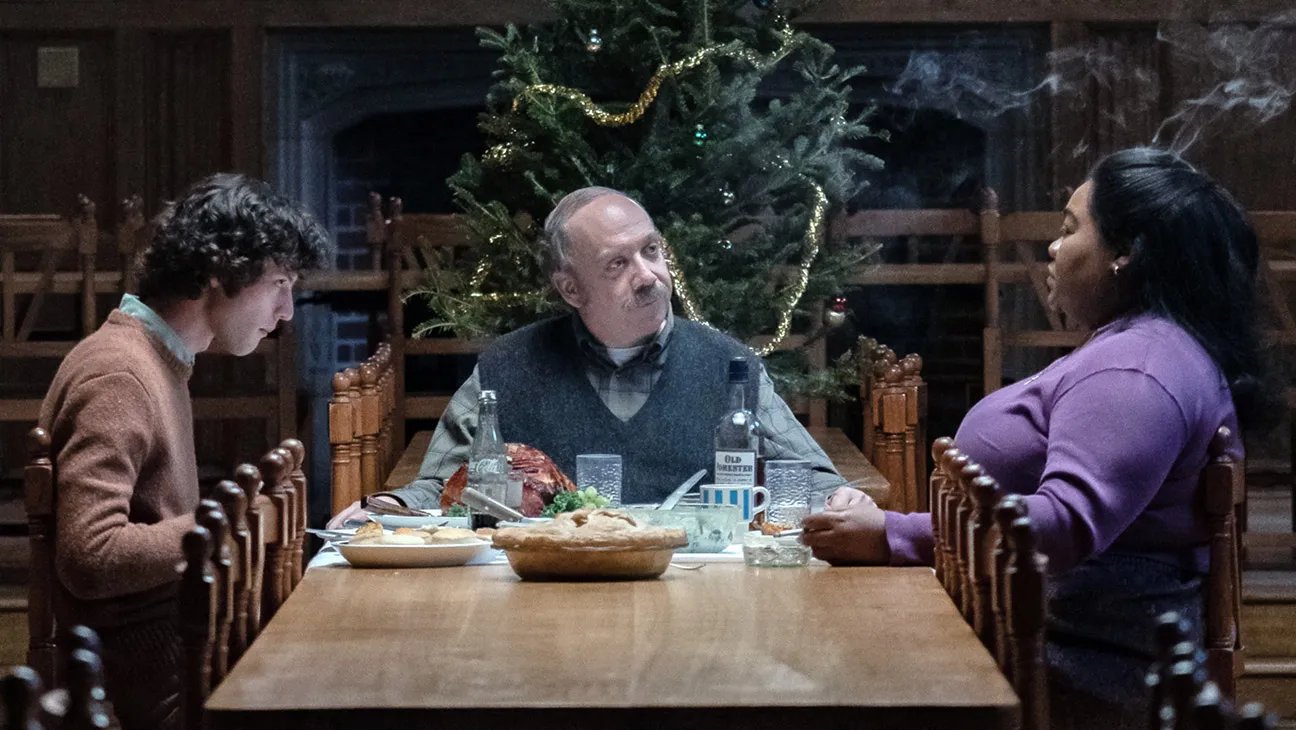
A high-stakes legal battle has erupted in the heart of Hollywood as Luca screenwriter Simon Stephenson has filed a copyright infringement lawsuit against Oscar-winning director Alexander Payne. The suit, filed in a California federal court, alleges that Payne’s critically acclaimed 2023 film The Holdovers was built upon the “blueprint” of Stephenson’s own unproduced screenplay, Frisco.
Allegations of Intellectual Property Theft
Stephenson, known for his work on Paddington 2, claims that Payne gained access to his script—which landed on the prestigious Black List in 2013—on two separate occasions: once in 2013 and again in 2019. According to the complaint, Payne allegedly transposed major narrative elements from Frisco into The Holdovers, incorporating only superficial modifications to disguise the origin of the material.
The lawsuit names a wide array of defendants, including Payne, screenwriter David Hemingson, production companies like Gran Via and Mirax, and distributors Universal and Focus Features. Stephenson is seeking unspecified damages and a court order to halt further exploitation of the film, which was a significant box office success, grossing roughly $46 million.
Examining the Evidence: “Stylistic Traces”
The complaint highlights specific “stylistic traces” that Stephenson claims point to plagiarism rather than coincidental overlap. One piece of evidence involves the recurring use of the term “Under Black” to denote scene transitions in The Holdovers scripts. Stephenson’s legal team argues that this is a persistent, technical error in his own writing habit, rather than a common industry choice.
Furthermore, the suit points to a bizarre narrative residue: a character in The Holdovers suddenly mentions a “medical conference” without any contextual justification. Stephenson asserts that this dialogue is a direct carryover from Frisco, where the protagonist’s attendance at a medical conference serves as a central plot point. Additionally, both scripts feature a curmudgeonly lead character tasked with supervising a teenager, a dynamic Stephenson argues was lifted directly from his work.
The Shifting Landscape of Copyright Litigation
This lawsuit arrives during a period of increased activity in intellectual property litigation within the entertainment industry. Recent rulings from federal appeals courts have made it harder for judges to dismiss such cases early, often citing that “reasonable minds could differ” regarding substantial similarity. This shift has emboldened creators to challenge major studios, though the threshold for securing a jury verdict remains dauntingly high.
While Payne has publicly stated that his primary inspiration for the boarding school setting was the 1935 French film Merlusse, Stephenson’s suit contends that the “architecture” of the story was pilfered from his script.
The Broader Industry Context
The case is being closely watched by the industry, especially as legal teams increasingly rely on pattern recognition—looking for specific, idiosyncratic “habits” rather than just broad plot similarities. As artificial intelligence and large-scale data analysis become more prevalent in script development and vetting, the ability to trace specific narrative markers or structural anomalies has become a new frontier in legal discovery.
Despite the WGA initially declining to intervene in the dispute, citing that copyright infringement falls outside its arbitration scope, Stephenson’s move to federal court signals a broader trend: creators are no longer waiting for industry guilds to solve internal disputes. Instead, they are turning to the courts to protect the “blueprints” of their creative output in an increasingly litigious media landscape. Whether this case concludes in a settlement, as seen with The Shape of Water, or proceeds to a verdict, it underscores the ongoing friction between artistic inspiration and intellectual property ownership.
Disclaimer: This content is auto-generated for informational purposes only.
Source: Read Original News