









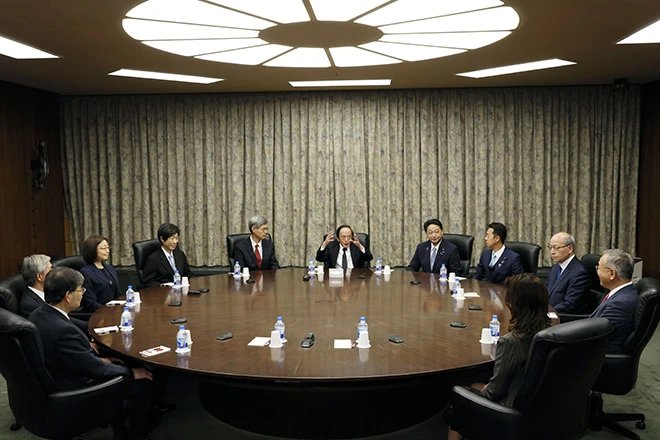
TOKYO — In a landmark shift for the Japanese economy, the Bank of Japan (BOJ) announced on October 30 that underlying inflation has officially reached its 2 percent price stability target. This milestone marks the first time the central bank has achieved the goal since it was first established in 2013, ending a grueling 13-year pursuit of a target that once seemed elusive.
The declaration represents a major turning point for the nation’s monetary policy. For over a decade, the BOJ maintained aggressive large-scale monetary easing, attempting to pull Japan out of a deflationary spiral. Following the announcement, the central bank signaled that its primary objective will now pivot: rather than pushing prices upward, the focus will shift to maintaining a stable inflation rate around the 2 percent benchmark.
“Underlying CPI inflation is at a level that is generally consistent with the price stability target of 2 percent, and is expected to remain at around that level,” the BOJ stated in its latest Outlook for Economic Activity and Prices report. This development came significantly earlier than previous projections, which had anticipated reaching this milestone between the second half of fiscal 2026 and fiscal 2027.
Despite the breakthrough, the BOJ opted for caution at its latest Monetary Policy Meeting, choosing to leave the policy interest rate unchanged at approximately 1.25 percent. Financial analysts suggest this pause is intended to allow the bank to evaluate the cumulative impact of its rate hike in September. However, the bank hinted that further rate hikes remain on the table to ensure that inflation stays anchored at the target and does not overshoot.
In a move to normalize its balance sheet, the BOJ also announced an acceleration in the liquidation of its massive exchange-traded fund (ETF) holdings. These assets were accumulated during years of unconventional stimulus. Under the revised strategy, the bank will increase its annual sales volume to approximately 860 billion yen ($5.5 billion), starting in January 2027. This move significantly compresses the timeframe for shedding these assets, reducing the projected liquidation period from 112 years to roughly 43 years.
While the attainment of the 2 percent target is being celebrated as a success for the monetary framework introduced during the administration of the late Prime Minister Shinzo Abe, the BOJ remains circumspect. Officials emphasized that the goal must be realized in a “sustainable and stable manner.” The challenge now facing Governor Kazuo Ueda and the policy board is to manage a delicate exit from years of extraordinary stimulus without triggering economic volatility.
As Japan moves into this new economic chapter, markets will be watching closely to see how the BOJ balances the need for interest rate normalization against the risks of cooling an economy that has only just begun to experience consistent, inflation-driven growth.
Disclaimer: This content is auto-generated for informational purposes only.
Source: Read Original News