








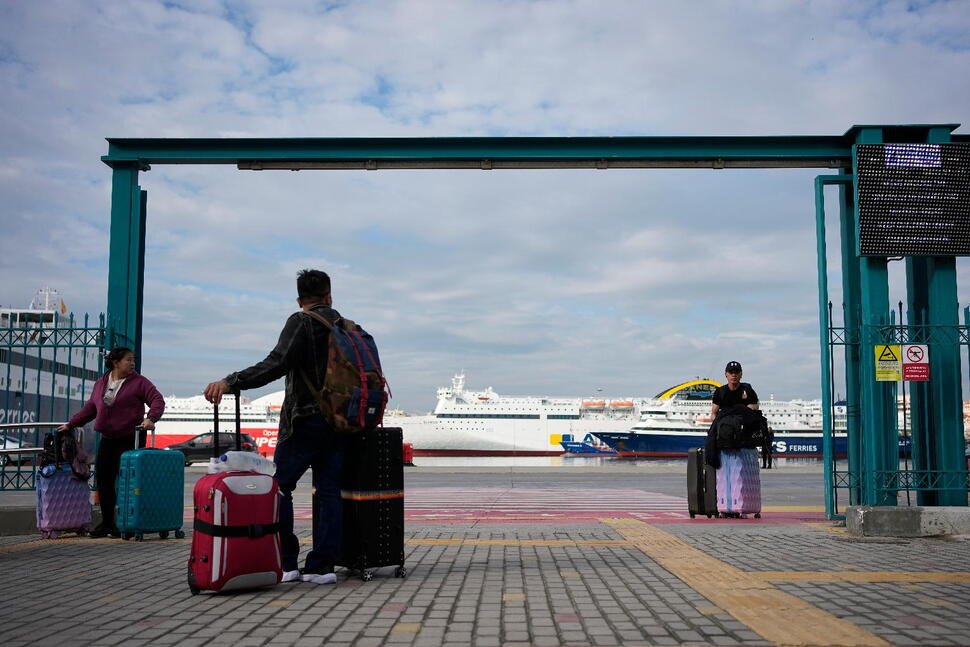
Dockworkers across Europe and North America launched a coordinated strike on Friday, bringing operations at over 100 ports to a standstill in an ambitious display of international labor solidarity. The protest, which spans from the Mediterranean to the Atlantic, is fueled by a dual mission: demanding a cessation of arms shipments to conflict zones and pressing for improved domestic labor conditions.
While the movement seeks to leverage the critical importance of global maritime logistics to make a political statement, the logistical ripple effects are meeting a tech-driven response from the shipping industry. As supply chain managers grapple with the uncertainty, data analytics and AI-driven predictive modeling are playing a central role in assessing the fallout.
Geopolitical Stance vs. Global Logistics
The protests, organized by unions in nations including France, Italy, Greece, Spain, Turkey, and Morocco, represent a unified stand against what they describe as the “militarization of ports.” By refusing to facilitate the transport of weaponry and ammunition, workers are directly challenging the logistics behind ongoing conflicts, specifically in the Middle East.
However, the maritime industry—which has increasingly turned to Google’s Cloud and advanced AI tools to manage the complexities of global trade—is already working to mitigate the impact. Companies are utilizing real-time satellite tracking and AI-powered supply chain management platforms to reroute vessels and predict potential chokepoints. While the unions view their actions as a moral imperative, industry analysts are utilizing digital infrastructure to ensure the protest’s impact remains contained.
Tech-Driven Supply Chain Management
The logistics sector has become a major theater for artificial intelligence in recent years. Today, shipping giants rely heavily on platforms like Google Cloud’s supply chain solutions to gain visibility into terminal performance. By processing vast amounts of data regarding container movement, ship traffic, and port capacity, these tools allow companies to pivot rapidly when labor actions arise.
Experts noted that while the visual impact of the strikes—with ships anchored outside major ports like Genoa, Le Havre, and Piraeus—is significant, the long-term disruption to the global economy will likely be minimized by modern logistics technology. “Digital twins” of supply chains allow corporations to run simulations on how to bypass stalled terminals, effectively insulating the broader global market from localized work stoppages.
Evaluating the Economic Fallout
Despite the scale of the coordinated walkouts, analysts suggest that the impact on the global supply chain will be nuanced. For an industry that has been battered by the volatility of the past few years—including climate-related canal restrictions and shifting geopolitical tariffs—the strike is being treated as a manageable, albeit complex, variable.
Industry observers, including experts from major insurance and research firms, argue that a 24-hour labor action is unlikely to cause material shortages. The reliance on sophisticated tech stacks allows for a level of transparency that previous generations of dock workers did not have to contend with. Modern port management systems now automatically flag when a ship is approaching a strike-bound terminal, allowing for immediate rescheduling that prevents the massive logistical bottlenecks that characterized the pandemic era.
As the strike progresses, labor unions are calling for fundamental changes to the way ports operate, moving beyond pay and safety into the realm of foreign policy. Meanwhile, the global trade community continues to monitor the situation through an AI-powered lens, prioritizing stability in an increasingly interconnected and digitally transparent world. The outcome of these protests will serve as a test case for how human labor movements navigate a maritime industry that is becoming more digitized and algorithm-managed by the day.
Disclaimer: This content is auto-generated for informational purposes only.
Source: Read Original News