








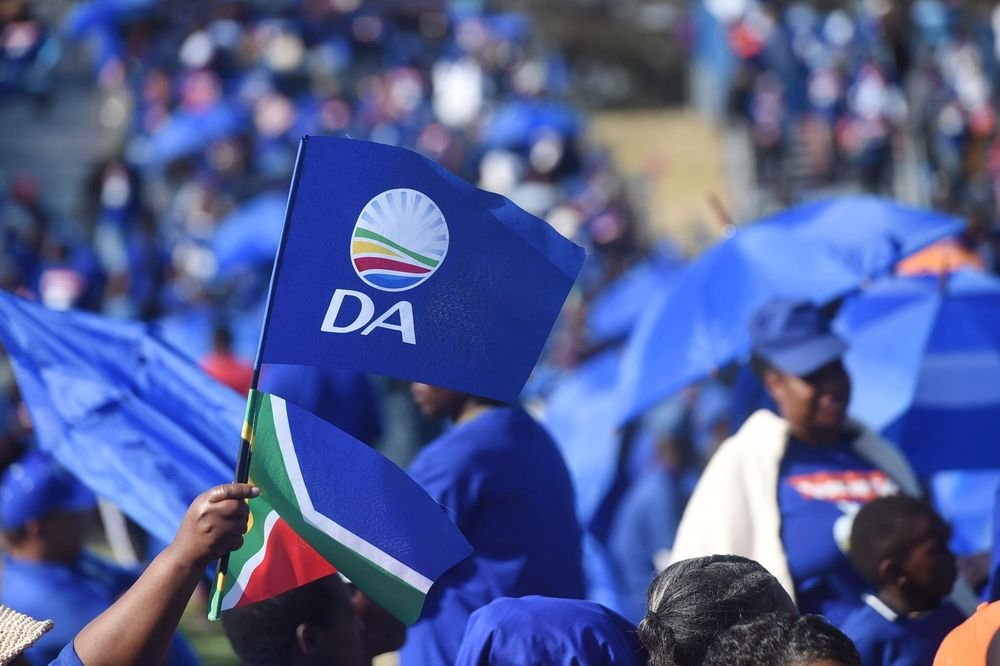
BLOEMFONTEIN – The Electoral Court has dealt a significant blow to the Democratic Alliance (DA) after dismissing its application to challenge the legality of one-name proportional representation (PR) lists submitted by four major political parties.
The ruling, delivered by Acting Judge Mangcu-Lockwood on Friday, brings a temporary halt to a legal battle that has loomed over the upcoming November 4 elections. The DA had sought to invalidate the candidate lists submitted by ActionSA, the EFF, the MK Party, and the GOOD party, alleging that these parties engaged in bad faith by deliberately concealing their candidates from the electorate.
The dispute centered on the practice of parties fielding only a single candidate for PR lists in municipalities where they are simultaneously contesting thousands of ward seats. The DA argued that this “one-name strategy” is a loophole used to keep candidates hidden from voters until after the ballots are cast and the seats are allocated. According to the DA, this prevents voters from making informed decisions, as they are essentially casting a vote for “unknown” representatives who may be appointed to council seats after the results are known.
DA federal council chairperson Ashor Sarupen had previously condemned the practice, arguing that the legislative provisions allowing for the supplementation of candidate lists were intended to accommodate unforeseen surges in electoral support, not to function as a strategic campaign tactic. Sarupen maintained that voters have a fundamental right to know who they are electing before they enter the polling booth.
During the proceedings, which were heard on October 13, the DA claimed that the uniformity of this strategy across the four parties suggested a calculated effort to manipulate the electoral process. Specifically, the DA pointed out that the EFF, ActionSA, and the MK Party had each fielded extensive lists of ward candidates while maintaining minimal, single-name PR lists in major metropolitan areas like Johannesburg.
In its judgment, however, the court rejected the DA’s request to declare these lists unlawful or a breach of the Constitution, the Local Government: Municipal Electoral Act, and the Municipal Structures Act. The court also declined to review the decision made by the Electoral Commission of South Africa (IEC) on September 16, which had officially published the contentious party lists.
While the court dismissed the application regarding the validity of the lists, it stopped short of a full resolution on the broader legal implications, opting to postpone indefinitely the DA’s constitutional challenge against the IEC’s processes. In a notable procedural move, the court made no order as to costs, effectively leaving the financial burden of the legal challenge with each respective party.
As the November 4 elections approach, the ruling clears the way for the affected parties to proceed with their submitted lists, while the DA’s constitutional grievances remain in legal limbo.
Disclaimer: This content is auto-generated for informational purposes only.
Source: Read Original News