









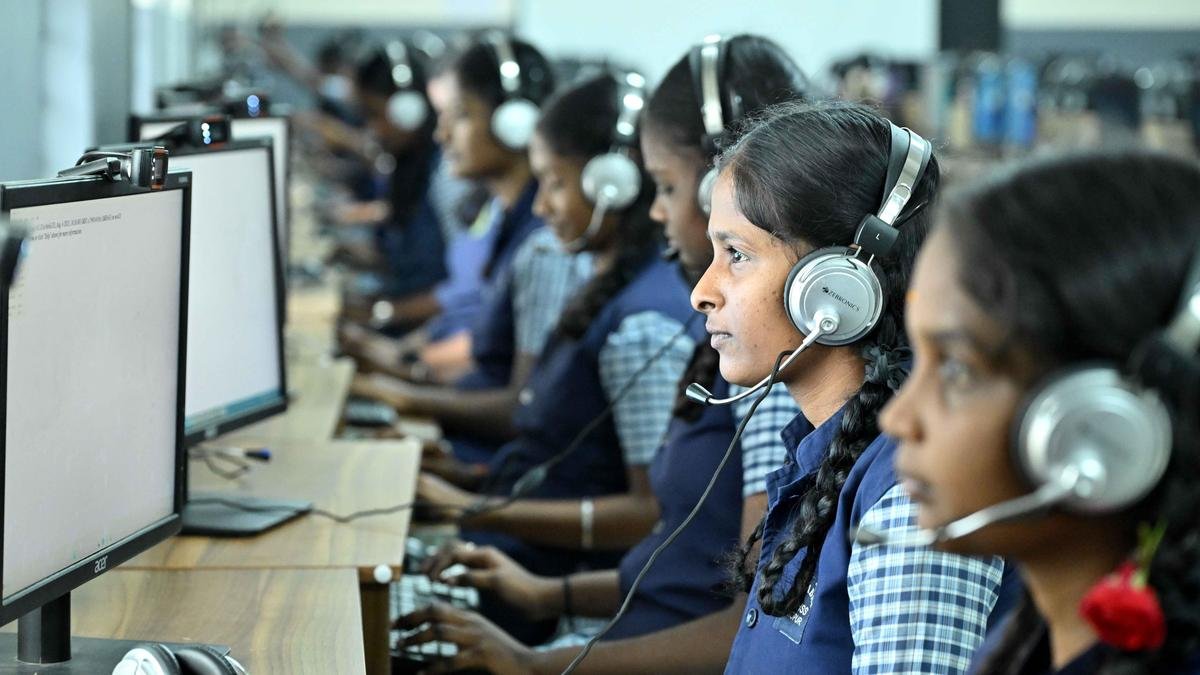
The landscape of Indian primary and secondary education is undergoing a seismic shift. Following a pivotal policy directive from the Union Education Ministry, the Central Board of Secondary Education (CBSE) is set to roll out a comprehensive curriculum centered on Computational Thinking and Artificial Intelligence (AI) for students in Classes 3 through 8. Starting in the 2026-27 academic session, this initiative aims to demystify emerging technologies and integrate them into the bedrock of foundational learning.
## A Phased Approach to Future-Ready Pedagogy
The curriculum’s design reflects a pedagogical strategy that prioritizes cognitive development over mere technical proficiency. Recognizing that screen time management is a critical concern for educators and parents alike, the primary years—Classes 3 to 5—will focus on “unplugged” learning. Instead of facing monitors, young students will engage with logic-based puzzles, interactive board games, and specialized worksheets.
This approach is designed to cultivate “Computational Thinking”—the analytical process of formulating problems and identifying solutions in ways that can be executed by humans or computers. By establishing these logical patterns early, the curriculum aims to build a robust foundation that will make the transition to actual AI programming in the middle school years (Classes 6 to 8) seamless and intuitive.
## Bridging the Digital Divide
The introduction of this curriculum comes at a time when the debate over digital infrastructure in schools remains intense. Recent data underscores a persistent gap: approximately 74% of private unaided schools possess functional computers for teaching purposes, a figure that drops to 59.4% in government-run institutions.
Policy experts argue that the success of the new AI curriculum depends heavily on the government’s ability to bridge this hardware disparity. Without equitable access to functional computers and reliable connectivity, the vision of a “future-ready” classroom risks creating a two-tiered system where only a segment of the student population is truly prepared for the high-tech workforce of the next decade.
## The Role of the Teacher: Empowerment Over Displacement
A significant narrative surrounding AI in education has been the fear of teacher displacement. However, recent evidence suggests that the teaching community views AI as a powerful ally rather than a threat. A JAN AI survey conducted across four states—Uttar Pradesh, Karnataka, Jharkhand, and Maharashtra—revealed a progressive outlook among educators.
Among nearly 800 government school teachers surveyed, 72% expressed a positive sentiment toward the adoption of AI tools in the classroom. Perhaps more importantly, 26% of these educators reported that they are already integrating AI into their regular teaching practices. Contrary to doomsday predictions, there was virtually no widespread fear among the teaching workforce that artificial intelligence would render them jobless. Instead, teachers are increasingly identifying AI as an administrative and pedagogical aid that can help customize lesson plans and handle repetitive tasks, allowing them to focus on the human-centric aspects of mentorship and classroom management.
## Looking Ahead: The Evolution of Exams
As these new subjects are introduced, the nature of student assessment is also expected to evolve. The Ministry’s focus on Computational Thinking suggests a departure from rote memorization toward assessment models that reward problem-solving skills and algorithmic logic.
As the 2026-27 academic year approaches, the focus for schools will now shift toward teacher training and infrastructure upgrades. If implemented effectively, the integration of AI and computational logic into the primary school syllabus could mark the beginning of a new era, moving Indian education from a content-delivery model to one that fosters the critical, logical thinking required to navigate an increasingly automated global economy.
Disclaimer: This content is auto-generated for informational purposes only.
Source: Read Original News