






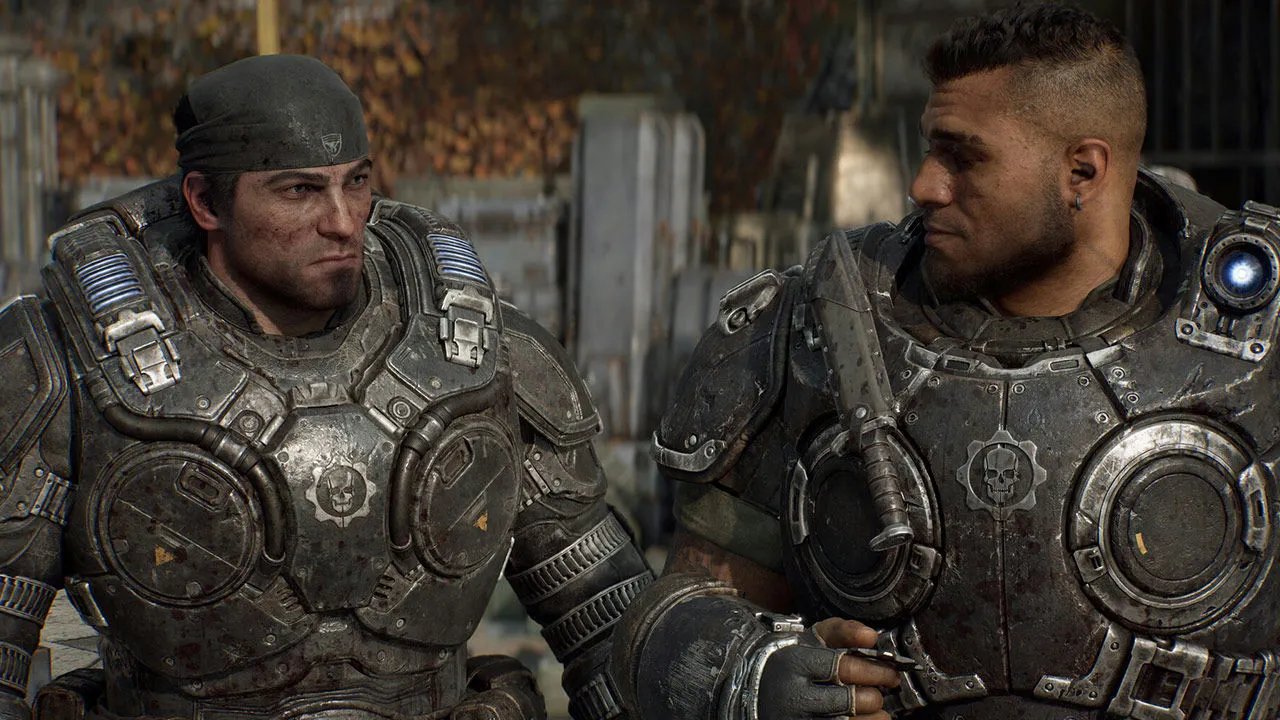
The landscape of modern triple-A game development is currently defined by a collision between creative ambition and harsh financial realities. The recent release of Gears of War: E-Day has brought these tensions to the forefront, as reports indicate the project carried a staggering development budget of $500 million. Despite its status as a flagship title for Microsoft’s gaming division, the game has reportedly moved only 400,000 units, fueling a broader conversation about the sustainability of massive production budgets in an era of shifting distribution models.
The Financial Weight of Modern Development
A budget of $500 million places Gears of War: E-Day among the most expensive media projects in history, dwarfing the development costs of many contemporary blockbusters. For context, industry benchmarks for high-end titles, such as The Last of Us: Part II or Horizon Forbidden West, generally fall into the $200 million range. While massive franchises like Call of Duty have seen cumulative spending reach upwards of $700 million over a full life cycle, E-Day’s initial outlay is unprecedented for a single launch window.
This expenditure has intensified scrutiny regarding the return on investment for console-exclusive titles. With the title launching exclusively on Xbox Series X, Series S, and PC, the available audience was theoretically restricted compared to a multi-platform release. The combination of an astronomical cost and a relatively modest sales figure highlights the volatility of the current market, where the failure of a project to achieve massive commercial success can ripple across an entire organization.
Subscription Services and Revenue Metrics
A critical factor in the current performance assessment is the role of Xbox Game Pass. As a first-party Microsoft title, Gears of War: E-Day was available on the subscription service from its first day of release. While this strategy drives recurring revenue through membership growth and platform engagement, it complicates traditional sales analysis. If users access the game via subscription rather than purchasing it individually, the revenue generated does not reflect the total value delivered to the player base or the platform’s ecosystem.
Analysts are now faced with the challenge of quantifying the success of such titles. If a game drives thousands of new Game Pass sign-ups, its impact may be significant despite low retail unit sales. However, when the cost of production reaches half a billion dollars, the subscriber-to-cost ratio must be exceptionally high to justify the expenditure. There is currently a lack of transparency regarding how Microsoft balances the immediate revenue shortfall against long-term subscription retention, leaving the industry to speculate on whether such high-budget titles can ever be truly profitable under this specific model.
Internal Pressures and Corporate Restructuring
The financial situation surrounding E-Day coincides with a period of significant volatility at Microsoft. Under the leadership of Xbox CEO Asha Sharma, the company has undergone a substantial realignment, resulting in nearly 2,000 layoffs within the current financial year. These changes include the consolidation of various studios and the shifting of development priorities toward established, low-risk franchises.
For the staff at The Coalition, the studio responsible for E-Day, this environment has created a atmosphere of uncertainty. Reports suggest that employees are cautious about the future, with internal concerns lingering regarding further layoffs or additional organizational shifts. The executive response has been to focus on technical achievement rather than raw sales figures. Studio head Mike Crump has emphasized that the game’s success lies in its ability to push the boundaries of Xbox hardware, serving as a technical showcase for what the platform can achieve, even as the market questions the economic viability of such a high-end approach.
The Shift Toward Risk Mitigation
The ballooning costs of production, as exemplified by E-Day, are forcing developers and publishers toward a strategy of extreme risk mitigation. This shift frequently involves moving production to areas with lower operational costs or focusing exclusively on massive, legacy franchises that offer a predictable return. The current industry trajectory favors titles with established fanbases, potentially stifling the creation of new intellectual properties that require significant financial investment to gain market traction.
This trend is not isolated to Microsoft. Developers across North America are contending with similar pressures to trim budgets and streamline operations. As the cost of labor, engine licensing, and high-fidelity asset production continues to rise, the barrier to entry for AAA development is becoming insurmountable for all but the largest entities. For the player, this means a marketplace increasingly dominated by a handful of reliable giants, often at the expense of variety and experimental projects.
Looking Toward Future Development Cycles
The future of the Gears of War franchise rests on the ability of The Coalition to adapt to these new realities. Management has indicated that future development cycles will be shorter, implying a push for greater efficiency in production pipelines. While this may address the issue of time-to-market, the challenge of recouping massive investments remains.
Whether Microsoft will continue to prioritize high-cost, high-fidelity development at this scale remains to be seen. The silence from leadership regarding the commercial performance of E-Day during recent financial summaries suggests that the company is still evaluating its strategy. As the gaming industry watches how these large-budget titles perform on subscription platforms, the case of Gears of War: E-Day will likely serve as a pivotal study in the necessity of balancing technical ambition with fiscal prudence in a changing media landscape.
Disclaimer: This content is auto-generated for informational purposes only.
Source: Read Original News