









The Evolution of Digital Archiving in Extreme Sports
The recent incident at Pershing Square, where skateboarding icon Tony Hawk was escorted from the premises while attempting to film a 25th-anniversary tribute for “Tony Hawk’s Pro Skater 3,” serves as a unique intersection between digital nostalgia and physical reality. For over two decades, the virtual recreation of Los Angeles in this gaming franchise has functioned as a digital archive for urban architecture. When Neversoft developers digitized the concrete curves and modernist aesthetics of Pershing Square in 2001, they effectively immortalized a specific iteration of urban design.
The struggle to blend these two worlds—the high-definition, physics-defying digital space and the restrictive, security-monitored physical space—highlights a growing challenge for preservationists and creators alike. While the game provides an infinite space for movement, the real-world site functions under strict private property regulations. This friction illustrates how digital media projects lasting impressions on the public consciousness that physical spaces often cannot accommodate.
Technical Legacy of the PlayStation 2 Era
“Tony Hawk’s Pro Skater 3” holds a distinct place in the history of interactive entertainment. Upon its 2001 release, it became the first title in the series to arrive on the PlayStation 2, marking a massive leap in graphical fidelity and rendering capabilities. By utilizing the enhanced power of the Emotion Engine, the development team introduced features such as more complex NPC artificial intelligence and improved polygon counts that made the environments feel more reactive.
The technical brilliance of the game reached a historic milestone, holding the top spot on Metacritic alongside “Grand Theft Auto 3.” This success was not merely aesthetic; the game introduced the “revert” mechanic, a technical innovation that allowed players to link tricks together into massive, seamless combos. This change in the physics system fundamentally altered the gameplay loop, transforming the series from simple goal-oriented levels into a complex rhythm and technical skill exercise. This legacy continues to inform how developers approach sports simulation mechanics today.
The Modern Remake and Industry Shift
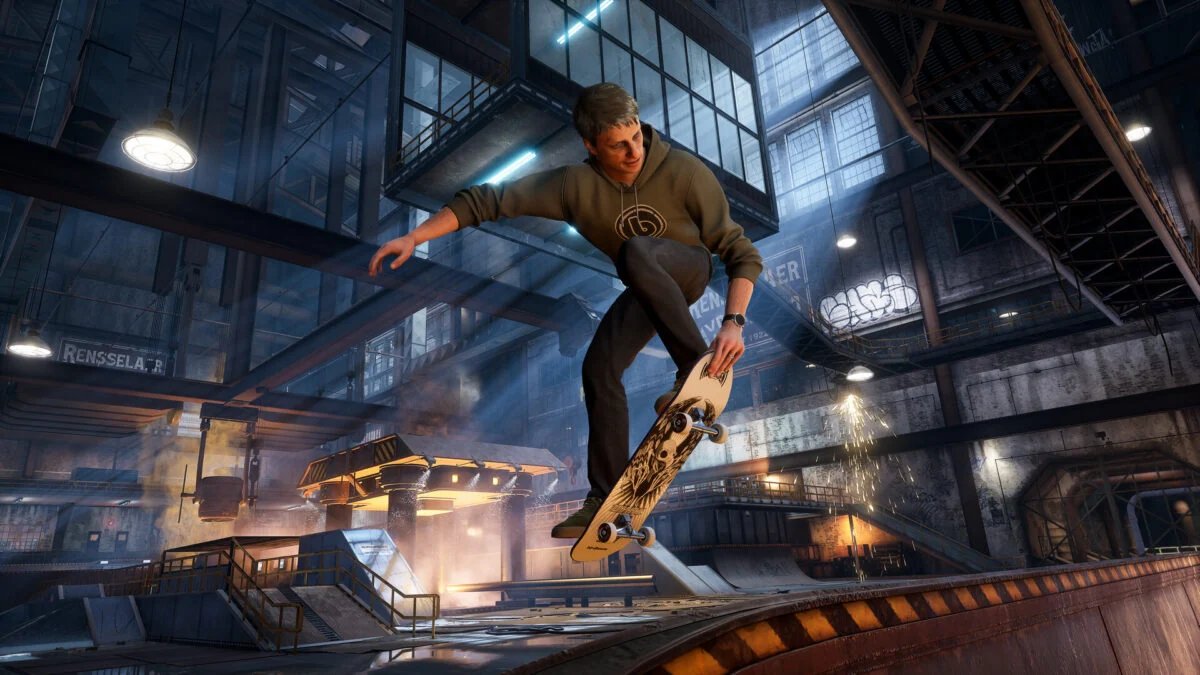
In 2025, the release of the “Tony Hawk’s Pro Skater 3 + 4” bundle by Iron Galaxy brought these classic levels into the modern era using advanced lighting engines and high-resolution textures. The transition from the original assets to the remade environments serves as a case study in remastering legacy code. Iron Galaxy faced the task of maintaining the original level geometry—essential for the muscle memory of long-time fans—while upgrading the visual presentation to meet contemporary 4K standards.
However, the mixed critical reception of the 3 + 4 bundle highlights the difficulty of satisfying long-term fanbases. Unlike the initial remake, which was met with near-universal acclaim, the later entries faced scrutiny regarding the retention of original physics and the inclusion of modern quality-of-life updates that some purists felt compromised the integrity of the original experience. This development cycle reflects a larger trend in the industry: the struggle to balance faithful preservation with the demands of modern performance metrics.
Urban Geometry and Digital Preservation
The architecture of Pershing Square, designed by Ricardo Legorreta, is defined by its bold, geometric structures and high-contrast color schemes. In the virtual space, these red orbs and crescent benches were not just decorative; they were designed as functional tools for traversal. The level design team utilized the square’s specific urban planning to create a “flow” that guided players through a logical progression of tricks.
The recent attempt by Hawk to revisit these sites demonstrates the disconnect between the permanence of the digital world and the transience of physical public spaces. While the video game level remains frozen in its 2001 state, the real-world location has continued to evolve. This contrast underscores a fundamental reality of digital preservation: virtual spaces provide a museum-like consistency that is impossible to replicate in the real world, where security protocols and urban development constantly reshape the landscape.
Future Perspectives on Sports Simulations
The ongoing frustration from fans regarding the lack of new entries in legacy skateboarding franchises reflects an industry-wide prioritization of risk-averse development. As the technology to create hyper-realistic skate simulations improves, the focus has shifted toward high-fidelity physics engines that require massive development budgets. When iconic figures like Tony Hawk are forced to engage with their own legacy through social media stunts rather than new, large-scale software releases, it underscores the current stagnation in the genre.
For developers, the challenge remains to create platforms that offer both the precision of the early 2000s classics and the expansive freedom expected by modern audiences. As the line between physical skating and digital simulation continues to blur, the demand for authentic, non-gimmicky gameplay persists. The legacy of “Tony Hawk’s Pro Skater 3” is not just found in its code, but in the way it successfully mapped the real world into a digital playground, a feat that continues to influence designers working on open-world urban environments across the gaming industry today.
Disclaimer: This content is auto-generated for informational purposes only.
Source: Read Original News