








Bombay High Court Grants Reprieve to Actor Imran Khan in ‘Leave India’ Notice Case
The Bombay High Court has provided a temporary reprieve to actor Imran Khan, an Overseas Citizen of India (OCI) cardholder and US citizen, permitting him to remain in the country for the time being. The court’s decision comes after the actor agreed to file an “unconditional apology” for his alleged involvement in a demonstration concerning the Special Intensive Revision (SIR) of electoral rolls.
Court Admonishes OCI Limitations
During the proceedings on Monday, the division bench addressed the legal status of OCI cardholders, offering a stern observation regarding their residency rights. The court remarked that individuals holding OCI status essentially remain “at the mercy of the country” and cannot equate their legal standing or rights to those of full-fledged Indian citizens.
As a condition for the temporary stay of the expulsion order, the High Court directed the actor to submit a formal undertaking. In this document, Khan must explicitly commit to abstaining from participation in any political protests, agitations, or public demonstrations for the duration of his stay in India. The court has scheduled the next hearing for December 7, keeping the controversial ‘Leave India Notice’ in abeyance until that date.
The Genesis of the Legal Conflict
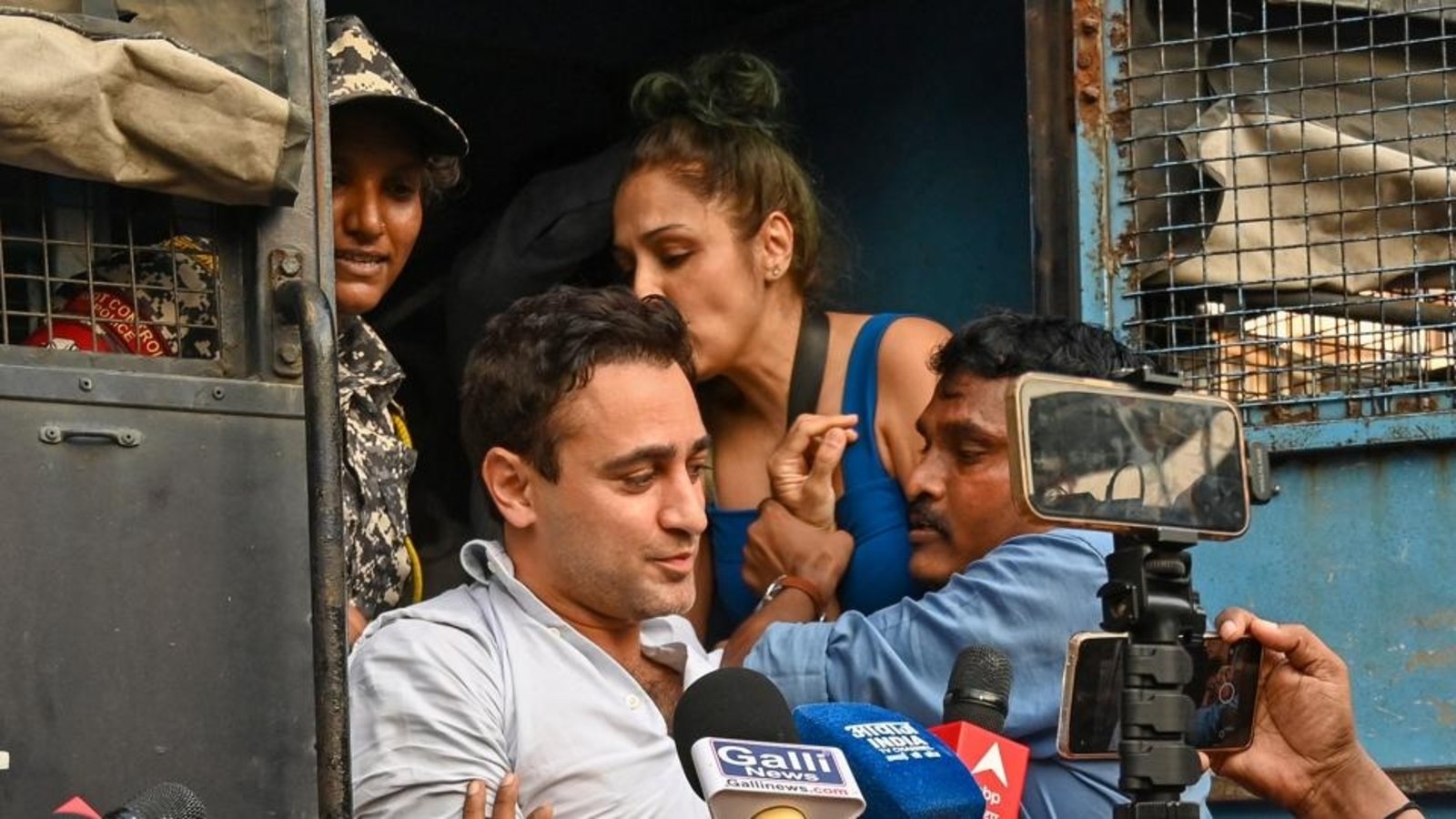
The legal turmoil began on October 10, when Mumbai Police took Imran Khan into custody during a youth-led protest near the historic August Kranti Maidan. The demonstrators were vocal in their criticism of Chief Election Commissioner (CEC) Gyanesh Kumar, calling for his immediate resignation due to alleged discrepancies uncovered during the Special Intensive Revision (SIR) of electoral rolls.
Following the event, senior BJP leader Kirit Somaiya lodged a formal complaint, asserting that by engaging in a political demonstration, the actor had breached the terms of his visa and immigration regulations applicable to foreign nationals. Acting on this complaint and the subsequent FIR, the Foreigners Regional Registration Office (FRRO) issued a notice on October 14, ordering Khan to depart from India by October 28, citing violations of the Immigration and Foreigners Act, 2025.
Legal Challenge to the FRRO
On October 17, Khan approached the Bombay High Court to contest the expulsion, labeling the government’s order as disproportionate, arbitrary, and a violation of his fundamental rights. The actor argued that he did not organize or actively participate in the protest; he claimed he was merely present in the vicinity of the gathering and left immediately upon being instructed to do so by local law enforcement.
Beyond the ‘Leave India’ notice, the FRRO has initiated parallel proceedings to potentially strip the actor of his OCI status. A show-cause notice was issued under Section 7D(e) of the Citizenship Act, 1955, which grants the government authority to cancel OCI registrations on grounds involving national security, public interest, or the sovereignty of the nation.
Khan, who has resided in India for nearly forty years, maintains that the FRRO acted prematurely by issuing an expulsion notice without granting him a fair opportunity to present his side of the story. As the matter heads toward the December deadline, the case continues to highlight the complex legal hurdles faced by foreign citizens residing in India under the OCI framework.
Disclaimer: This content is auto-generated for informational purposes only.
Source: Read Original News