







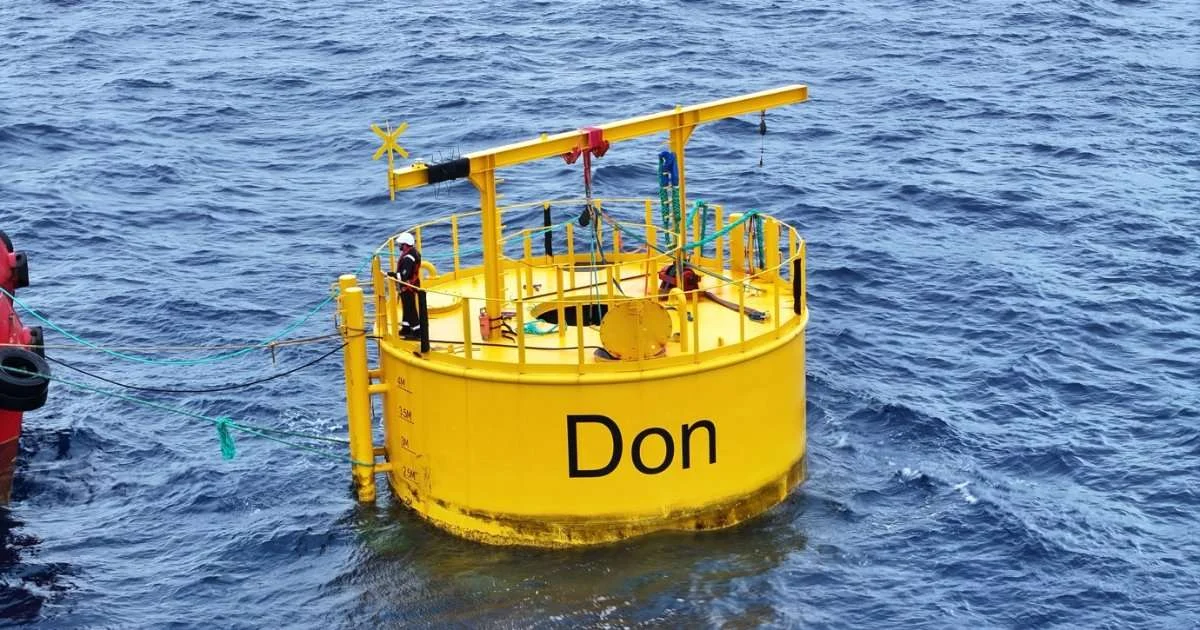
A breakthrough in ocean thermal energy conversion (OTEC) has cleared a critical hurdle, paving the way for a new era of clean, consistent power for tropical and sub-tropical island nations. A prototype floating OTEC platform, developed under the EU-funded PLOTEC project, has successfully completed a rigorous year-long offshore trial at the Oceanic Platform of the Canary Islands (PLOCAN), proving that the technology can withstand the volatile conditions of the open ocean.
OTEC works by harnessing the temperature differential between warm surface waters and cold, deep-ocean waters to generate continuous electricity. While the process has been demonstrated at small scales onshore, the logistical challenges of building massive seawater intake pipes across coastal zones have historically limited its potential. Moving OTEC offshore is the solution, reducing the required length of these critical intake pipes by 80%. However, until now, the industry lacked proof that a floating structure could maintain the integrity of these pipes while enduring the physical stresses of the open sea.
The PLOTEC project, which received €3.5 million from Horizon Europe in 2022, provided the platform to test this hypothesis. Installed in October 2025 at the PLOCAN test site, the prototype was immediately put to the ultimate stress test. According to Spain’s national weather agency, AEMET, the 2025-2026 season was the most tempestuous since the current storm-naming system began in 2017, featuring 19 named storms.
Throughout this period, the platform’s sensors recorded maximum wave heights of 5 meters. In the context of a full-scale industrial system, this load is equivalent to surviving 30-meter waves. The success of the prototype through these record-breaking weather events marks a turning point for the sector.
“This project really helped advance our riser installation methodology and solidified the path forward for future OTEC deployments in storm-prone environments,” said Sam Johnston, the Lead Engineer for the offshore test phase. “We couldn’t have asked for more challenging conditions for testing.”
The significance of this result cannot be overstated for island economies. Currently, many tropical nations remain heavily dependent on imported diesel and heavy fuel oil for their power needs, leaving them vulnerable to global fuel price volatility and high energy costs. While wind and solar energy offer alternatives, their adoption is frequently hindered by limited land availability and the complex seabed conditions of coastal regions.
OTEC offers a unique value proposition: it is a “baseload” power source, meaning it provides electricity 24 hours a day, regardless of weather conditions or the time of day. Unlike wind or solar, it does not suffer from intermittency, nor does it compete with tourism or agriculture for scarce land. By leveraging the vast ocean surrounding these islands, OTEC has the potential to replace a significant portion of the 25 GW of existing fossil fuel capacity currently installed across tropical island markets.
The success of the PLOTEC prototype specifically addresses the “riser” challenge—the vertical seawater intake system that feeds the power plant. As the most complex element of an offshore OTEC deployment, the riser’s proven durability in high-seas conditions suggests that the technical barriers to large-scale deployment are finally falling. With the pilot phase complete, the project provides a blueprint for scaling the technology, offering tropical nations a reliable path toward energy independence and long-term decarbonization.
Disclaimer: This content is auto-generated for informational purposes only.
Source: Read Original News