








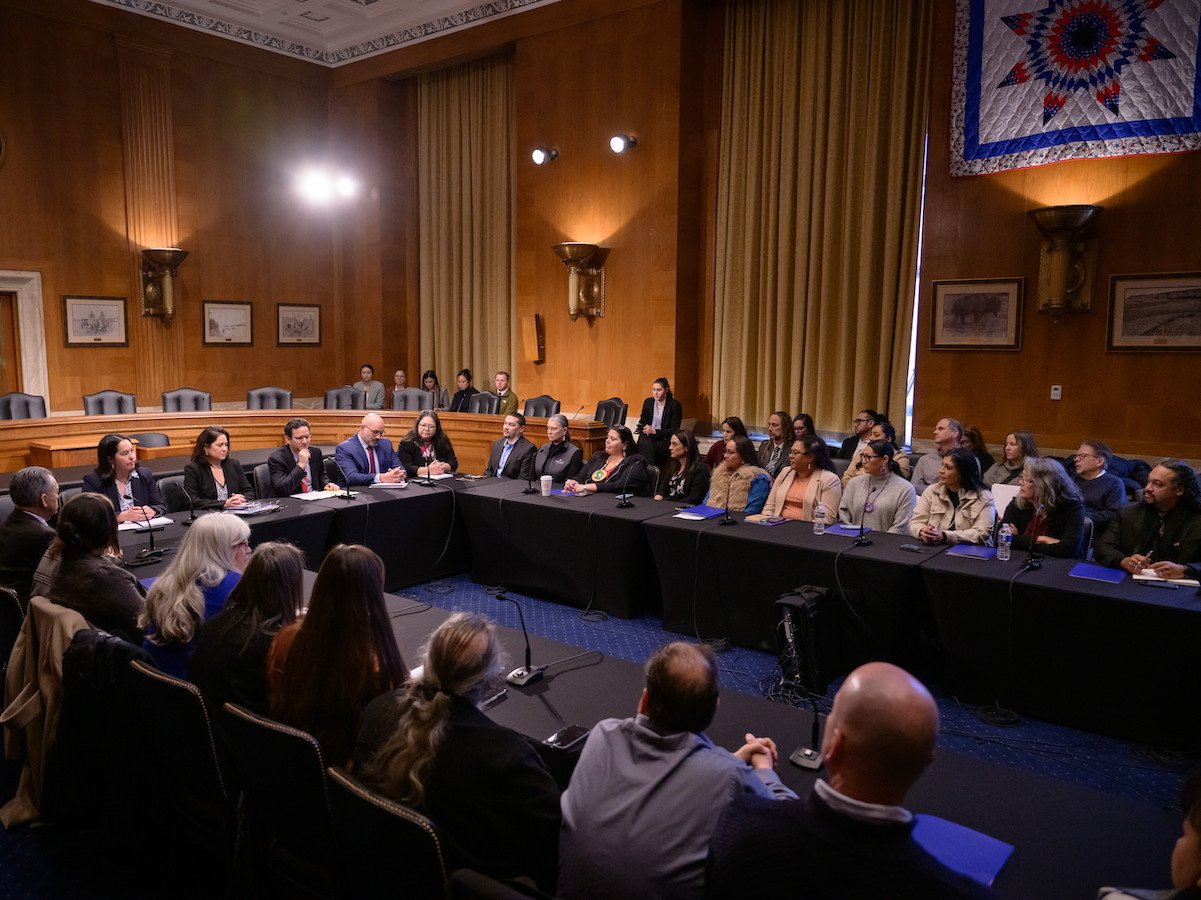
WASHINGTON — The landscape of economic development across Indian Country is undergoing a major transformation, with a focus on shifting from small-scale assistance to large-scale project financing. This evolution will be the primary theme of the Native CDFI Network’s (NCN) seventh annual Policy & Capacity Building Summit, taking place December 6–9 at the Hyatt Regency Washington on Capitol Hill.
The four-day event aims to bridge the gap between more than 100 Native community development financial institutions (CDFIs) and the institutional investors, policymakers, and banking leaders necessary to accelerate capital flow into American Indian, Alaska Native, and Native Hawaiian communities.
## Scaling Capital Through Strategic Collaboration
The summit arrives as Native CDFIs move beyond basic micro-lending. According to NCN CEO Pete Upton, the organizations are increasingly utilizing complex financial instruments—including bridge loans, mezzanine financing, and “capital weaves” that blend tribal equity with traditional bank debt—to support larger economic initiatives.
“Native CDFIs are growing in number and financing bigger projects,” Upton said. “We have the relationships and local knowledge. Banks, foundations, and investors bring capital and expertise that can help us do more.”
By utilizing tools like New Markets Tax Credits and federal housing programs, these lenders are creating new entry points for private capital. The summit will feature a “Deal Room” session specifically designed to showcase these complex project financing structures, signaling a maturation of the sector’s technical capabilities.
## The Role of Data and Technology in Modern Finance
While traditional relationship-building remains at the core of Native finance, the industry is increasingly looking toward data-driven insights to attract institutional partners. As Native lenders scale, they are adopting sophisticated reporting and impact-tracking frameworks to mirror the transparency required by large-scale investment firms and foundations.
In the broader financial technology sector, the integration of AI and automated underwriting remains a hot topic for smaller community lenders. By streamlining the “missing middle” of capitalization—the long-term, equity-style capital that strengthens balance sheets—Native CDFIs are beginning to leverage tech-enabled financial analysis to prove their creditworthiness to skeptical mainstream banks. Discussions at the summit will likely emphasize how these lenders can use modern digital infrastructure to satisfy regulatory requirements, such as those governed by the Community Reinvestment Act, ultimately reducing risk for outside investors.
## A Pivotal Moment for Policy and Advocacy
The summit is occurring at a critical juncture for federal policy. With high-level stakeholders slated to attend—including U.S. Treasurer Brandon Beach and Senator Tina Smith (D-Minn.)—the NCN is pushing for a $50 million annual funding commitment and permanent statutory authorization for the Native American CDFI Assistance Program.
The intersection of policy and practice will be the focus of the final day, which involves direct congressional engagement. Participants will connect the federal regulatory environment—specifically regarding CDFI certification and grant accessibility—to the tangible outcomes of their work, such as homeownership rates and small business growth.
By centralizing these conversations, the summit serves as more than a networking event; it functions as a strategic pivot point for an industry that is actively modernizing its operations to capture, deploy, and manage significantly larger volumes of capital. For Native communities, this shift represents a move toward long-term economic sovereignty, fueled by a new generation of institutional partnerships and sharpened financial tools.
Interested parties can register for the summit or view the preliminary agenda through the Native CDFI Network’s official event portal.
Disclaimer: This content is auto-generated for informational purposes only.
Source: Read Original News