








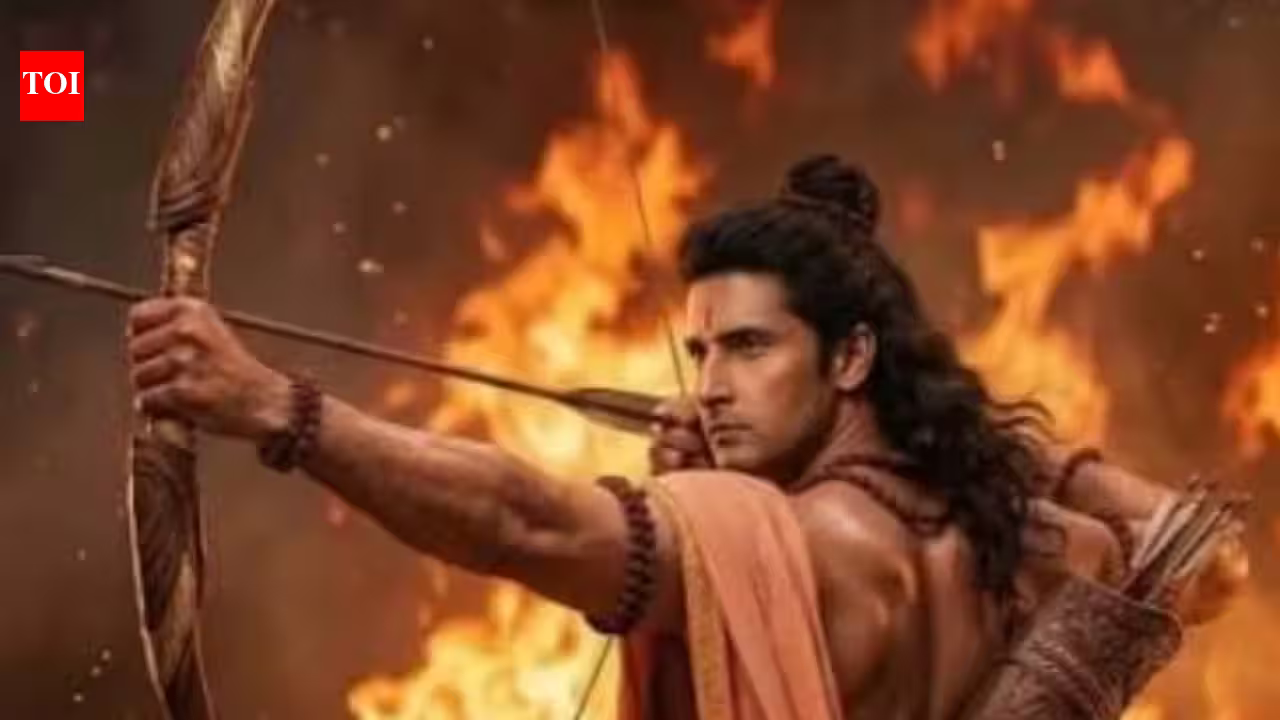
The landscape of Indian cinema is currently undergoing a tectonic shift, one that has been decades in the making. While the “pan-Indian” phenomenon has successfully broken down internal linguistic barriers, a new ambition is taking root—one that looks past the domestic borders to the global stage. Standing at the forefront of this evolution is Ravie Dubey, who steps into the pivotal role of Lord Lakshman in Nitesh Tiwari’s highly anticipated epic, Ramayana: Rise of a Legend. For Dubey, this project isn’t just a high-profile casting call; it is a declaration of intent for the entire industry.
The Global Awakening of Indian Narratives
For years, Indian filmmakers have grappled with the “crossover” dilemma—the tendency to simplify or sanitize local stories to make them palatable for Western sensibilities. Ravie Dubey, however, is championing a different philosophy. In a recent conversation with Variety India, the actor articulated a sentiment that is increasingly resonating across Mumbai’s creative corridors: the Indian story has arrived, and it no longer requires a filter to be understood globally.
“I believe India is already taking that leap of faith,” Dubey notes. His confidence stems from the inherent depth of Indian intellectual property. With thousands of years of mythology, philosophy, and complex character archetypes, India possesses a treasure trove of narratives that address universal human truths—the struggle of morality, the complexity of duty, and the eternal clash between order and chaos. According to Dubey, the “global” label isn’t something to be sought after; it is an inevitability if the storytelling matches the grandeur of the source material.
A Cinematic Movement Beyond the Box Office
When analyzing the weight of a project like Ramayana, it is easy to get lost in the talk of budgets and star power. However, Dubey argues that Nitesh Tiwari and producer Namit Malhotra are doing something more profound than simply producing a blockbuster. They are laying the groundwork for a structural change in how India perceives its own cinematic output.
Dubey describes the project as a “catalyst for a cinematic movement.” If Ramayana succeeds on its own terms, it will theoretically provide a template for future creators. This template is built on the idea of “unapologetic” storytelling—telling indigenous tales with the technical prowess of Hollywood but with the soul and cultural context of India. It’s an invitation to the global audience to enter India’s world, rather than India trying to conform to the aesthetics of a Western studio production.
The Integrity of Identity: Why Authenticity is Non-Negotiable
The most compelling aspect of Dubey’s argument is his stance on cultural preservation. There is a historical trap that many international endeavors fall into—the dilution of core values in an attempt to be “more universal.” Dubey is firm in his opposition to this trend. “We shouldn’t have to dilute our Indianness to become global,” he asserts.
This perspective challenges the prevailing notion that globalization requires homogenization. By keeping the narrative grounded in its specific cultural heritage, the film gains a level of sincerity and weight that a generic, globally-engineered plot often lacks. Dubey’s belief is that if the storytelling is sincere, the audience will follow, regardless of their background. In an era where audiences are increasingly craving diverse, authentic perspectives, the specificities of the Ramayana are actually the film’s greatest competitive advantage.
Star Power and the Weight of Expectation
The sheer scale of the production is reflected in the star-studded ensemble tasked with bringing these legendary figures to life. With Ranbir Kapoor portraying Lord Rama, Sai Pallavi as Sita, and Yash stepping into the formidable role of Ravana, the film is anchored by some of the most bankable talent in the industry. Ravie Dubey’s inclusion as Lord Lakshman adds a layer of dedicated craft to this high-wattage cast, signaling a balance between mainstream commercial appeal and character-driven performance.
The production is essentially a test case for whether a distinctly Indian epic can command the same cultural capital as Western franchises like Lord of the Rings or the Dune series. By blending the gravity of the epic with modern VFX and high-stakes production, Tiwari is aiming to bridge the gap between ancient text and contemporary spectacle.
The Box Office Reality: A Metric of Transition
The theatrical journey of Ramayana began with a massive stir, opening to a net collection of Rs 64.85 crore across India. While this is a formidable figure that demonstrates the power of the brand, it has sparked intense discussion among trade analysts. Despite an impressive Rs 50 crore in advance bookings and high pre-release hype, the final Day 1 numbers fell short of the aggressive “100 crore-plus” projections some had anticipated.
However, viewing this through the lens of a “movement” rather than a single quarterly report, the context changes. The industry is currently recalibrating what a “hit” looks like in the era of fragmented viewing habits. As the film continues its theatrical run across its 25,200 shows, the true metric of its success will be its longevity—both in India and in the way it influences the next wave of big-budget projects.
Whether or not it hits the record-breaking ceilings predicted by analysts, the film has already achieved a crucial objective: it has sparked a conversation about the trajectory of Indian cinema. As Ravie Dubey suggests, the goal is not to win a single race, but to change the direction of the industry entirely. If Ramayana succeeds in being both a massive commercial event and a faithful cultural touchstone, it will prove that India doesn’t need to chase the world—it just needs to keep telling its stories, louder and with more conviction than ever before.
Disclaimer: This content is auto-generated for informational purposes only.
Source: Read Original News