









Indian Markets Defy Global Tech Sell-Off Amid Renewed Foreign Inflow
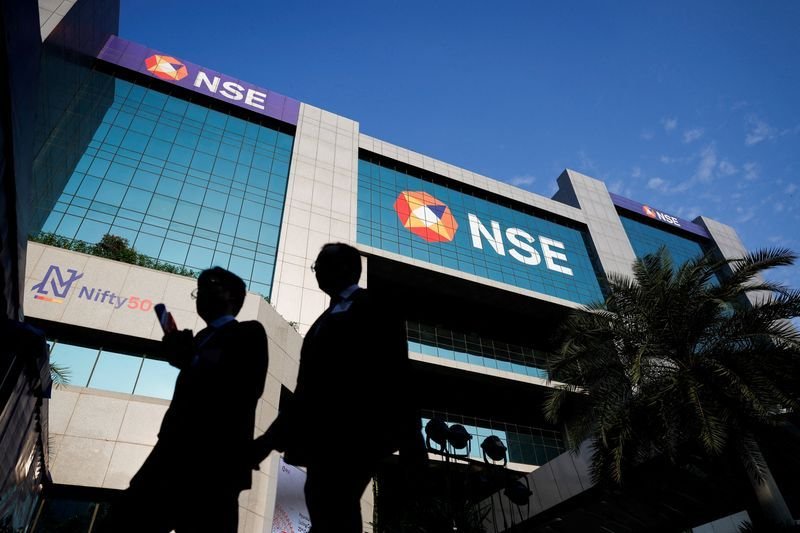
Indian equity markets demonstrated remarkable resilience on Friday, decoupling from a broader Asian market slump as domestic indices charted a recovery path. While major regional benchmarks—including Japan’s Nikkei and South Korea’s Kospi—faced steep declines of 5% and 8% respectively, India’s Nifty 50 and S&P BSE Sensex posted steady gains, signaling a pivotal shift in investor sentiment toward the South Asian economy.
By mid-morning trade, the Nifty 50 had climbed 0.51% to reach 24,662.80, while the Sensex added 0.76% to settle at 79,917.60. This performance stands in stark contrast to the wave of risk-aversion sweeping across global markets following a tumultuous session on Wall Street, where the Nasdaq plummeted 5.5% on the back of underwhelming corporate results and growing skepticism regarding the long-term sustainability of the artificial intelligence (AI) infrastructure boom.
Macro-Economic Winds of Change
For much of 2026, India had struggled to keep pace with emerging market peers, often hindered by an aggressive global rotation into AI-linked assets and mounting inflationary pressures fueled by high crude oil prices. However, the tide appears to have turned. Analysts suggest that the recent shift in US political dynamics, following the midterm election results, has helped stabilize energy markets. The subsequent dip in Brent crude prices below the $100-per-barrel mark has provided a much-needed buffer for India’s oil-sensitive economy.
“The macroeconomic overhang that weighed on India—namely volatile energy prices, currency depreciation, and persistent foreign institutional investor (FII) outflows—is finally beginning to dissipate,” noted Shahzad Madon, managing director and CEO at TCG AMC. According to Madon, the “worst appears to be behind us,” as reasonable valuations and robust corporate earnings have begun to re-attract global capital.
Record Foreign Inflows
The renewed confidence in Indian stocks is backed by hard data. On Thursday, foreign institutional investors executed net purchases worth approximately 150 billion rupees ($1.6 billion), marking the largest single-day influx of foreign capital in nearly six years. This rotation underscores a broader strategic pivot, as global funds rebalance their portfolios away from over-leveraged AI bets and back into more fundamentally driven markets like India.
Sectoral Resilience and the IT Pivot
The resilience of the Indian market was bolstered by a surprising rally in the domestic technology sector. While global investors fled tech stocks, India’s Nifty IT index bucked the trend, gaining 1.3% on Friday to extend its two-day rally to nearly 4%. Financial stocks, which traditionally command a significant portion of foreign investment, also provided strong support, with the Nifty Private Bank Index recording substantial gains over the same period.
Despite the broader optimism, volatility remains visible in the domestic space, as small-cap and mid-cap indices saw minor pullbacks of 1.4% and 0.8% respectively. However, experts remain bullish on the road ahead. Krishna Bhimavarapu, an APAC economist at State Street Investment Management, observed that the Indian market is “ripe for a rebound.” As long as global conditions remain relatively stable, analysts believe India is well-positioned to emerge as a primary destination for foreign capital, potentially closing the performance gap that has persisted for the better part of the year.
Disclaimer: This content is auto-generated for informational purposes only.
Source: Read Original News