








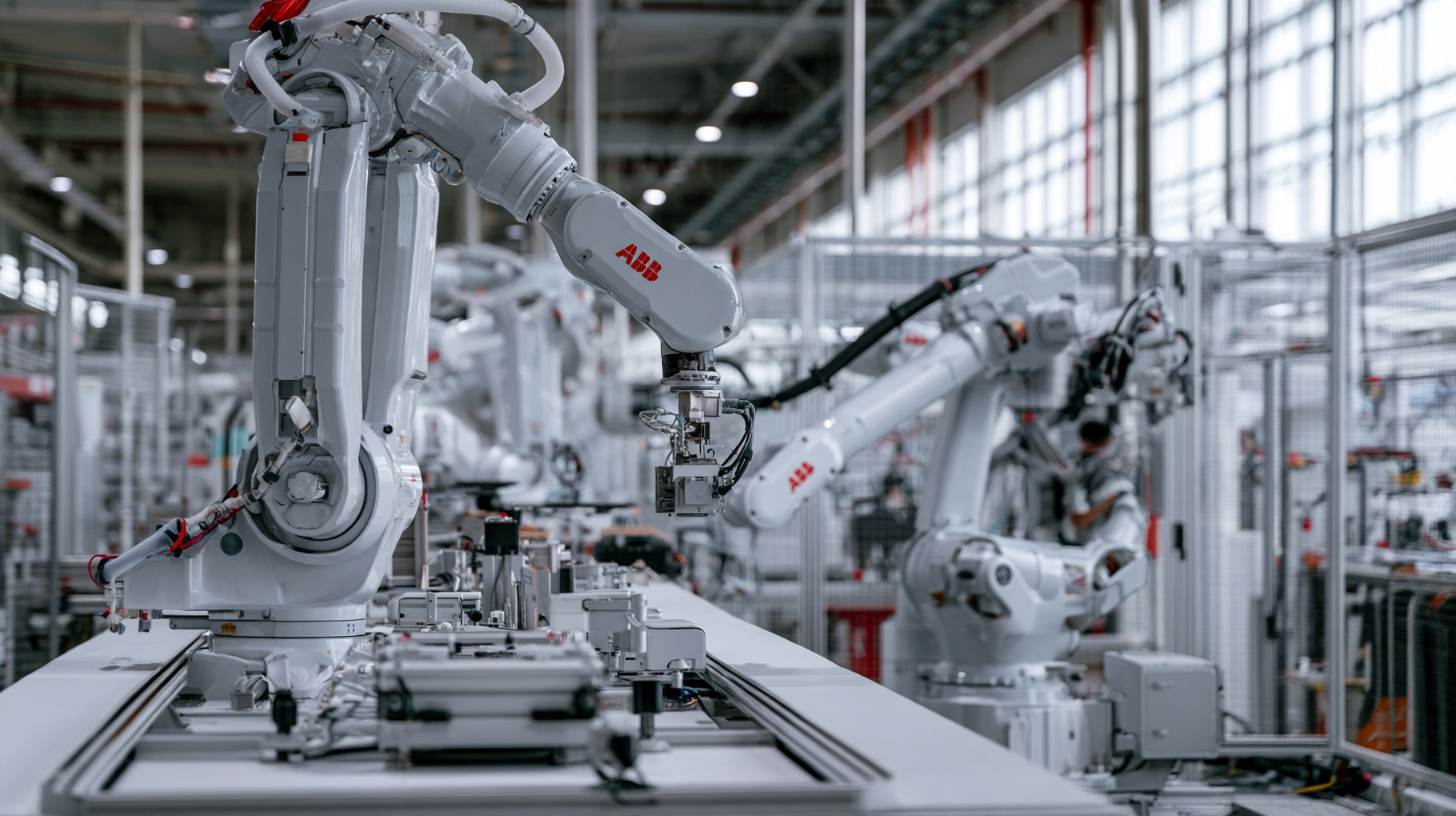
China has officially blocked SoftBank Group’s ambitious $5.4 billion acquisition of ABB’s robotics division, a move that signals a significant escalation in Beijing’s oversight of global technology deals. Announced on November 5, 2026, the regulatory rejection represents a major blow to Masayoshi Son’s strategy to bridge the gap between advanced artificial intelligence and large-scale industrial manufacturing.
The prohibition, issued by China’s Office of the Working Mechanism for Foreign Investment Security Review, highlights a growing trend where nations are weaponizing regulatory approval processes to protect domestic data sovereignty.
## Data Sovereignty and the AI Arms Race
At the heart of the regulatory intervention is the emerging concern over “industrial intelligence.” While traditional antitrust reviews typically focus on market concentration and competition, the Chinese government expressed alarm that the data generated by ABB’s widespread robotics network within China could be siphoned abroad.
Beijing fears that the precise operational data collected from factories—detailing how machines interact, handle materials, and execute complex manufacturing tasks—could be utilized to train advanced AI models. Of particular concern to regulators is the potential for this data to flow into the ecosystem of OpenAI, a company in which SoftBank maintains a significant financial stake. By blocking the acquisition, China is effectively asserting that the “experience” gained by machines on its factory floors constitutes a strategic national asset that should not be leveraged to enhance foreign AI capabilities.
## The Strategic Importance of ABB’s Chinese Footprint
The decision to intervene was facilitated by ABB’s deep-rooted presence within China. As the company’s largest robotics market, China is home to the group’s global robotics headquarters in Shanghai, as well as several critical R&D and production hubs. Approximately 90% of the equipment ABB supplies to its Chinese clients is manufactured domestically.
Because such a vast portion of ABB’s operational infrastructure is embedded within China’s industrial ecosystem, the state exerts significant leverage. By refusing to greenlight the merger, Beijing has effectively stalled a deal that was intended to be the cornerstone of SoftBank’s transition from a pure-play tech investor to a provider of practical, physical-world AI solutions. Analysts had viewed the acquisition as a vital link that would have allowed SoftBank to deploy its software-based intelligence into established industrial workflows.
## Navigating a New Era of Regulatory Hurdles
The collapse of the ABB deal serves as a cautionary tale for global corporations pursuing cross-border technology acquisitions. It demonstrates that access to a market is increasingly tied to the control of information. For SoftBank, the path forward remains uncertain. While the company stated that it remains in active dialogue with stakeholders to potentially restructure the deal, industry experts suggest that finding a regulatory “remedy” for data-security concerns is exceptionally difficult.
This episode marks a paradigm shift in the tech industry. As AI models become increasingly hungry for high-quality, real-world data, the “training sets” provided by industrial automation have become as valuable as the hardware itself. The blockage of the ABB deal suggests that multinational companies must now account for geopolitical risk regarding data flow with the same level of scrutiny they apply to financial and legal due diligence. For investors, the message is clear: in the race to achieve Artificial General Intelligence, the physical data generated on factory floors has become a new, high-stakes battleground.
Disclaimer: This content is auto-generated for informational purposes only.
Source: Read Original News