







Microscopic shards of plastic have become a ubiquitous feature of the modern environment, detected everywhere from the deepest ocean trenches to the clouds drifting above the earth. Now, new research confirms that even the most remote, pristine mountain snowpacks are not immune to this invisible pollution.
A study led by Aleksandra Karapetrova, an environmental scientist at the University of California, Riverside, reveals that microplastics are being deposited into the Sierra Nevada mountains by winter storms. The findings, published in the journal Environmental Science & Technology, provide a clearer picture of how weather patterns act as a “scrub brush” for the atmosphere, scavenging accumulated plastics and delivering them to the ground.
For Karapetrova, the project was a marriage of academic expertise and personal passion. An avid alpine enthusiast with over a decade of experience in ski mountaineering and avalanche risk assessment, she possessed the unique ability to read the layers of a snowpack—a skill typically used to identify weak points in mountain terrain. By applying this hydrological understanding to toxicology, she was able to document how microplastics are integrated into the water cycle.
“They’re a part of the water cycle,” Karapetrova explained.
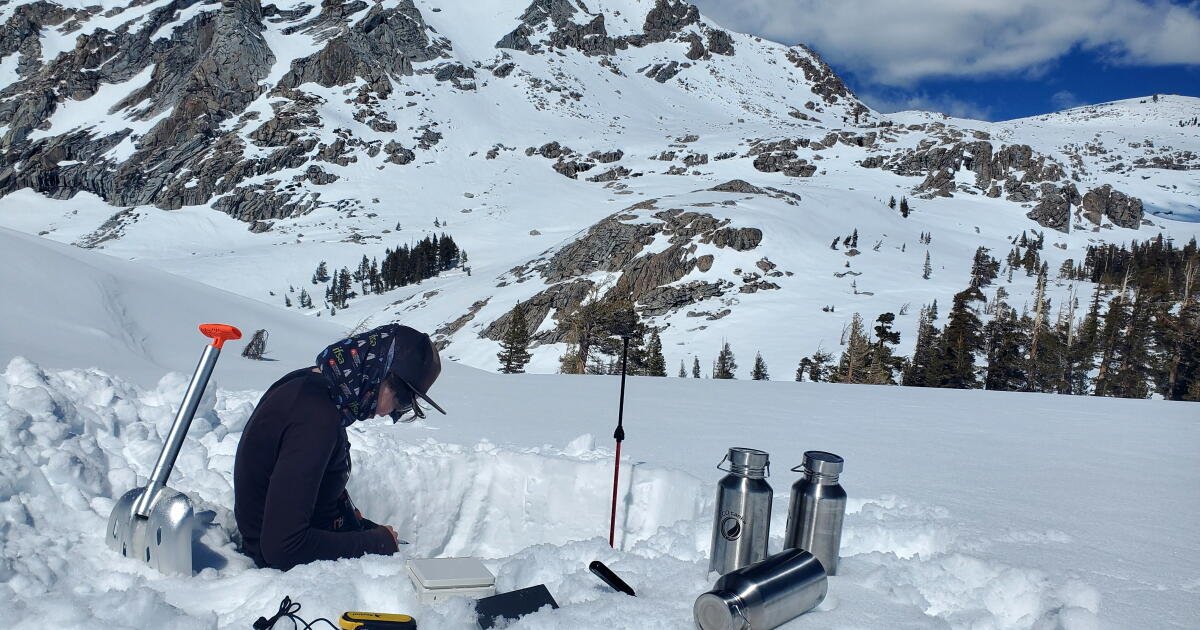
To conduct the research, Karapetrova and her team trekked into the deepest reaches of the Sierra Nevada during the spring of 2024. Traveling on skis, they reached sites far removed from roads, human settlements, or infrastructure, ensuring that any plastics detected were transported by atmospheric processes rather than direct local contamination. The researchers collected 43 samples across seven sites, ranging from remote wilderness areas to a research station at Mammoth Mountain.
The results were stark: microplastics were present at every sampled location. By cross-referencing weather records with the specific snow layers, the team discovered that storms serve as the primary mechanism for plastic deposition. As snow falls, snowflakes “scavenge” airborne microplastics—which originate from sources like synthetic clothing fibers and tire wear—and drag them down to the snowpack.
The study identified a clear correlation between the length of time between storms and the concentration of plastic deposited. A dry spell of 28 days followed by a storm resulted in a concentration of approximately 69 particles per liter of meltwater, whereas a storm following a brief four-day dry spell yielded only 11 particles per liter. This suggests that as plastic accumulates in the lower atmosphere during calm periods, the next incoming storm acts as a massive filtration event, washing the sky clean and depositing the load into the mountain snow.
The implications are significant for the state of California, where roughly 27 million people rely on the Sierra snowpack for their water supply, and over a million acres of farmland depend on it for irrigation.
To ensure the validity of their data, the researchers implemented rigorous protocols to avoid self-contamination. They eschewed synthetic clothing, opting for wool and cotton layers, and utilized metal sampling equipment to prevent plastic shards from shedding into their samples. The team even took care to position themselves downwind while digging snow pits, carrying an additional 25–30 pounds of specialized gear into the backcountry to maintain strict environmental controls.
Independent experts have praised the study for its methodological rigor and its novel approach to linking specific storm events with plastic deposition. Scott Coffin, a staff toxicologist at the California Office of Environmental Health Hazard Assessment, noted that the research serves as a “sober reminder” of the global reach of plastic pollution.
As scientists continue to trace the movement of these particles, the study underscores that even the highest, most isolated peaks are now tethered to the synthetic footprints of human society. For Karapetrova, who spends her winters reading the history of storms in the snow, the research provides a vital data point in the ongoing effort to understand and mitigate the impacts of plastic on the world’s essential water resources.
Disclaimer: This content is auto-generated for informational purposes only.
Source: Read Original News