









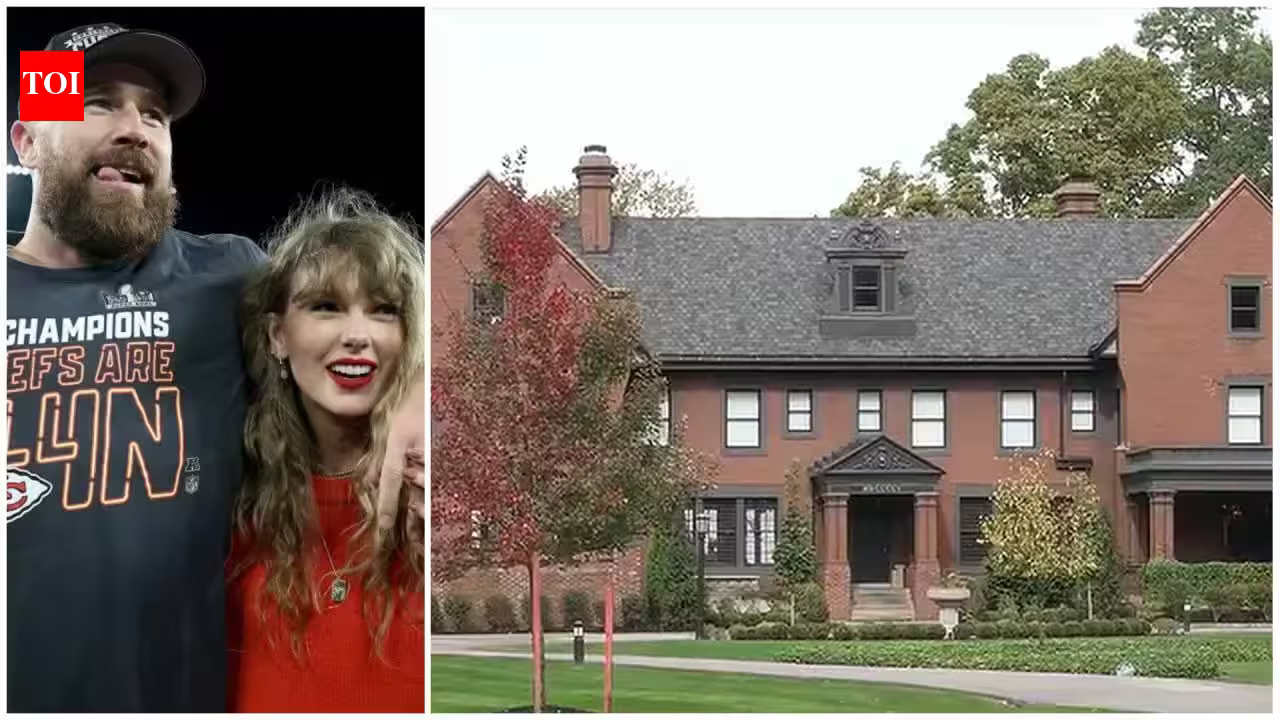
The ongoing saga of Taylor Swift and Travis Kelce’s Ohio dream home has officially entered the “red tape” phase. What was supposed to be a peaceful lakeside retreat in the wealthy village of Bratenahl has, instead, become a local flashpoint. The power couple, who dropped $5.35 million on their sprawling lakefront estate back in March, finds themselves locked in a bureaucratic struggle over a piece of property that is arguably the most scrutinized address in the state.
As the couple prepares for yet another appearance before the local review board—this time to plead their case for a revised privacy wall—the narrative has shifted from mere celebrity real estate interest to a micro-war between privacy needs and neighborhood aesthetics.
A Tale of Two Realities: Support Versus Scrutiny
While the headlines might lead you to believe that the entire village of Bratenahl is up in arms over the “Swift-Kelce invasion,” the reality on the ground appears far more nuanced. Behind the closed doors of local planning meetings and the public bickering of a few disgruntled neighbors, a different sentiment is brewing among the wider community.
Speaking anonymously to Page Six, one local resident offered a dose of reality that challenges the “angry neighbor” narrative. They suggested that the vitriol isn’t coming from the village at large, but rather from a very specific, very vocal minority living directly adjacent to the property. “I think they’re excited. I think it’s great. I don’t think people are angry,” the source noted.
For the residents of Bratenahl, a community of just over 1,000 people nestled along the shores of Lake Erie, the arrival of the world’s biggest pop star and a Super Bowl-winning tight end isn’t an inconvenience—it’s a badge of honor. There is a palpable effort by many to ensure the couple feels welcomed, rather than hounded, despite the loud protests of the “fence-line” residents.
The Security Paradox: Privacy in the Public Eye
At the heart of the dispute is a fundamental disconnect between the needs of global icons and the rigid regulations of a small-town architectural review board. The couple’s initial proposal for an eight-foot perimeter fence was unceremoniously rejected in September, leading to a scramble for a compromise. The new, revised plan—a six-foot black aluminum barrier that stops short of the actual lakefront—is an attempt to meet the village halfway.
But why the fuss? For the average homeowner, a fence is a weekend DIY project. For Swift and Kelce, a fence is a necessity for basic safety. Jacob Kutz, the planner representing the couple, made their position clear: they aren’t just looking for a decorative addition; they are looking for “privacy and security” necessitated by one of the largest, most publicized real estate transactions in Cuyahoga County history. It is the classic celebrity dilemma: the more you pay for privacy, the more attention you inadvertently attract.
The “Green” Battleground: Deer and Sewer Lines
The opposition to the fence isn’t just about how it looks; it’s about the ecological and infrastructural impact. Neighbors like Chuck Bauernschmidt have voiced heated concerns over the “clear-cutting” of existing foliage, labeling it a loss for the neighborhood’s character. Beyond the aesthetic argument, there is a genuine anxiety regarding local wildlife. Critics have raised alarms that an imposing fence could become a hazard for local deer, turning the property into a dangerous obstacle course for the area’s fauna.
Then there is the issue of the century-old infrastructure. Katherine Bolton, a resident of over 30 years, has raised a compelling, if unglamorous, argument: the sewer line. By planting new, dense evergreen trees meant to provide a privacy screen, the couple may be unintentionally jeopardizing the aging shared sewer system. Bolton has cited a potential $75,000 cost to fortify the pipes against encroaching roots, warning of “catastrophic sewer backups.” It is a reminder that even for a billionaire, the laws of biology—and municipal plumbing—remain stubbornly indifferent to status.
Why Bratenahl Matters
Bratenahl, an enclave of about 552 acres, has long been a sanctuary for those seeking luxury away from the bustle of Cleveland. It is quiet, exclusive, and until recently, fairly anonymous. The arrival of Swift and Kelce has turned what is usually a sleepy village board meeting into a media spectacle. Meetings that once saw a handful of attendees are now packing out with journalists and curious onlookers.
This is the price of the “Swift Effect.” The couple has opted to stay away from these heated meetings, relying on planners to do the talking. While some see this as a sign of distance, others see it as a strategic move to lower the temperature. They are, in effect, trying to be good neighbors by not turning every review board session into a red-carpet event.
The Road Ahead
As the board prepares to weigh the new plans, the question remains: Can a massive estate truly co-exist with the precise zoning laws of a small village? The couple wants the same peace as any other homeowner, but their reality involves a level of threat and public interest that the zoning board of Bratenahl has clearly never had to quantify before.
Ultimately, the dispute is a fascinating case study in celebrity navigation. If the latest plan is approved, it will be a victory for the couple’s safety. If it is rejected, the saga of the Bratenahl mansion will continue to drag on, proving that no matter how many stadiums you sell out, you still have to deal with the local building inspector. For now, the majority of the neighborhood seems content to let them settle in, hoping that the fences—metaphorical and physical—can eventually be mended.
Disclaimer: This content is auto-generated for informational purposes only.
Source: Read Original News