









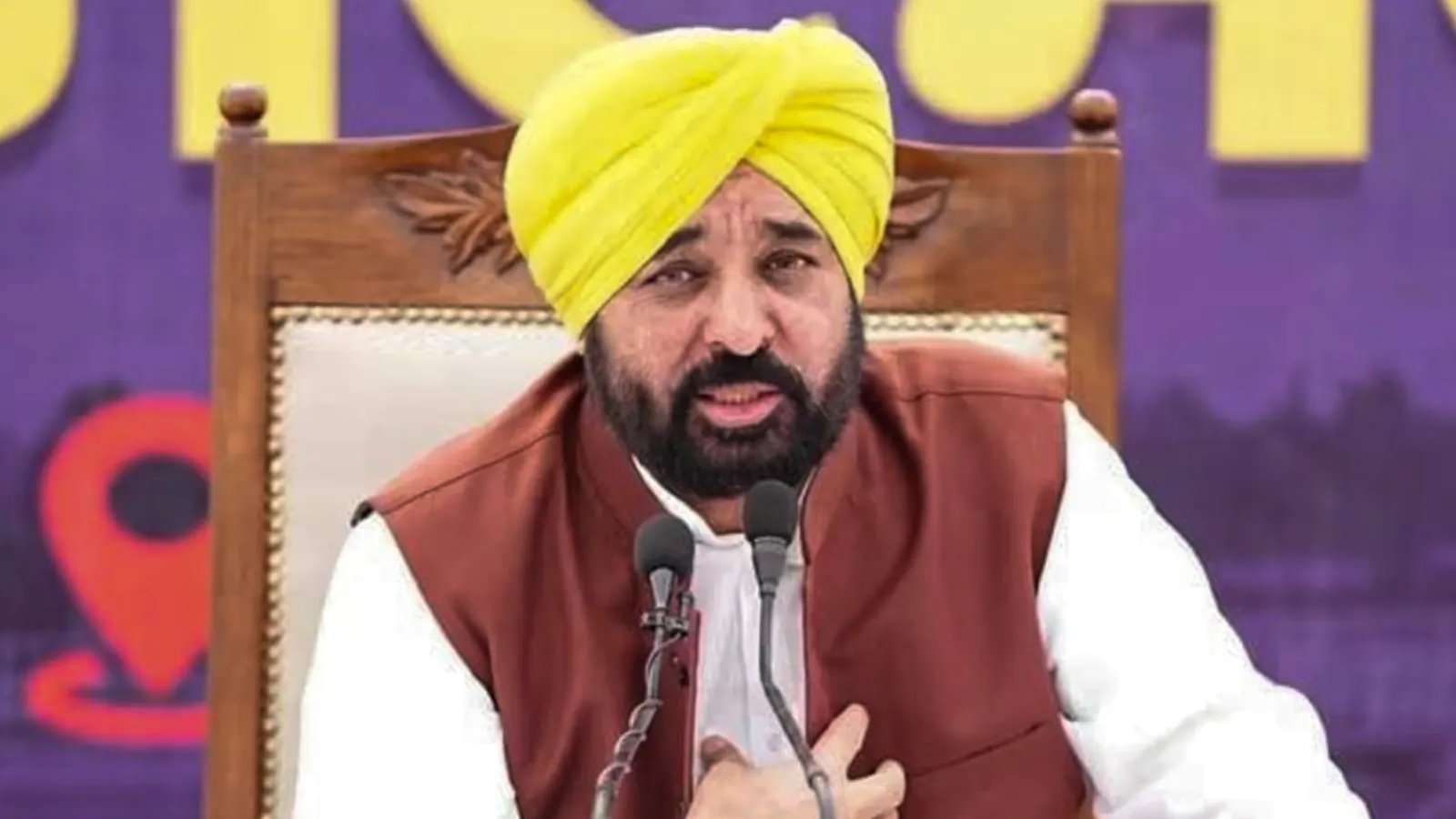
Punjab 2027: Bhagwant Mann Shifts Campaign Gears from Governance to Historical Reckoning
Chandigarh: As the political temperature in Punjab rises ahead of the 2027 Assembly elections, Chief Minister Bhagwant Mann has recalibrated his campaign strategy. Moving beyond a standard assessment of his government’s accomplishments, the Aam Aadmi Party (AAP) leader is now aggressively targeting the opposition by revisiting deeply emotive and historically sensitive chapters in the state’s political narrative.
While the AAP government initially centered its discourse on tangible deliverables—such as employment metrics, healthcare initiatives, and educational reforms—the campaign is now evolving into a high-stakes confrontation. Mann is deliberately forcing his political rivals onto the back foot by demanding accountability for their past tenures.
The Three-Front Assault
Mann’s recent campaign rhetoric follows a calculated pattern, assigning specific historical liabilities to the Congress, the Shiromani Akali Dal (SAD), and the Bharatiya Janata Party (BJP).
Regarding the Congress, the Chief Minister has focused on the legacy of the 1984 anti-Sikh riots and Operation Bluestar. By highlighting these events, he aims to undermine the party’s attempts to frame itself as a viable alternative. By bringing these wounds to the forefront, Mann forces the Congress to address the historical actions of its past leadership rather than focusing solely on the current government’s performance.
The Akali Dal, conversely, finds itself under renewed fire over the 2015 sacrilege incidents and the subsequent police violence at Behbal Kalan and Kotkapura. This issue has long been a source of electoral distress for the Badal-led party. Mann’s constant reminders of these events serve to reinforce the narrative that the previous administration failed to provide justice, a failure he frames as the primary catalyst for the decline of their political influence.
Meanwhile, the BJP is being confronted with the memory of the prolonged farmers’ protest against the now-repealed farm laws. Mann frequently invokes the deaths of over 700 farmers to challenge the BJP’s electoral ambitions in the state. Furthermore, he is using this point to critique the possibility of a renewed SAD-BJP electoral alliance, painting both parties as opportunistic and disconnected from the sentiments of the farming community.
From Development to Confrontation
This shift in strategy marks a significant departure from the launch of AAP’s campaign in September 2026. At that time, the emphasis was strictly on the “report card” of the government’s four-year term, focusing on achievements like Aam Aadmi Clinics, the Maavan-Dheeyan Satkar Yojana, and the provision of thousands of government jobs.
However, recognizing the need to counter relentless opposition criticism, the AAP has pivoted. Rather than passively defending his own governance, Mann is now dictating the terms of the debate by pushing the opposition onto the defensive.
Risks and Counter-Narratives
This aggressive approach is not without its perils. By highlighting the failure to deliver justice in the 2015 sacrilege cases, the opposition has found a loophole to attack the AAP’s own broken promises. Similarly, the Congress and BJP are expected to double down on their critiques of the current administration’s record on law and order and drug control.
For Chief Minister Mann, the upcoming election will be a test of whether he can successfully blend his developmental achievements with a potent, history-based critique of his rivals. As the 2027 deadline nears, the political landscape in Punjab is transforming into a battleground where the past is just as important as the present in deciding the state’s future.
Disclaimer: This content is auto-generated for informational purposes only.
Source: Read Original News