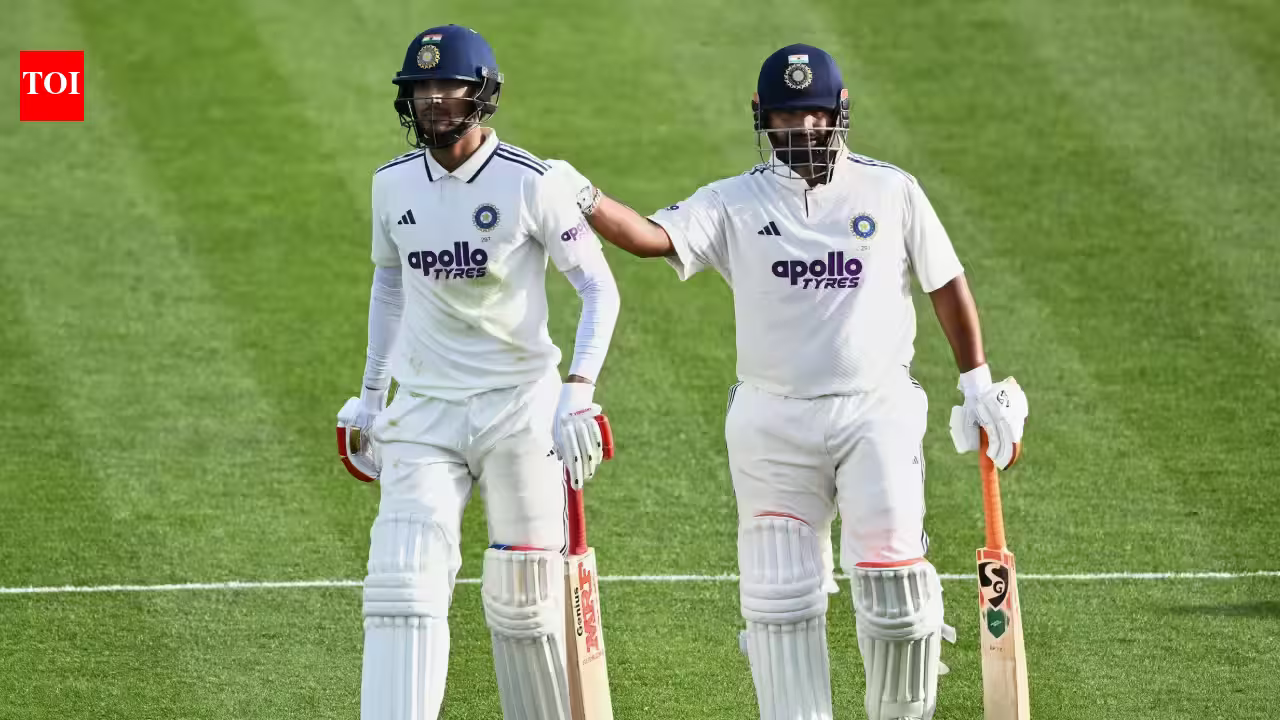










WELLINGTON — KL Rahul has cemented his status as one of modern cricket’s most adaptable opening batters, etching his name into the history books with a masterful century at the Basin Reserve that underscored a rare and enviable achievement: centuries in all four SENA (South Africa, England, New Zealand, Australia) countries as an opener.
Following a period of intense preparation and a clear tactical blueprint, Rahul’s performance on Day 3 of the first Test against New Zealand was a masterclass in patience, technical discipline, and mental fortitude. Speaking after the day’s play, a visibly pleased Rahul admitted that the accomplishment felt “really awesome,” marking the culmination of months of meticulous planning.
A Blueprint Built on Research
Rahul’s path to the three-figure mark in New Zealand was far from accidental. Aware that the conditions at the Basin Reserve—characterized by a thick 15mm grass cover, biting winds, and persistent cloud cover—would test the technical limits of any top-order batter, the Indian opener began his homework nearly seven months in advance.
Rather than relying solely on past muscle memory, Rahul leaned heavily into analytical study. He requested comprehensive footage from team analysts, specifically focusing on how successful overseas batters had navigated the challenging New Zealand tracks in recent years.
“I watched the last few years of Test cricket here,” Rahul explained. “England played here, Australia played here, West Indies were here recently. I just pulled out some videos and asked the analysts to send me footage of guys who’ve scored runs here. Joe Root was there, Harry Brook scored a lot of runs. I just watched how they went about it. It gave me a little confidence that it’s not impossible to score runs in New Zealand. It requires a very clear game plan.”
This data-driven approach allowed Rahul to walk out to the crease with a sense of clarity that is often absent in touring batters. By internalizing the methods of Root and Brook, Rahul arrived in Wellington not as a stranger to the conditions, but as a student who had already sat the exam.
From Struggle to Success
The road to this century was not without its hurdles. Rahul arrived in New Zealand early, prioritizing net sessions in Christchurch and Auckland to acclimate to the local bounce and movement. However, early returns were modest, and an India A stint failed to yield the runs he craved.
The subsequent ODI series offered little time at the crease, leaving his form a subject of debate heading into the Test match. Yet, Rahul remained unfazed, viewing the net sessions as his sanctuary. “I didn’t get a lot of runs in that India A game,” he noted. “But I used the time in the nets and tried to figure out how I could give myself the best chance to succeed in these conditions. There’s a lot of Test cricket under me, a lot of experiences, good and bad.”
That experience proved pivotal. Throughout his innings, Rahul acted as the anchor for the Indian batting lineup, absorbing pressure during testing spells from the Kiwi seamers and providing a stable base that allowed his partners to play with more freedom.
A Near-Miss and a Tactical Win
No century is without its share of luck, and Rahul’s innings was no exception. He survived a frantic, high-stakes moment when he was struck on the pads by Glenn Phillips. The umpire signaled not out, and for 15 agonizing seconds, the fate of his innings hung in the balance as New Zealand debated a review.
“I will buy Glenn Phillips a few drinks after the game for not reviewing that,” Rahul joked post-match. “Those were the slowest 15 seconds of my life. Kept hoping people would listen to GP.”
The reprieve allowed him to continue his methodical dismantling of the New Zealand bowling attack, eventually steering India into a commanding position in the Test.
Dominance Abroad
This innings marks the 10th overseas century of Rahul’s career, a staggering statistic that highlights his comfort away from the familiar conditions of the Indian subcontinent. With only three of his 13 career Test centuries coming on home soil, Rahul has effectively redefined himself as the ultimate road warrior.
His consistency throughout the current World Test Championship (WTC) cycle—having already flourished in England and Sri Lanka—suggests a batter at the peak of his powers. By refusing to deviate from the methods that have brought him recent success, Rahul has ensured that he remains one of the most difficult wickets to secure in international cricket today.
As the match progresses, Rahul’s contribution looks increasingly vital. Though his arm remains sore from a blow sustained during the innings, the mental toll of the match has been offset by the satisfaction of a mission accomplished. After months of digital study and countless hours in the nets, the “New Zealand code” has finally been cracked.
Disclaimer: This content is auto-generated for informational purposes only.
Source: Read Original News