







The Anatomy of a Market Correction: China’s AI Investment Retreat
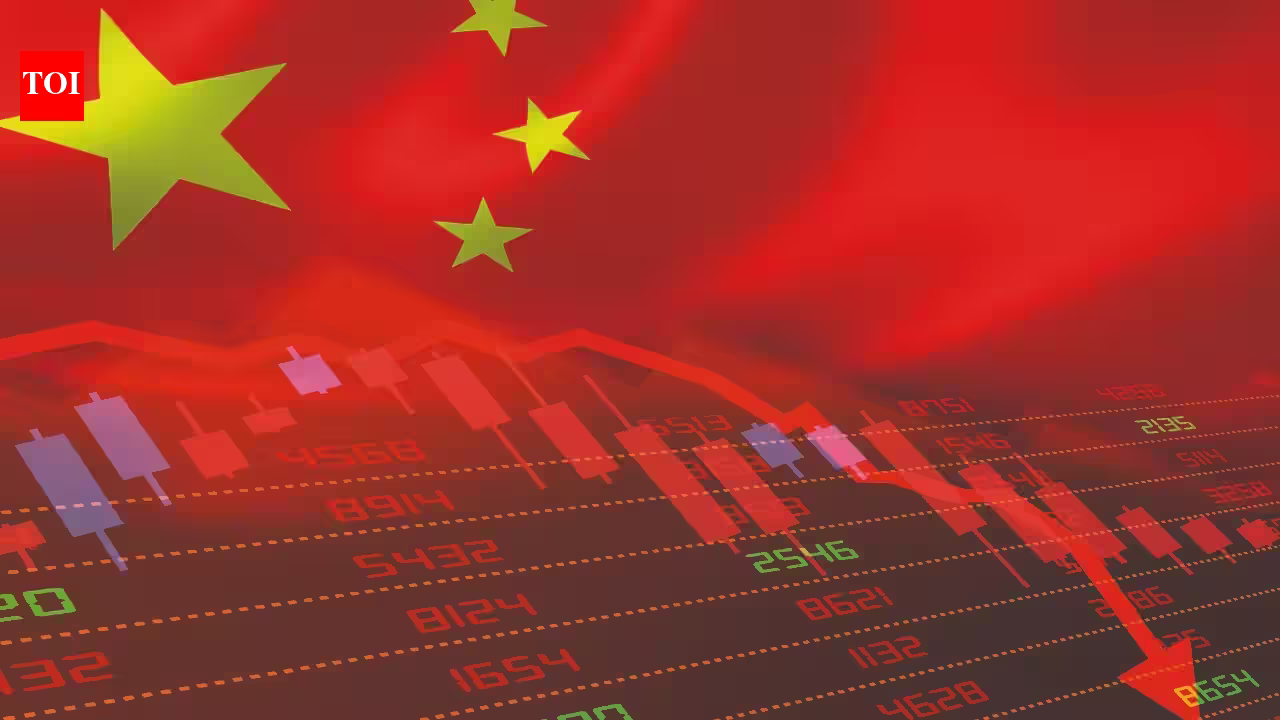
The global narrative surrounding Artificial Intelligence has recently shifted from unbridled optimism to a sobering re-evaluation of fundamental value. Nowhere is this transition more visible than in the Chinese equity markets, where a staggering 1.7 trillion dollars in market capitalization has evaporated from technology-focused indexes since the end of June. This massive sell-off signifies the end of a speculative phase characterized by liquidity-driven growth and represents a painful adjustment for investors who treated AI as a near-guaranteed asset class.
The rapid rise and subsequent fall of companies like Z.AI Co and Zhongji Innolight highlight the volatility inherent in capital-intensive sectors that rely heavily on policy momentum rather than sustained earnings. Early in the year, investors poured capital into these firms under the assumption that China’s indigenous AI development would bypass US technological hegemony. However, as the global momentum behind AI stocks decelerates, the structural weaknesses of the Chinese market—specifically high valuations and sensitivity to regulatory shifts—have been laid bare.
Geopolitical Constraints and the Silicon Bottleneck
A primary driver of the current market anxiety is the escalating complexity of the US-China trade relationship. For Chinese tech firms, the pursuit of AI dominance is not merely a matter of software innovation; it is tethered to a physical reliance on high-end semiconductors. As the United States continues to tighten export restrictions on critical hardware, the path toward a self-sufficient AI ecosystem in China faces significant bottlenecks.
Investors initially ignored these headwinds, focusing on the potential for local alternatives to fill the void. However, as trade barriers impact the supply chain for advanced optical modules and computing infrastructure, the long-term viability of firms reliant on foreign-sourced specialized hardware is being questioned. The market is now pricing in a reality where the “DeepSeek” era of rapid development encounters a structural ceiling caused by hardware scarcity. When the ability to scale models is tethered to the availability of sanctioned technology, growth projections often succumb to the realities of geopolitical tension.
The Vulnerability of Policy-Dependent Growth
In the Chinese economic context, market movements are frequently correlated with government directives. While this provides stability during periods of policy expansion, it creates extreme vulnerability when investor sentiment pivots. The recent rout demonstrates that even massive support mechanisms cannot permanently buoy valuations if the underlying fiscal performance of the sector does not justify the trading multiples.
Many Chinese AI stocks experienced valuations that were untethered from operational reality, fueled by speculative fervor rather than tangible profit margins. When global peers in the US tech sector began to show signs of overextension, the “contagion” spread rapidly to China. For professional investors, this underscores a critical lesson: policy support can act as a floor during slow periods, but it cannot override the gravity of market correction when global liquidity conditions tighten. The shift from aggressive expansion to cautious accumulation suggests that participants are now prioritizing cash flow and resilience over speculative growth.
Implications for the Indian Technology Landscape
The recent turbulence in Chinese AI markets offers significant lessons for the Indian equity landscape. India, currently experiencing a surge in digital infrastructure and startup activity, has its own unique relationship with the AI boom. Unlike the Chinese model, which has been characterized by state-led investment in industrial-scale hardware and large-model development, the Indian ecosystem has leaned toward service-oriented AI integration and application-layer innovation.
Indian enterprises, particularly in the IT services sector, are currently leveraging AI to improve efficiency and service delivery. This is a fundamentally different risk profile compared to the hardware-centric, high-capex investments that collapsed in China. However, Indian investors must remain vigilant regarding valuations in the broader tech sector. The Chinese experience proves that when global capital begins to rotate out of tech, even robust regional markets can suffer from a cooling of sentiment. For Indian investors, the focus must remain on firms with deep integration into global supply chains that are not solely reliant on domestic policy tailwinds, but rather on competitive advantages that survive irrespective of the prevailing macroeconomic cycle.
Reframing the AI Investment Thesis
The market’s current state is not necessarily the end of the AI revolution, but rather the end of its first speculative wave. The 1.7 trillion dollar wipeout serves as a necessary cleansing of the market, forcing participants to distinguish between companies that provide foundational infrastructure and those that merely capitalize on the nomenclature of innovation.
As the industry matures, the focus will inevitably shift toward the “utility” phase of AI. In this new cycle, companies will be evaluated based on their ability to integrate AI into existing business models to generate tangible productivity gains. Those that survive the current downturn will likely be firms that possess clear pathways to monetization and a defensive strategy against supply chain disruption. For stakeholders, this period of volatility is a critical juncture to re-evaluate the risk-to-reward ratio. The reliance on cheap liquidity and the hope for rapid scaling through subsidies has been replaced by a demand for fiscal discipline and technical adaptability.
Conclusion: Navigating the Post-Speculative Era
The contraction of the Chinese AI trade serves as a warning for global markets about the limits of momentum-driven investing. The era of blind optimism regarding high-growth technology stocks is giving way to a more disciplined approach to capital allocation. As the global economy navigates this transition, the emphasis will shift from the sheer volume of investment to the efficiency and durability of the technology being deployed.
For those watching the intersection of policy, technology, and finance, the current reckoning provides a blueprint for what to avoid in the future. Overextended valuations, excessive reliance on government backing, and ignoring the realities of international trade constraints are clear pathways to systemic risk. As the market stabilizes, the winners will be the firms that treat AI as a long-term utility rather than a short-term trade, grounding their growth in the bedrock of consistent revenue and actualized innovation. The current correction is a painful, yet fundamental step in the evolution of the AI sector, marking a transition toward a more sustainable and value-oriented investment landscape.
Disclaimer: This content is auto-generated for informational purposes only.
Source: Read Original News