








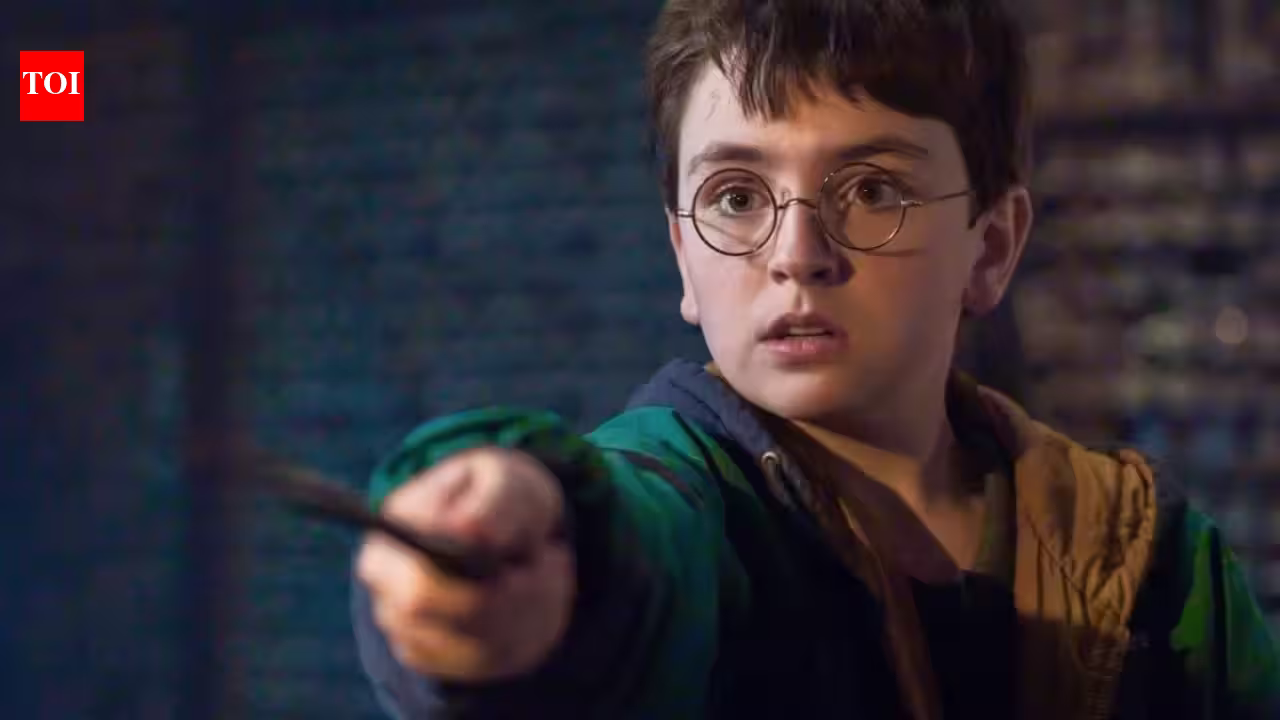
The Wizarding World is bracing for a tectonic shift. For over two decades, the cultural bedrock of the Harry Potter franchise has been firmly rooted in the imagery established by Chris Columbus’s 2001 blockbuster adaptation. We have collectively memorized the cadence of the films, the specific hue of the Great Hall’s enchanted ceiling, and the precise timing of every comedic beat. But HBO’s upcoming series is clearly signaling that it has no intention of being a carbon copy of the source material—or its cinematic predecessors.
With the release of the first 90-second clip, the veil has been lifted on what many are calling the most ambitious television project of the decade. As Harry and Ron step into the Great Hall, we aren’t just seeing a reboot; we are witnessing a reimagining. And for those who have memorized every sentence of JK Rowling’s debut novel, the small, deliberate deviations are already causing a stir among the fandom.
Hogwarts moment gets a new interpretation
The most immediate change in the newly released scene involves the atmosphere of the Great Hall itself. In the sequence, students are seen chanting Dumbledore’s name—a rhythmic, boisterous display of student body reverence that is entirely absent from the pages of The Philosopher’s Stone. In the book, the start-of-term feast is viewed strictly through the anxious, wide-eyed lens of a boy who has never belonged anywhere. By shifting the perspective to include the students’ collective reaction, the show is establishing a tone that feels more grounded in the reality of a functioning magical school, rather than just a backdrop for Harry’s internal monologue.
Perhaps more intriguing to the die-hard book readers is the alteration of a pivotal bit of dialogue. In the original text, when Harry whispers the iconic line, “Is he a little mad?” regarding Dumbledore, he is speaking to Percy Weasley. In this new adaptation, that line is directed at Ron. It is a shrewd narrative choice; by cementing the Harry-Ron bond immediately, the show prioritizes the duo’s burgeoning friendship over the more bureaucratic interactions with the Weasley older brother. It signals that this series is interested in the emotional scaffolding of the trio from the very first frame.
The “James Potter” mystery: Why the show is looking beyond the page
The most significant departure, however, is a private, clandestine conversation between Albus Dumbledore and Professor Minerva McGonagall. In the book, the banquet remains anchored to Harry’s perspective—he is an observer, largely unaware of the high-level politics and watchful eyes of the professors. By giving the audience a window into a quiet moment where McGonagall discusses Harry’s striking resemblance to his late father, the series is breaking the “Harry-only” narrative structure.
This is a massive indicator of the show’s potential trajectory. If HBO is willing to insert scenes that take place away from the protagonist, it suggests that the creative team is interested in world-building beyond the limits of the original novel’s restricted point of view. It hints at a richer, more expansive tapestry, perhaps giving screen time to the machinations of the staff, the history of the school, and the looming shadows that Harry isn’t yet old enough to notice. For a story that has been told so many times, this “omnipresent” perspective could be the breath of fresh air that justifies the production of a new adaptation.
The math of magic: Analyzing the runtime
The ambition of this adaptation is perhaps best evidenced by the numbers. Leaked runtimes for the eight-episode first season have confirmed that the series will span over seven and a half hours of television. When you compare this to the two-and-a-half-hour runtime of the 2001 film, the scale becomes clear: the show has roughly five additional hours to breathe, explore, and expand.
This isn’t just padding; it’s an opportunity. The first film was a whirlwind, a race to capture the whimsy of the novel while adhering to the constraints of a theatrical release. An eight-hour season allows for the “boring” parts of school life—the homework, the wandering corridors, the smaller magical mishaps—to be given weight. When the runtime for Episode 1 sits at an hour and six minutes, it’s clear that we are in for a slow-burn, prestige-drama approach to the material. This format allows the show to treat Hogwarts not just as a location, but as a living, breathing character, providing the depth that a two-hour movie simply could never afford.
Is it time to rewrite our expectations?
The reaction to these changes has been predictably polarized. Some purists view any alteration of the source text as a bridge too far, arguing that if the book didn’t contain a scene, it shouldn’t be on screen. But this ignores the fundamental nature of adaptation. If we wanted the exact experience of the book, we have the book. If we wanted the exact experience of the film, we have the film.
By introducing these changes, HBO is making a bold statement: this is a new interpretation for a new generation. The inclusion of the chanting, the realignment of dialogue, and the behind-the-scenes glimpses of the professors are all design choices aimed at creating a show that can stand on its own feet. The creative team seems to understand that to successfully adapt a piece of culture as massive as Harry Potter, they must be willing to occasionally disappoint the gatekeepers in order to surprise the audience.
As we count down the days to the December 25 premiere, the burning question isn’t whether this show will follow the book, but how much further it will dare to stray. If these early crumbs of footage are any indication, we are in for a version of Hogwarts that is more collaborative, more complex, and perhaps, more magical than ever before. It is a bold start, and for a franchise that has lived in the past for so long, looking forward—and outside the pages—might be exactly what it needs.
Disclaimer: This content is auto-generated for informational purposes only.
Source: Read Original News