







The Evolution of Worldbuilding in Grand Theft Auto 6
The release of Grand Theft Auto 6 represents a significant shift in how Rockstar Games approaches open-world storytelling. While the series has long been lauded for its sprawling maps and chaotic gameplay, the latest entry demonstrates a marked maturation in its narrative caliber. The dialogue, character motivations, and structural writing in the current iteration elevate the franchise, placing it closer to prestige television and cinematic experiences than the arcade-style narratives of the early 2000s.
However, this elevation creates an internal friction. As the storytelling has matured, the persistent reliance on juvenile, legacy-based satire—specifically regarding in-game corporate branding—is becoming an anchor. While the game world functions as an analogue for real-world society, allowing for expansive worldbuilding, some of the satirical elements that defined the series a quarter-century ago are now clashing with the sophisticated, modern narrative framework the developers have built.
The Necessity of Fictionalized Branding
In the realm of open-world development, the use of parody brands is a necessity born of legal constraints. Unlike titles that pursue aggressive product placement deals, Grand Theft Auto operates in a vacuum where real-world trademarks are replaced by fictional, often mocking equivalents. This is a functional design choice that allows the game to maintain its proximity to reality without falling into the complexities of corporate licensing.
In previous entries, this approach was highly effective. Names like Weazel News for a national news outlet or Snapmatic for a photo-sharing platform are successful because they are instantly recognizable and reinforce the game’s satirical intent. These brands bridge the gap between the player’s real-world experience and the digital setting of Leonida. Yet, as we move through 2026, the threshold for what constitutes effective satire has shifted. When the narrative writing reaches high levels of emotional complexity, a reliance on low-effort puns risks breaking the player’s immersion.
The Mismatch Between Sophistication and Slapstick
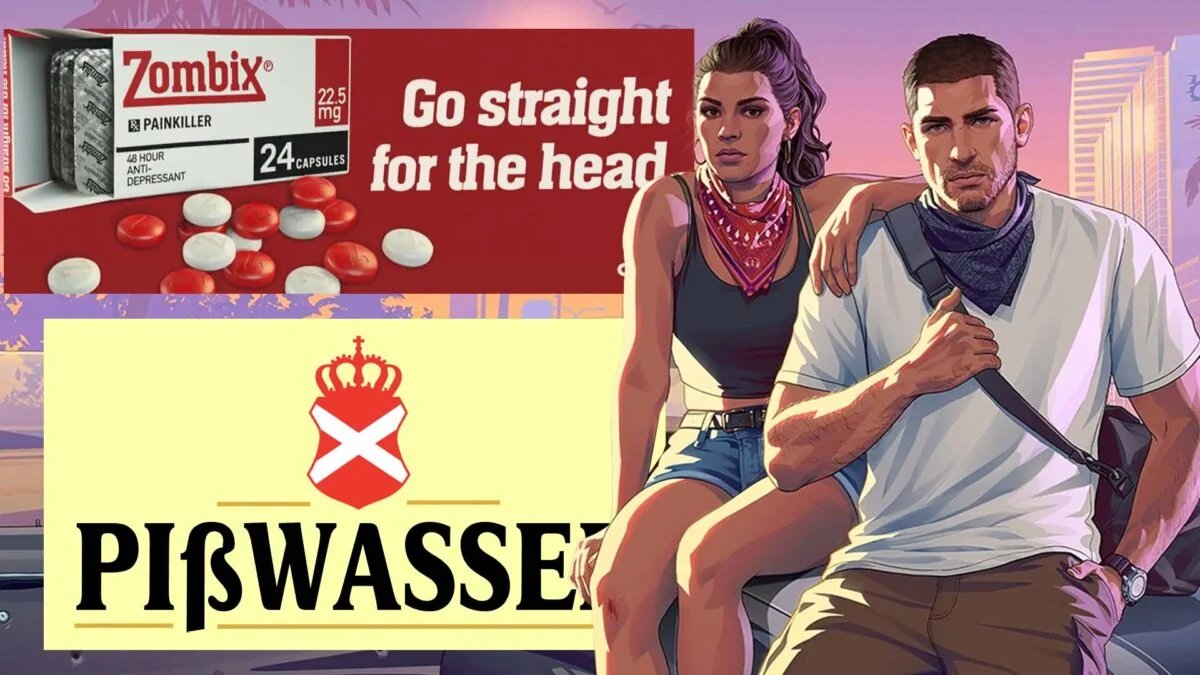
The core conflict lies in the aging quality of specific recurring brands. Elements like Pisswasser or restaurants that rely on basic double entendres—such as the Big Balls burger—exemplify a specific brand of comedy that feels increasingly out of place. While these were staples of the earlier era of gaming, their continued presence in a world that is otherwise meticulously crafted to feel grounded can feel like a relic.
This is not a call for the total abandonment of humor. Rather, it is an observation of an uneven tone. When a game manages to present a story with the weight and gravity of a modern crime drama, the sudden appearance of a store brand that feels lifted from a 2005 parody film creates a dissonance. The “Zombix” brand, for instance, serves as a prime example of a joke that has lost its impact, functioning more as a placeholder than a piece of world-building. These elements reflect a period of gaming history where the medium was still defining its voice, often opting for the loudest, most obvious gag available.
Auditing the Virtual World
For future iterations or ongoing updates to the current world, an audit of these assets is a logical step for technical and creative refinement. The world of Grand Theft Auto is intended to feel like a living, breathing space, yet real-world brands and societal landscapes are subject to constant change and eventual disappearance. If real-world companies can vanish, then the game world should be comfortable retiring its own stale satirical tropes.
Removing these legacy brands does not mean the world would feel hollow. On the contrary, replacing them with more nuanced or subtle references could enhance the sense of discovery for the player. By pruning the list of tired jokes, the development team creates space for more clever, current, and integrated humor that better aligns with the high standards of the central narrative.
Refining the Creative Vision
Ultimately, the strength of Grand Theft Auto 6 lies in its ability to adapt and evolve. The mechanics, visual fidelity, and narrative depth have all seen massive improvements compared to the foundations of the series. To ensure that the worldbuilding matches these advancements, it is essential to re-evaluate the utility of long-standing creative decisions.
A commitment to iterative improvement is what allows a series to remain relevant over decades. By critically examining which brand names still serve the vision of the game and which have simply become clutter, developers can ensure that the satire remains sharp rather than becoming a performance of its former self. As the series moves forward, the focus should remain on maintaining a consistent narrative tone. If the writing is a cut above the rest, the environmental storytelling and brand architecture should strive to reach that same level of quality, ensuring the game feels like a cohesive, modern achievement rather than a collection of disparate jokes from different eras.
Disclaimer: This content is auto-generated for informational purposes only.
Source: Read Original News