








Enhanced Communication Control with Scheduled Messaging
WhatsApp has officially initiated the global rollout of its long-anticipated message scheduling feature. This update, which spans both iOS and Android platforms, represents a significant shift in how the messaging giant manages asynchronous communication. By allowing users to queue messages for future delivery, WhatsApp is addressing one of the most requested functional gaps in its feature set, aligning its capabilities with contemporary demands for efficient digital coordination.
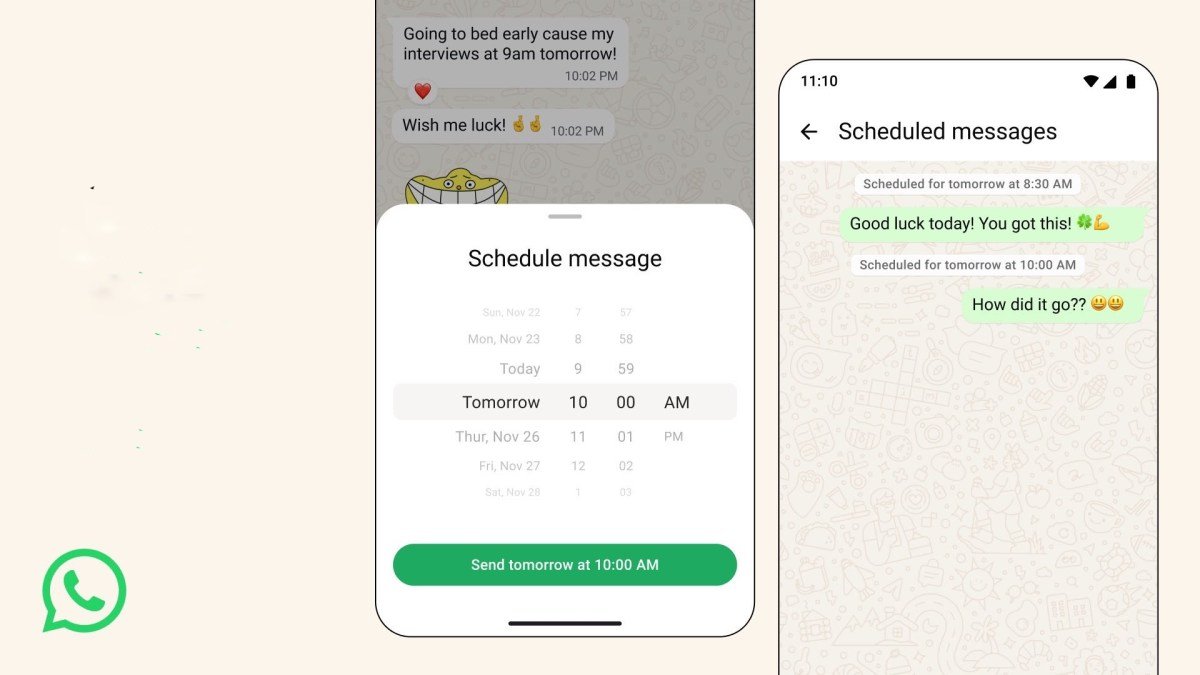
The implementation is designed for simplicity. Upon receiving the update, users will notice that the standard interaction with the send button has been augmented. Instead of a single tap to transmit content immediately, a long-press on the send button now triggers the scheduling interface. This intuitive adjustment minimizes user friction, ensuring that the feature remains accessible without cluttering the primary chat interface. Users can define a delivery window ranging from 10 minutes to 14 days in the future, providing a generous buffer for planning both personal and professional correspondence.
Technical Execution and Reliability
One of the most noteworthy technical aspects of this release is the server-side management of the scheduling process. Unlike early third-party workarounds or local-device-dependent automations, WhatsApp’s new feature ensures that the scheduled transmission is handled by the platform’s infrastructure. This means that the message will be delivered regardless of the user’s device status. Whether a smartphone is powered down, in airplane mode, or situated outside of network coverage at the time of the scheduled delivery, the message will reach its intended destination on schedule.
This architectural approach removes the reliance on persistent device connectivity, which is a major reliability upgrade. By shifting the processing to the server, WhatsApp ensures that users can confidently set reminders, announcements, or time-sensitive data packets without worrying about maintaining an active cellular or Wi-Fi connection at the exact moment of delivery. The feature supports various media types, including standard text, high-resolution photos, and video files, maintaining the same integrity and end-to-end encryption standards expected of the platform.
Management and Oversight of Queued Content
To prevent potential confusion or the accidental sending of outdated information, WhatsApp has included a centralized management view. Users can navigate to a specific section within the app—accessible via the chat context menu—to view a complete list of their pending messages. This oversight mechanism allows users to audit their queue, providing the necessary control to delete messages that may have become irrelevant or superseded by subsequent events.
While the ability to delete a message is confirmed, the current iteration of the feature focuses primarily on transmission control rather than live document editing. If a user realizes a mistake in a message that has already been scheduled, the most efficient workflow is to delete the original entry and create a new one. This approach prioritizes system stability and data integrity, ensuring that message timestamps and delivery logs remain accurate while preventing conflicts that could arise from real-time modifications to a payload that is already queued in the distribution server.
Strategic Use Cases in Professional Environments
The implications for professional use are extensive. In modern corporate environments where cross-departmental collaboration is the norm, the ability to schedule updates is a substantial productivity multiplier. Team leads can now draft project status reports or reminders during late-night or weekend hours and schedule them for delivery at the start of the standard business day. This helps maintain professional boundaries while ensuring that information arrives when it is most relevant to the recipient’s workflow.
Furthermore, small and medium-sized businesses that utilize WhatsApp as a primary tool for customer engagement will benefit from this functionality. Scheduling promotional updates, event notifications, or seasonal greetings allows for more consistent communication patterns. By distributing these messages at optimal times—rather than in irregular bursts—businesses can increase the likelihood of recipient engagement. The ability to coordinate these messages across different time zones also serves to bridge the gap for global teams, ensuring that announcements reach all participants simultaneously, regardless of their geographical location.
Maintaining Competitive Parity in a Saturated Market
The introduction of scheduled messaging is a strategic move that brings WhatsApp into closer parity with its primary competitors. Platforms like Telegram and Signal have long included scheduling functionality, which has served as a primary draw for power users who require higher levels of control over their messaging cadence. By finally integrating this feature, Meta is effectively neutralizing one of the main competitive advantages held by its rivals.
This update reinforces WhatsApp’s position as an essential utility for both casual and power users. In an era where digital communication is constant, the ability to “set and forget” provides a necessary level of convenience. It reduces the cognitive load on the sender, who no longer needs to keep a manual alarm or reminder to send critical information. As WhatsApp continues to mature, the focus remains on balancing the simplicity that brought it to prominence with the sophisticated functionality required to stay relevant in a highly competitive landscape. The rollout is currently underway globally, and all users should see the functionality appear in their respective app versions in the coming days.
Disclaimer: This content is auto-generated for informational purposes only.
Source: Read Original News