







The Conceptual Framework of My Channel
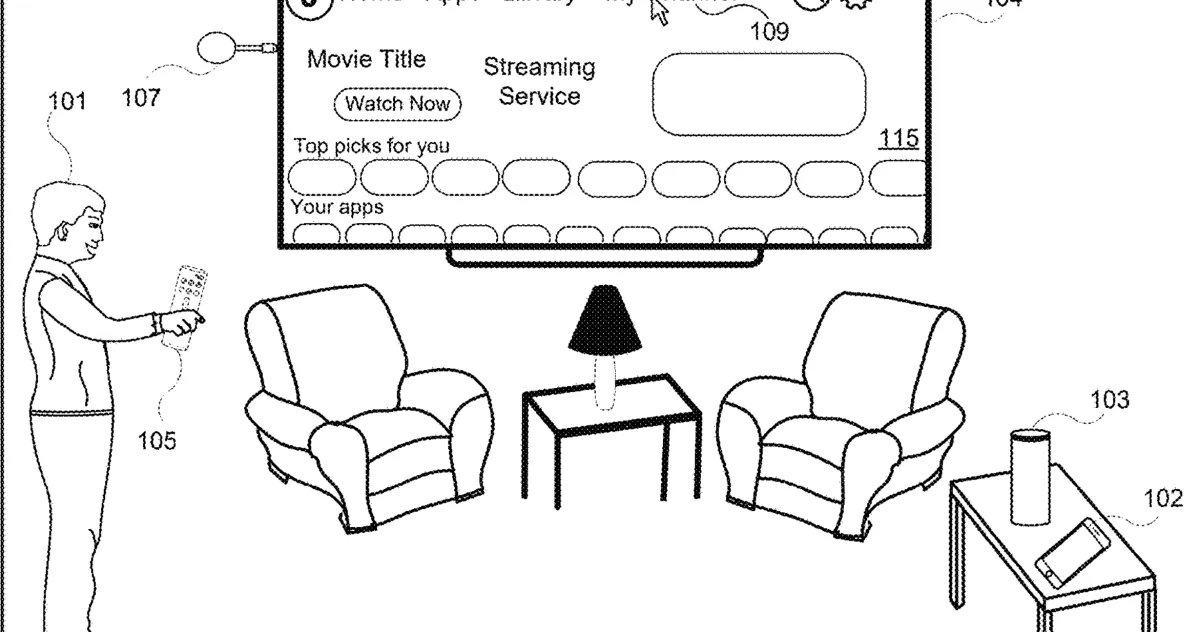
Google has recently faced a significant regulatory hurdle regarding a patent filing for an ambitious and controversial system titled My Channel. While the United States Patent and Trademark Office has currently rejected the application, the filing offers a detailed blueprint of how the technology giant intends to leverage generative artificial intelligence to redefine media consumption. At its core, My Channel is designed to function as an automated, hyper-personalized broadcasting feed. Unlike traditional streaming services that provide a library of existing content, this proposed system would act as an on-the-fly production house, synthesizing video narratives and targeted advertisements in real-time.
The architecture of the system relies on the integration of massive datasets, combining explicit user inputs with granular behavioral telemetry. By analyzing demographic data, historical watch patterns, and contextual information—such as geolocation via GPS, IP address positioning, and age-specific profile data—the system is intended to formulate dynamic prompts. These prompts are then processed by large language models (LLMs) and advanced video diffusion generators hosted on Google’s infrastructure. The objective is to produce a continuous stream of video content that aligns precisely with the user’s documented interests and immediate environment.
Technological Integration and Data Harvesting
The technical depth of the My Channel patent reveals a system designed to ingest vast amounts of external information. Beyond static user profile metrics, the platform would theoretically integrate with existing streaming services to harvest training data and refine its generative accuracy. This interoperability is a critical component, as it would grant the AI access to metadata from professional film and television libraries, allowing it to mimic specific directorial styles, genres, or narrative structures.
Furthermore, the system incorporates real-time news feeds and social media trends, enabling the generated content to remain culturally relevant. If a user has a documented affinity for a particular director or a specific cinematic genre, the system could synthesize a movie-length production that reflects those themes. The processing burden for this synthesis would be handled entirely on Google’s server-side, insulating the user’s local device from the intensive computational requirements of high-fidelity video generation. However, this centralized architecture creates a massive data funnel, centralizing an unprecedented amount of personal information to power the personalization engine.
The Advent of Protagonist-Centric Generation
Perhaps the most disruptive and debated feature within the patent is the capability to place the user directly into the content. My Channel describes a process wherein the system captures visual and auditory data to construct digital avatars of the viewer. Through sophisticated rendering techniques, the AI would then map the user’s likeness onto the primary character of a generated narrative. This moves beyond traditional deepfake technology, aiming for a seamless integration where the user becomes the lead protagonist in a bespoke film or television sequence.
This feature raises significant questions regarding digital identity and the nature of passive entertainment. While proponents might argue that this increases user engagement, the underlying mechanics necessitate the constant processing of personal biometric data. The ability to cast a user in an endless series of generated clips suggests a transition from media consumption to a form of digital roleplay, orchestrated entirely by algorithms designed to maximize time-on-platform metrics.
Algorithmic Echo Chambers and Cultural Stagnation
From an architectural standpoint, My Channel is engineered to prioritize retention through radical customization. By delivering content that reflects only what the system has deduced a user already likes, the platform risks reinforcing severe algorithmic echo chambers. In the context of media consumption, this means reducing exposure to diverse perspectives or unexpected artistic styles. If the system succeeds in its goal of keeping users engaged by serving them constant, tailored regurgitations of their own preferences, it effectively limits the potential for intellectual discovery.
The impact of such a system on the broader cultural landscape could be profound. By automating the creation of entertainment, platforms may devalue the role of human creative intent. Generative models, regardless of their technical sophistication, are fundamentally probabilistic, not purposeful. They excel at pattern matching and visual mimicry but lack the capacity for intentional narrative development or authentic expression. The result is a cycle where the algorithm feeds the user a stream of artless content, trained on previous art, resulting in a degradation of aesthetic standards—a phenomenon often described in industry circles as content slop.
Industry Impact and Future Outlook
The push by large technology firms to integrate generative AI into streaming media is indicative of a broader shift in the digital economy. Studios and platforms are under immense pressure to increase user engagement and lower production costs. My Channel represents the logical, if bleak, conclusion to these efforts. If successful, the platform would not just be a delivery mechanism for content; it would become the primary creator of that content, bypassing the need for human writers, actors, and directors in favor of automated scripts and synthetic performances.
Although the initial patent application has been rejected, the possibility of an appeal or a revised submission remains. The regulatory battle over this technology will likely serve as a testing ground for how intellectual property laws and personal privacy standards intersect with generative AI. As developers continue to improve the latency and visual fidelity of video models, the gap between human-produced media and AI-synthesized content will narrow. Whether this transition enriches the user experience or merely creates a vast, hollow feedback loop of personalized, machine-generated noise remains the central tension of the current technological era. For now, the prospect of My Channel stands as a stark reminder of the potential consequences when technological capabilities outpace the consideration of human-centric values in entertainment.
Disclaimer: This content is auto-generated for informational purposes only.
Source: Read Original News