









2026 was dead on arrival. As ever, the horizon was crowded with stars whose luminosity increasingly concealed diminishing returns, while spectacle was promised at the expense of storytelling. Jingoism was once again sold as the grammar of commerce, while crass comedy was offered as its only permissible relief. There were some good films and a few great films, money spinners and films that were doa, films that will pass the test of time and those that will be forgotten immediately. Amidst the Borders and Dhurandhars of the world which earned crores and created records, cinema reminded us that history is rarely written by its loudest proclamations alone.
There are always small currents that refuse the direction of the wind. They may not have won the battle for attention, but they gave the giants a far sterner contest than the box office alone could ever reveal.

So, with six months behind us, here’s a roundup of the ten finest films of 2026 so far, ranked. None of the them have passed that rs 100 crore Rubicon, but stood out.
10. Happy Patel: Khatarnak Jasoos
 A still from Happy Patel Khatarnak Jasoos
In the hands of Vir Das and Kavi Shastri, Happy Patel: Khatarnak Jasoos becomes a delirious act of genre vandalism, taking apart the spy blockbuster at a time when the year has been overrun by chest-thumping espionage epics and comedies allergic to wit. Its most inspired flourish, though, is its conversation with the mythology of Shah Rukh Khan. Beneath the zaniness lies the story of a NRI discovering his roots (read Swades), and in doing so, it suggests, perhaps patriotism isn’t measured in displays of muscle. Perhaps it begins with something as simple as opening your arms (and hearts) like Khan. An embrace of yourself, and by extension, of a country whose greatest strength has always been its many selves.
9. Subedaar
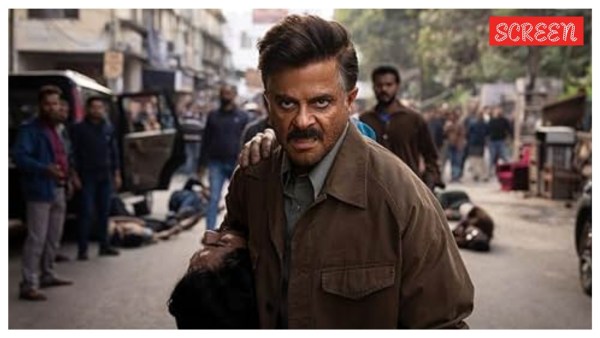 Anil Kapoor in and as Subedaar.
Who would have thought that in an era when every star seemed determined to prove their mettle as an action hero, it would be a weathered, world-weary Anil Kapoor, playing a distinctly desi John Wick, who would emerge as the year’s most formidable screen warrior in Suresh Triveni’s Subedaar. But the tragedy of his character Arjun is that he is very much exhausted by the burden of heroism. As a retired solider who returns from a lifetime of service only to discover that peace is harder to come by than war. For a man who consistently offered his body to the nation, the wound is not simply that the system has failed him. It is the more devastating suspicion that somewhere along the way, the country he served stopped resembling the one he believed he was protecting. In Arjun, one glimpses an older idea of India, trying to find its footing within the intolerable, impatient skin of a naya bharat.
8. Kennedy
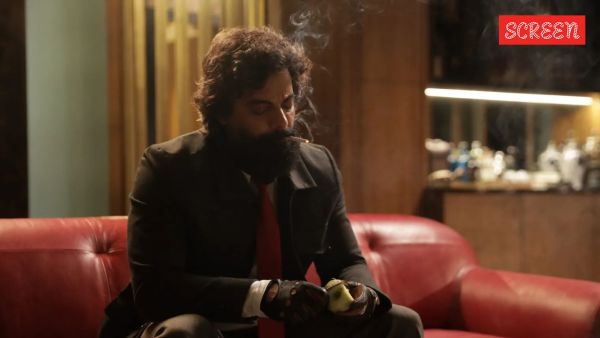 Kennedy is now streaming on Zee 5
Though it first premiered at the Cannes Film Festival in 2023, Anurag Kashyap’s Kennedy finally found its audience this year. Its eponymous protagonist, however, is granted no such release. Kennedy (Rahul Bhatt) wanders through Mumbai in search of a closure that forever eludes him. It is only fitting that Kashyap mirrors the maximum city in his assassin: where every gain is someone else’s loss. The hunter inevitably becomes the hunted, as the larger hunt for a man reveals the ruin within the hunter. His rage invites many readings: an indictment of a society that has normalised violence until it becomes instinct; or rather, a portrait of a crowd forever consumed by rage but blind to the wreckage it leaves behind. Above all, though, Kennedy feels like Kashyap’s most personal film in years. Time ticks forward within the film, moving towards “The Night,” yet by the time it arrives, you understand that there will be no dawn from hereon.
7. Tu Yaa Main
 Tu Yaa Main is essentially a love story.
Bejoy Nambiar finally finds material worthy of his stylistic exuberance. You walk in expecting a creature feature; somewhere along the way, you find yourself swept up by something far more disarming; a love story. At its heart is a class-crossed romance between two internet sensations: Maruti (Adarsh Gourav) and Avani (Shanaya Kapoor), whose budding relationship is put to the ultimate test when they find themselves trapped inside an abandoned swimming pool at a secluded Goan resort with a crocodile circling the water. Much of the criticism surrounding the film centred on how long it takes to arrive at the crocodile. But that complaint mistakes the spectacle for the story. Because the crocodile was always almost incidental. The true trial was of love itself as the was never asking whether its lovers could outrun the beast. It was asking whether their affection could survive the ordeal.
Story continues below this ad
Also Read | Imtiaz Ali’s films taught me that getting what you want won’t save you
6. Mayasabha
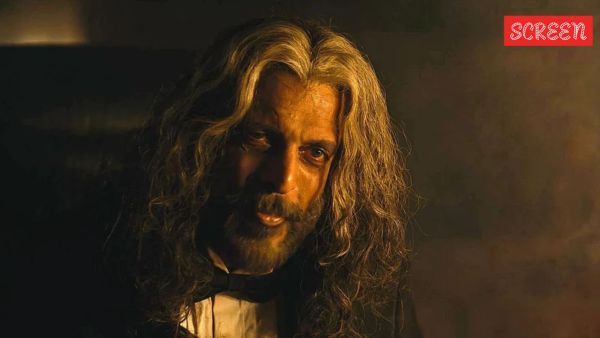 The principal language of the film is that of deception.
As is often the case with Rahil Anil Barve, Mayasabha unfolds in a world where people seem to have stepped out of folklore rather than reality. Once again, his cinema returns to familiar fixations: greed that corrodes from within, a dysfunctional father and son dynamic. Yet deception remains the true cornerstone of Barve’s storytelling. Greed is only the bait. Beyond it lies an inquiry into trust. The volatile father-son relationship slowly reveals itself as an autopsy of intergenerational trauma. An atmospheric chamber thriller draped in the shadows of the Mahabharata and the Ramayana, Mayasabha borrows the language of myth only to arrive at its deepest devotion: to storytelling itself. Its most potent image is a crumbling single-screen cinema, standing like a forgotten shrine. It’s most potent thought is cinema as a place where stories not only unfold but are also set free.
5. Dug Dug
 The recurring visual of a man inflating a balloon throughout the film.
Ritwik Parekh’s indie feature is a deceptive little marvel. Its trickery is embedded as much in its visual language as in its narrative design, constantly nudging you towards one interpretation only to unsettle it with another. The simplest way to describe the film is this: a new god arrives in town, and it happens to be a motorcycle. Drawing inspiration from the Om Banna Temple in Jodhpur, where travellers offer prayers to a motorcycle before embarking on their journeys, the film can certainly be read as a sly satire on blind faith and the machinery that monetises belief. But to stop there would be to miss its more fascinating provocation. The film is just as interested in the architecture of faith as it is in its exploitation. It asks how belief comes into being, how myths gather momentum, and how enough people willing something into existence can make it feel indistinguishable from truth. That idea is found through a recurring visual motif: a man blowing into a balloon that keeps expanding throughout the film. The image becomes a metaphor for manifestation. After all, every faith looks like delusion from the outside. And every delusion begins with someone willing to believe.
4. Everybody Loves Sohrab Handa
 Vinay Pathak is in sublime form in Everybody Loves Sohrab Handa.
The whodunit has long overstayed its welcome. Not even Agatha Christie’s blueprint has been enough to rescue the genre from its increasingly mechanical Bollywood avatars. Trust Rajat Kapoor, then, to remind us that the mystery was never the point. His chamber piece begins with the death of Sohrab Handa (a magnificent Vinay Pathak), whose closest friends immediately find themselves under suspicion. Kapoor’s masterstroke lies elsewhere: he first makes Handa almost impossible to like. Abrasive, insensitive, provocative and casually cruel, he is the sort of man whose absence seems easier to mourn than his presence. Then he dies within the film’s opening minutes. Death, however, proves to be Handa’s greatest defence. As the investigation unfolds, so do the lives of those he leaves behind, and their polished facades begin to crack.
Story continues below this ad
Handa may have been blunt, but they are duplicitous. He was aggressive; they are capable of violence. He wounded people in plain sight, while they perfect the art of doing so behind closed doors. By the time the truth emerges, it becomes difficult to believe that only one person killed him. Everyone, in ways both visible and invisible, had already played a part. But beyond the mechanics of the mystery lies a far more searching examination of masculinity. A deeply affecting exchange between Handa and Arun (Chandrachur Rai) rearranges everything you thought you knew about him. In that moment, Kapoor refuses the comfort of easy villains. He reminds us that every bully leaves victims in his wake, but every bully, too, carries the bruises of a past that shaped him. The revelation doesn’t absolve Handa. It simply makes the tragedy impossible to look away from.
3. Ikkis
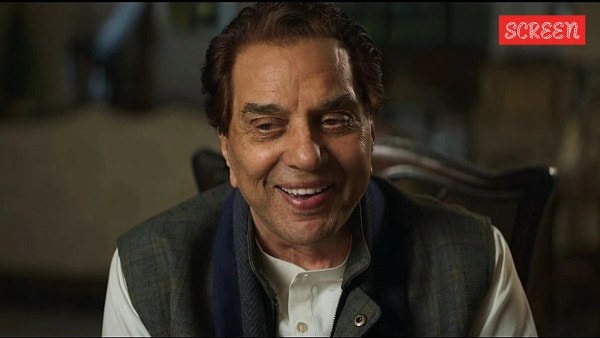 Dharmendra’s casting in the film was a masterstroke.
Trust Sriram Raghavan to step into the domain a of war narrative and emerge with a film that refuses to glorify it. Every great war film is, eventually, an argument against war, and Ikkis wears that conviction with great confidence. While so much of contemporary cinema imagines soldiers as men forever drawn to the battlefield, Raghavan understands a simpler, more devastating truth: no one longs for peace more than the person who has witnessed war. The greatest dream of a soldier is not victory, but a chance to return to his home.
Homecoming becomes the film’s emotional grammar, and nowhere is that more poignantly realised than in the casting of the late Dharmendra. Like his contemporaries, Dilip Kumar, Dev Anand and Raj Kapoor, he belonged to the last generation of Hindi cinema’s great stars whose lives were irrevocably shaped by Partition. His presence carries memories no performance can manufacture: of a homeland lost, of lives divided by borders, and of a generation that understood displacement. That is Ikkis’s greatest strength. It arrives at a moment when the last custodians of those memories are fading away, and with them, a cinema that instinctively placed humanity before hostility. In remembering their world, Raghavan reminds us that the first casualty of forgetting Partition isn’t history. It’s humanity.
Also Read | Imtiaz Ali’s Main Vaapas Aaunga chronicles a country in danger of forgetting itself
Story continues below this ad
2. Assi
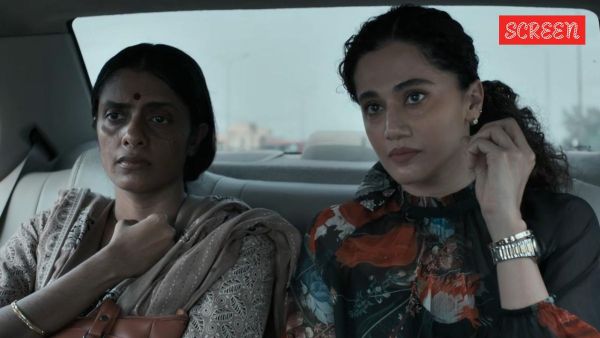 With Assi, Anubhav Sinha delivers his finest film in years.
Assi is an angry film, but one that never allows itself to be consumed by its rage. It begins as the story of a rape survivor’s pursuit of justice, only to gradually widen into something far more unsettling: an inquiry into the ecology of sexual violence itself. The crime is not treated as an isolated act, but as the inevitable consequence of a society that manufactures it. That is where the film’s intelligence lies. It refuses the comfort of easy binaries, widening its gaze to encompass not only the survivor but also the parents of the accused (a remarkable Manoj Pahwa and Supriya Pathak), forcing us to confront the uncomfortable ripples of violence long after the crime itself has been committed. It is acutely aware of the world it inhabits, its misogyny, its evasions, its institutions designed less to deliver justice than to exhaust those who demand it.
Yet the film’s boldest gesture is that it refuses to sanctify vengeance. It interrogates the seductive morality of “an eye for an eye,” asking what happens when the wounded begin to see themselves as the sole custodians of justice. Because, anger, when left unchecked, ceases to be a force of resistance and becomes another instrument of ethical blindness. That conviction finds its expression through Vinay (Mohammed Zeeshan Ayyub) and his young son. In an incisive moment, the child plays with a toy machine gun. Vinay gently takes it away, reminding him that even play teaches its own language, and that violence rehearsed is violence remembered. It is a deceptively simple exchange, but it contains the entire moral architecture of Assi. For all its fury, the film never relinquishes its capacity for empathy.
1. Main Vaapas Aaunga
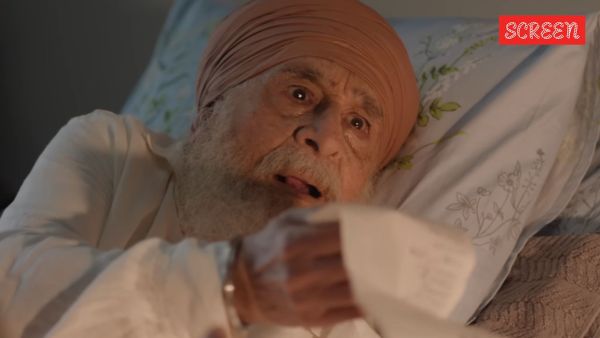 Keenu pines for love on his deathbed.
At the age of 95, Keenu (Naseeruddin Shah) longs not merely for a lost love, but for an entire world that disappeared with it. A homeland, a youth, a future that never came to pass, he lives suspended between what was and what might have been. Like Manto’s Bishan Singh in Toba Tek Singh, he inhabits the space between geographies and histories, belonging fully to neither. Partition did not simply separate him from the woman he loved; it stranded him in time itself. Imtiaz Ali transforms Keenu’s fading memory into a metaphor for a nation losing its moral memory. In many ways, the film feels like a companion piece to Ikkis, yet Ali pushes the idea further inward. The film’s most affective truth isn’t that the greatest theft of his life was not committed by Partition; it was committed by the bitterness he allowed Partition to leave behind. Keenu’s punishment, then, is not mortality but memory. To survive everyone else is simply longevity. To survive your own unlived life is tragedy. Perhaps only Ali could have made this film. For two decades, his cinema has followed lovers in search of themselves. This time, it is a nation searching for its soul.