








Jaipur’s Civic Complaint Portal Goes Viral for Refreshingly Relatable Hindi
JAIPUR, INDIA – August 18, 2026 – The Jaipur Nagar Nigam (Jaipur Municipal Corporation) has unexpectedly found itself at the center of a social media sensation, with its official complaint portal garnering widespread praise for its remarkably candid and simple Hindi language options. Eschewing formal jargon, the portal’s direct and everyday descriptions of civic issues have struck a chord with citizens and netizens alike, transforming a routine administrative tool into a viral internet hit.
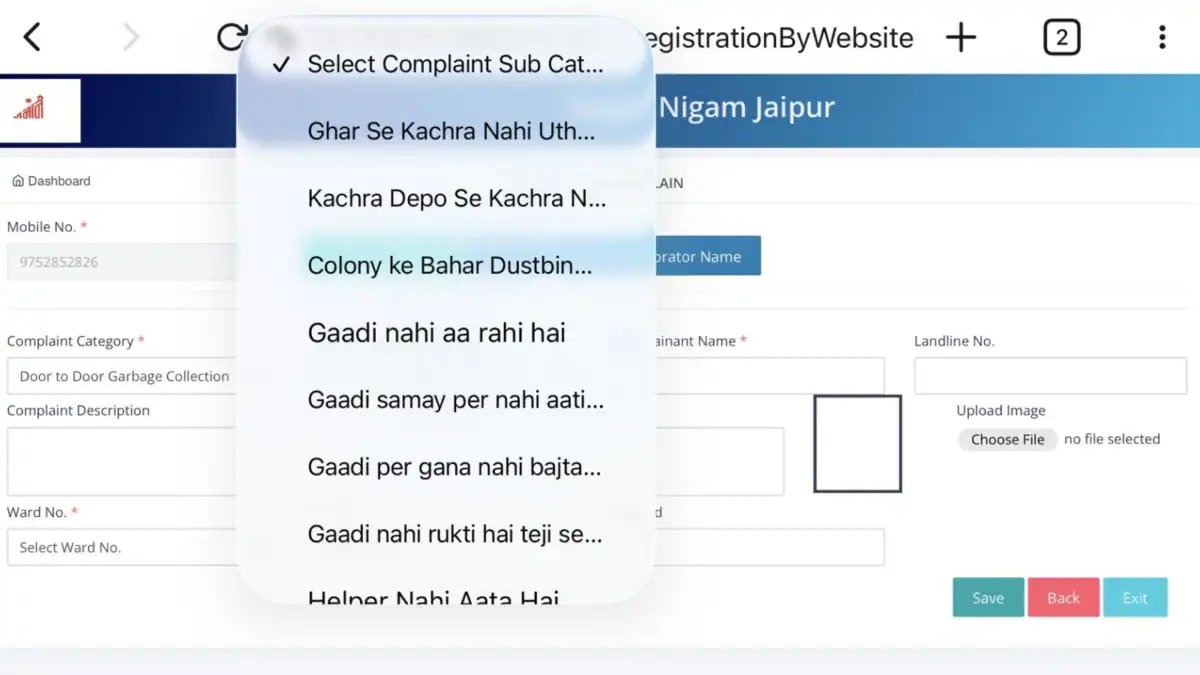
Screenshots of the website, widely circulated across platforms like X (formerly Twitter), showcase complaint categories that directly mirror the conversational language residents would typically use to describe their problems. This includes everything from the proliferation of stray animals to issues with garbage collection and road cleanliness.
The viral phenomenon began when X user Ravi Handa shared a screenshot of the portal, expressing his delight at its "real" and approachable nature. "I love how real the Jaipur Nagar Nigam website is. Yes. This is the official website," he tweeted, drawing immediate attention to the municipal body’s unconventional approach.
Among the standout options that have captivated online users is a section titled "Select Complaint Sub Category," which offers surprisingly blunt choices for animal-related issues. These include "Dog bahut ho gaye hai" (There are too many dogs), "Monkey bahut ho gaye hai" (There are too many monkeys), "Pig bahut ho gaye hai" (There are too many pigs), and even the highly specific "Dog pagal ho gaya hai pakadwana hai" (A dog has gone mad, needs to be caught). An inclusive "Other" option rounds out the selection.
The candid wording doesn’t stop there. Further exploration of the portal by internet users revealed a treasure trove of equally direct complaints, such as "Dog Mar Gaya Hai" (Dog has died), "Monkey Mar Gaya Hai" (Monkey has died), "Pig Mar Gaya Hai" (Pig has died), "Cat Mar Gai Hai" (Cat has died) for deceased animals. For sanitation and road maintenance, options like "Building Material Dal Rakh" (Building material has been dumped), "Road ki safai karwani hai" (Road needs cleaning), "Road Par Se Malva Hatwa do" (Remove debris from the road), and "Khali Plot per Kachra Pada hai" (Garbage is lying on an empty plot) are available.
Waste collection issues are addressed with equal frankness: "Ghar Se Kachra Nahi Utha Hai" (Garbage has not been picked up from home), "Kachra Depo Se Kachra Nahi Utha" (Garbage has not been picked up from the depot), "Colony ke Bahar Dustbin Khali Karna Hai" (Dustbin outside the colony needs to be emptied). Even grievances concerning waste collection vehicles are covered, with options like "Gaadi nahi aa rahi hai" (Vehicle is not coming), "Gaadi samay per nahi aati hai" (Vehicle does not come on time), "Gaadi per gana nahi bajta hai" (No music plays in the vehicle), "Gaadi nahi rukti hai teji se chali jati hai" (Vehicle doesn’t stop, speeds away), "Helper Nahi Aata Hai" (Helper does not come), "Gaadi Wala Paise Mangta Hai" (Vehicle driver asks for money), and "Helper Kachara Nahi Uthata Hai" (Helper does not pick up garbage).
This refreshing departure from bureaucratic formality has been widely lauded. Many social media users have pointed out that this direct approach significantly enhances accessibility, especially for citizens who might find English-language government websites or overly formal Hindi difficult to navigate.
"They’ve truly analysed the top complaint patterns and given a dropdown expansion on each of the categories. Every expansion has one such gem," commented one appreciative user. Another praised the move, stating, "If it’s true then I think we should appreciate Jaipur Nagar Nigam for making the website citizen friendly by using language citizen can easily understand. Having pure English which many don’t know, what good will it do?"
The initiative is seen by many as a powerful example of how government services can be made more inclusive. A third user highlighted the common struggles faced by individuals in accessing online government forms and services: "Jaipur Nagar Nigam deserves credit for making this simple and easy to understand in everyday language. All government offices have a cyber or computer operator who charges ₹50–100 from each person for filling out government forms, complaints and other applications because the process is complicated, not citizen-friendly, or in English."
The overwhelming sentiment online is that this practical, relatable, and easy-to-understand language makes the complaint process less intimidating and more effective. As one commenter succinctly put it, it’s a "Good use case tbh! Public can connect easily and realistic options." The Jaipur Nagar Nigam’s innovative approach offers a compelling model for other government bodies seeking to enhance public engagement and streamline citizen services.