









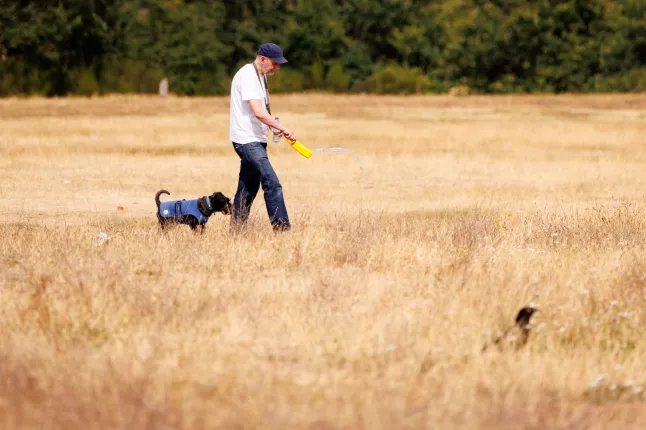

Several regions of the UK have declared a drought as warm conditions fail to let up.
North Wales and the Upper Severn, covering England and Wales, have become the first parts of the country to officially declare a drought.
North Gwynedd, Ynys Mon, South Gwynedd, Dee in Wales, Clwyd, and parts of Upper Severn, which covers mid-Wales and parts of the West Midlands, are all impacted.
The declaration comes after a sustained period of hot and dry weather.
The UK has already endured three heatwaves this year in May, June and July, which have seen temperature records repeatedly broken.
Sign up for all of the latest stories
Start your day informed with Metro’s News Updates newsletter or get Breaking News alerts the moment it happens.


The most recent heatwave proved particularly dry – this month is on track to be the driest July in almost 190 years.
The country has seen just 3% of its average rainfall for July – a figure that drops to 2% in the region impacted by the drought – with the conditions causing ponds and wetlands to dry up and prompting the introduction of hosepipe bans currently affecting 23,000,000 people nationwide.
Rhian Thomas, sustainable water and nature manager at Natural Resources Wales (NRW), said: ‘The prolonged period of hot, dry weather we have experienced this summer is now having serious impacts on the environment across parts of Wales.
‘We have seen rivers fall to exceptionally low levels, groundwater continuing to decline and increasing reports of environmental impacts affecting wildlife, fisheries, farming and sensitive habitats.’


Wildfires have broken out across the UK, including at national parks such as the Cairngorms in Scotland.
In Wales, the government has activated a ‘crisis’ plan as there are not enough helicopters to tackle the blazes.
Firefighters are working to get wildfires under control in Pentrefelin, Holyhead; Hope Mountain; Pentre Halkyn; Mount Pleasant, Brymbo; and the mountain above Capelulo near Sychnant Pass, according to the North Wales Fire and Rescue Service.
Although wildfires are still burning in the north and south of the country, the Welsh government said the Ministry of Defence (MoD) had told it there was ‘no aerial support available for anywhere in the UK’.
Meanwhile, a wildfire in Derbyshire has burned through more than 600 hectares of moorland – the equivalent of 900 football pitches – since it started a month ago.
The fire started at Tintwistle Moor near Glossop and is still not extinguished. Firefighters are working to manage hotspots and keep flare-ups under control.
MORE: 7 travel experts reveal their top European ‘coolcations’
MORE: Millions warned of life-threatening conditions as Tropical Storm Bertha heads toward US
MORE: Struggling to sleep in the UK heatwave? Simba Sleep has slashed 25% off cooling mattresses