








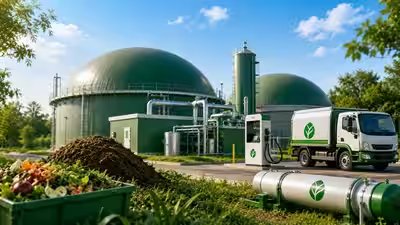
In a bid towards energy security, the Union Cabinet on Thursday approved a Rs 23,731 crore GOBARdhan scheme for bio gas. GOBARdhan or the Galvanizing Organic Bio- Agro Resources Dhan scheme aims to push for the production of compressed bio-gas.The move assumes significance in the backdrop of the ongoing Middle East crisis which has exposed India’s vulnerability to natural gas imports. India at present imports around 50% of its natural gas consumption. The Strait of Hormuz disruption impacted 55–60% of India’s LNG imports. The government sees compressed bio-gas as a domestic solution.
GOBARdhan scheme: All you want to know
The scheme has six pillars: assured offtake, price stability, capex support, pipeline infra development, credit guarantee, and challenge fund for innovation.Government-backed administered CBG (Compressed Bio-Gas) price aims to insulate buyers from global fuel price volatility.
- Capital support: Up to Rs 2 crore/TPD (tons per day) for plant, feedstock systems and organic manure processing machinery.
- Pipeline infrastructure infrastructure support Compressed Bio-Gas plants connected to trunk and City Gas networks
- Credit guarantee: Up to 85% cover on eligible loans for MSME-led projects
- Challenge Fund: Supporting district-level implementation, feedstock development, research and innovation, technology adoption, by-product value addition and stakeholder awareness.
Expected Benefits over a decade
- CBG production grows by 10X, attracting private investment
- Reduces energy import dependence and saves over Rs 40,000 Crore in forex
- Clean, home-grown gas displaces 10 MMT of fossil fuel
- A new industry will add more than Rs 75,000 Crore to national GDP
- Over 1.5 lakh jobs will be generated
- Diverting waste from landfills into fuel cuts 40+ MT of CO₂ emissions
- 250 MMT of organic fertilizer produced